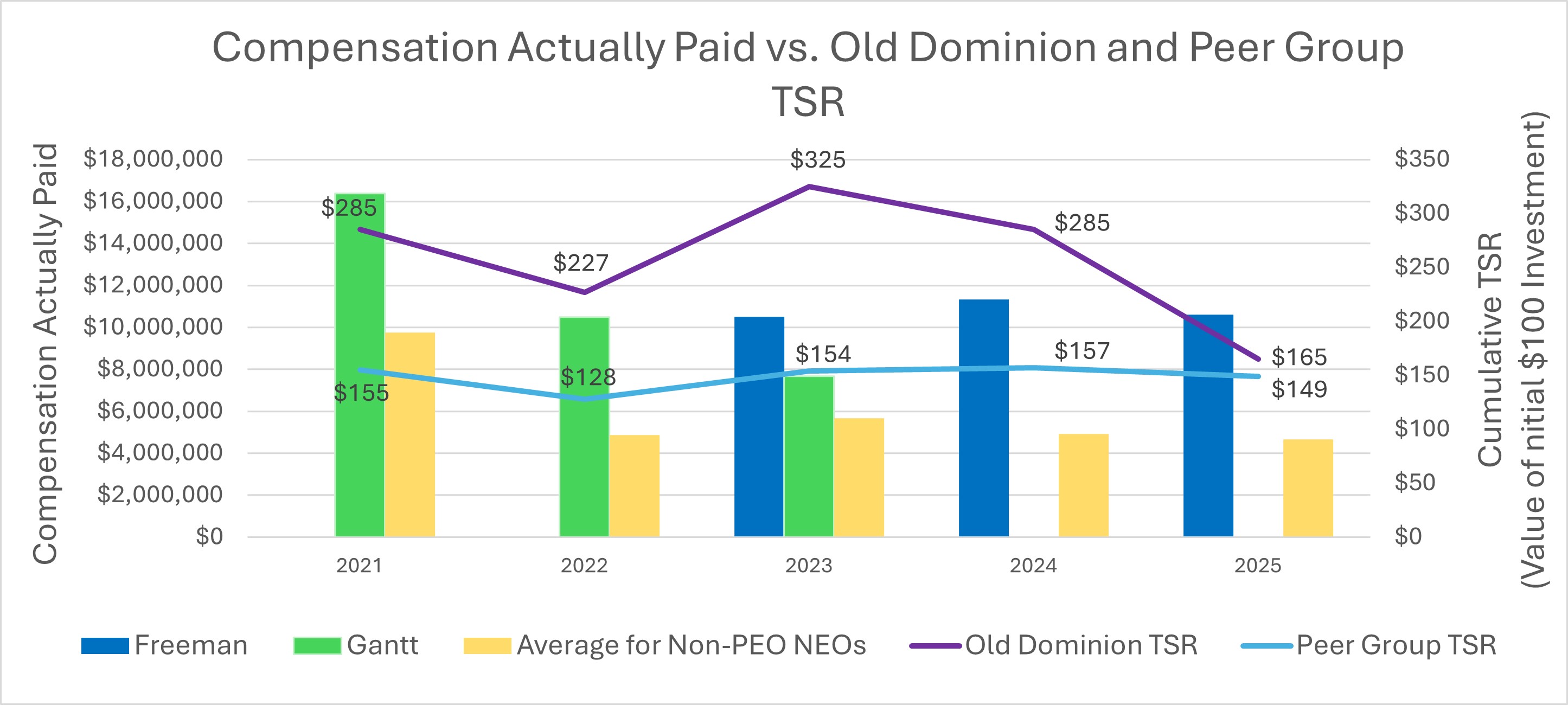
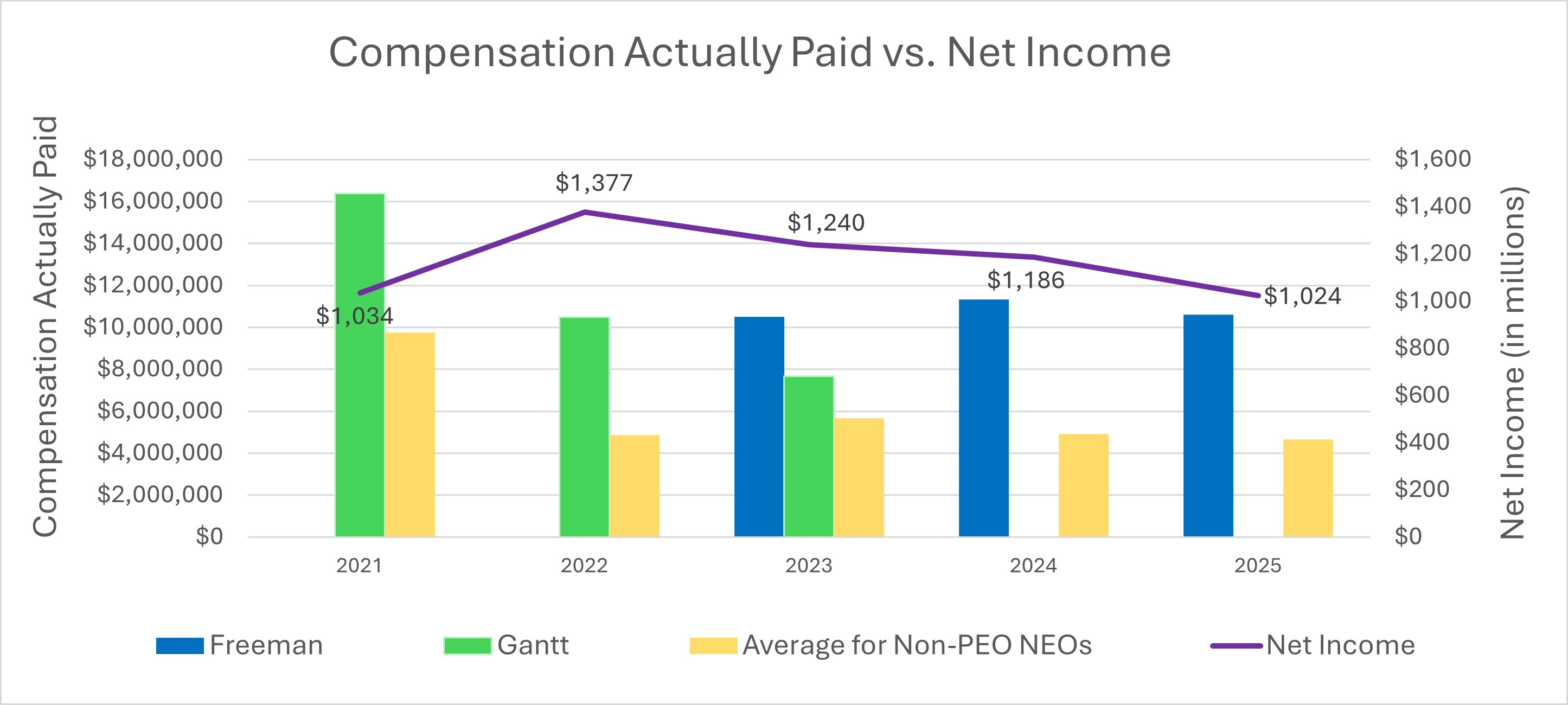
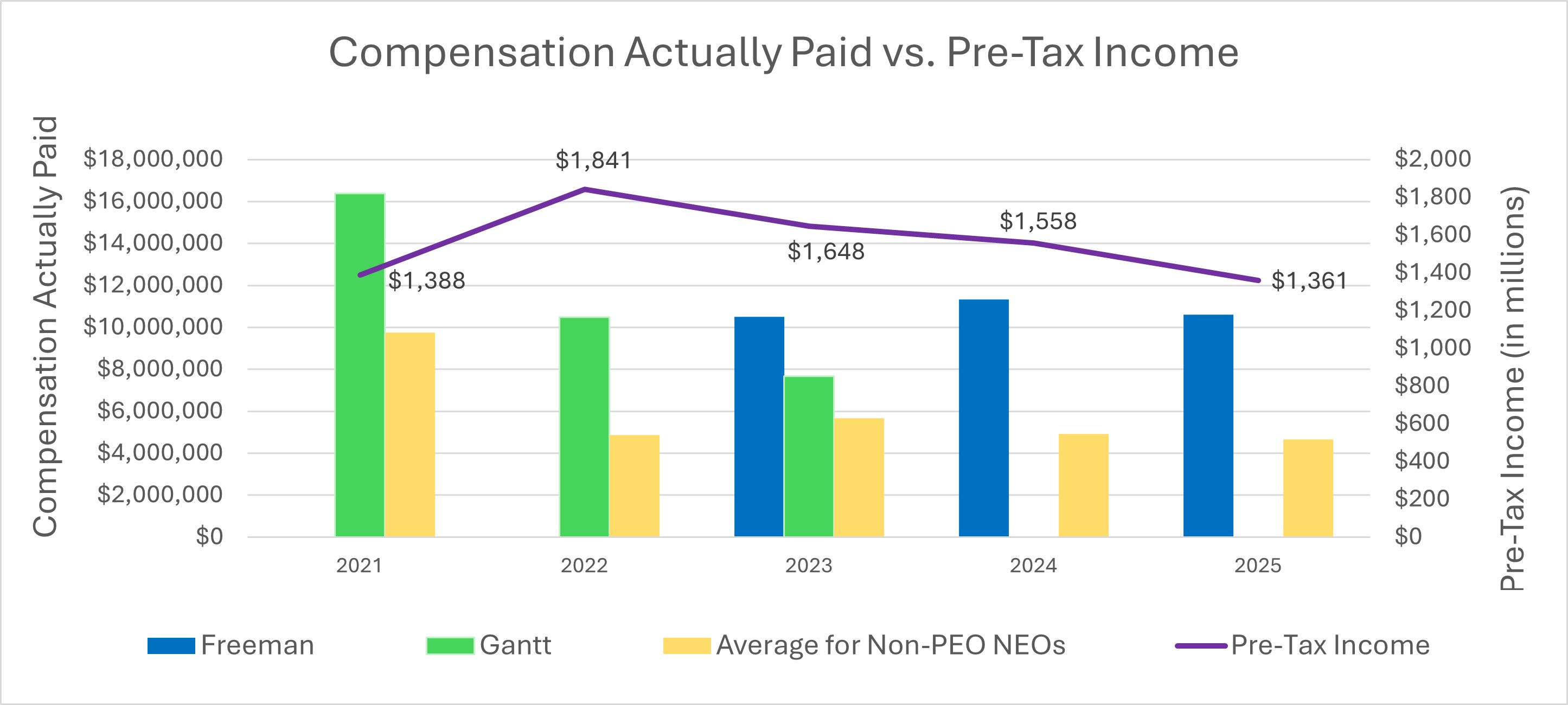
0000878927falseDEF 14A0000878927odfl:FreemanMemberecd:ChngInFrValOfOutsdngAndUnvstdEqtyAwrdsGrntdInPrrYrsMemberecd:PeoMember2025-01-012025-12-3100008789272024-01-012024-12-310000878927ecd:NonPeoNeoMemberecd:VstngDtFrValOfEqtyAwrdsGrntdAndVstdInCvrdYrMember2023-01-012023-12-310000878927ecd:NonPeoNeoMember2024-01-012024-12-310000878927ecd:NonPeoNeoMember2025-01-012025-12-310000878927ecd:NonPeoNeoMemberecd:ChngInFrValOfOutsdngAndUnvstdEqtyAwrdsGrntdInPrrYrsMember2023-01-012023-12-310000878927odfl:ValueOfDividendsOrOtherEarningsPaidOnStockOrOptionAwardsNotOtherwiseReflectedInFairValueOrTotalCompensationMemberodfl:GanttMemberecd:PeoMember2023-01-012023-12-310000878927odfl:FreemanMember2024-01-012024-12-310000878927ecd:NonPeoNeoMemberecd:ChngInFrValAsOfVstngDtOfPrrYrEqtyAwrdsVstdInCvrdYrMember2022-01-012022-12-3100008789272022-01-012022-12-310000878927ecd:NonPeoNeoMemberecd:YrEndFrValOfEqtyAwrdsGrntdInCvrdYrOutsdngAndUnvstdMember2022-01-012022-12-31000087892722025-01-012025-12-310000878927odfl:FairValueAtTheEndOfThePriorYearOfEquityAwardsThatFailedToMeetVestingConditionsInTheYearMemberodfl:GanttMemberecd:PeoMember2021-01-012021-12-310000878927odfl:FreemanMemberecd:PeoMember2025-01-012025-12-310000878927ecd:NonPeoNeoMemberecd:VstngDtFrValOfEqtyAwrdsGrntdAndVstdInCvrdYrMember2025-01-012025-12-310000878927odfl:YearEndFairValueOfEquityAwardsMemberodfl:GanttMemberecd:PeoMember2023-01-012023-12-310000878927odfl:GanttMember2023-01-012023-12-310000878927ecd:NonPeoNeoMemberecd:DvddsOrOthrErngsPdOnEqtyAwrdsNtOthrwsRflctdInTtlCompForCvrdYrMember2022-01-012022-12-3100008789272023-01-012023-12-310000878927odfl:YearOverYearChangeInFairValueOfEquityAwardsGrantedInPriorYearsThatVestedInTheYearMemberodfl:GanttMemberecd:PeoMember2023-01-012023-12-310000878927ecd:NonPeoNeoMemberecd:FrValAsOfPrrYrEndOfEqtyAwrdsGrntdInPrrYrsFldVstngCondsDrngCvrdYrMember2023-01-012023-12-310000878927odfl:FreemanMemberecd:FrValAsOfPrrYrEndOfEqtyAwrdsGrntdInPrrYrsFldVstngCondsDrngCvrdYrMemberecd:PeoMember2023-01-012023-12-310000878927odfl:YearOverYearChangeInFairValueOfEquityAwardsGrantedInPriorYearsThatVestedInTheYearMemberodfl:GanttMemberecd:PeoMember2022-01-012022-12-310000878927odfl:YearEndFairValueOfEquityAwardsMemberodfl:GanttMemberecd:PeoMember2024-01-012024-12-310000878927odfl:GanttMemberecd:PeoMember2025-01-012025-12-310000878927odfl:ValueOfDividendsOrOtherEarningsPaidOnStockOrOptionAwardsNotOtherwiseReflectedInFairValueOrTotalCompensationMemberodfl:GanttMemberecd:PeoMember2024-01-012024-12-310000878927odfl:FreemanMemberecd:VstngDtFrValOfEqtyAwrdsGrntdAndVstdInCvrdYrMemberecd:PeoMember2023-01-012023-12-310000878927ecd:NonPeoNeoMemberecd:ChngInFrValOfOutsdngAndUnvstdEqtyAwrdsGrntdInPrrYrsMember2024-01-012024-12-310000878927ecd:NonPeoNeoMemberecd:ChngInFrValOfOutsdngAndUnvstdEqtyAwrdsGrntdInPrrYrsMember2025-01-012025-12-310000878927odfl:GanttMemberodfl:ValueOfDividendsOrOtherEarningsPaidOnStockOrOptionAwardsNotOtherwiseReflectedInFairValueOrTotalCompensationMemberecd:PeoMember2021-01-012021-12-3100008789272023-01-012023-06-300000878927odfl:FreemanMemberecd:PeoMember2024-01-012024-12-310000878927odfl:FreemanMemberecd:YrEndFrValOfEqtyAwrdsGrntdInCvrdYrOutsdngAndUnvstdMemberecd:PeoMember2024-01-012024-12-310000878927odfl:YearOverYearChangeInFairValueOfOutstandingAndUnvestedEquityAwardsMemberodfl:GanttMemberecd:PeoMember2023-01-012023-12-310000878927odfl:FreemanMemberecd:VstngDtFrValOfEqtyAwrdsGrntdAndVstdInCvrdYrMemberecd:PeoMember2025-01-012025-12-310000878927odfl:FairValueAsOfVestingDateOfEquityAwardsGrantedAndVestedInTheYearMemberodfl:GanttMemberecd:PeoMember2024-01-012024-12-310000878927ecd:NonPeoNeoMemberecd:FrValAsOfPrrYrEndOfEqtyAwrdsGrntdInPrrYrsFldVstngCondsDrngCvrdYrMember2022-01-012022-12-310000878927ecd:NonPeoNeoMemberecd:ChngInFrValAsOfVstngDtOfPrrYrEqtyAwrdsVstdInCvrdYrMember2021-01-012021-12-310000878927ecd:NonPeoNeoMember2021-01-012021-12-310000878927ecd:NonPeoNeoMemberecd:YrEndFrValOfEqtyAwrdsGrntdInCvrdYrOutsdngAndUnvstdMember2024-01-012024-12-310000878927odfl:FreemanMember2023-01-012023-12-310000878927odfl:FreemanMemberecd:ChngInFrValOfOutsdngAndUnvstdEqtyAwrdsGrntdInPrrYrsMemberecd:PeoMember2023-01-012023-12-310000878927odfl:FreemanMemberecd:ChngInFrValAsOfVstngDtOfPrrYrEqtyAwrdsVstdInCvrdYrMemberecd:PeoMember2024-01-012024-12-310000878927odfl:FairValueAtTheEndOfThePriorYearOfEquityAwardsThatFailedToMeetVestingConditionsInTheYearMemberodfl:GanttMemberecd:PeoMember2024-01-012024-12-310000878927odfl:FreemanMemberecd:FrValAsOfPrrYrEndOfEqtyAwrdsGrntdInPrrYrsFldVstngCondsDrngCvrdYrMemberecd:PeoMember2025-01-012025-12-310000878927odfl:YearEndFairValueOfEquityAwardsMemberodfl:GanttMemberecd:PeoMember2021-01-012021-12-310000878927odfl:FreemanMemberecd:ChngInFrValAsOfVstngDtOfPrrYrEqtyAwrdsVstdInCvrdYrMemberecd:PeoMember2025-01-012025-12-310000878927ecd:NonPeoNeoMemberecd:YrEndFrValOfEqtyAwrdsGrntdInCvrdYrOutsdngAndUnvstdMember2023-01-012023-12-310000878927odfl:GanttMemberecd:PeoMember2021-01-012021-12-310000878927ecd:NonPeoNeoMemberecd:ChngInFrValOfOutsdngAndUnvstdEqtyAwrdsGrntdInPrrYrsMember2022-01-012022-12-3100008789272025-01-012025-12-310000878927ecd:NonPeoNeoMemberecd:VstngDtFrValOfEqtyAwrdsGrntdAndVstdInCvrdYrMember2021-01-012021-12-310000878927odfl:FairValueAtTheEndOfThePriorYearOfEquityAwardsThatFailedToMeetVestingConditionsInTheYearMemberodfl:GanttMemberecd:PeoMember2023-01-012023-12-310000878927odfl:GanttMember2022-01-012022-12-310000878927odfl:YearOverYearChangeInFairValueOfOutstandingAndUnvestedEquityAwardsMemberodfl:GanttMemberecd:PeoMember2025-01-012025-12-310000878927odfl:GanttMemberodfl:ValueOfDividendsOrOtherEarningsPaidOnStockOrOptionAwardsNotOtherwiseReflectedInFairValueOrTotalCompensationMemberecd:PeoMember2022-01-012022-12-310000878927odfl:FreemanMember2025-01-012025-12-310000878927odfl:FreemanMemberecd:PeoMember2023-01-012023-12-310000878927odfl:GanttMemberecd:PeoMember2023-01-012023-12-310000878927ecd:NonPeoNeoMember2023-01-012023-12-310000878927odfl:FreemanMemberecd:DvddsOrOthrErngsPdOnEqtyAwrdsNtOthrwsRflctdInTtlCompForCvrdYrMemberecd:PeoMember2024-01-012024-12-310000878927odfl:FreemanMemberecd:DvddsOrOthrErngsPdOnEqtyAwrdsNtOthrwsRflctdInTtlCompForCvrdYrMemberecd:PeoMember2025-01-012025-12-310000878927odfl:FreemanMemberecd:YrEndFrValOfEqtyAwrdsGrntdInCvrdYrOutsdngAndUnvstdMemberecd:PeoMember2023-01-012023-12-310000878927odfl:YearOverYearChangeInFairValueOfOutstandingAndUnvestedEquityAwardsMemberodfl:GanttMemberecd:PeoMember2024-01-012024-12-310000878927odfl:YearOverYearChangeInFairValueOfEquityAwardsGrantedInPriorYearsThatVestedInTheYearMemberodfl:GanttMemberecd:PeoMember2025-01-012025-12-310000878927ecd:NonPeoNeoMemberecd:DvddsOrOthrErngsPdOnEqtyAwrdsNtOthrwsRflctdInTtlCompForCvrdYrMember2024-01-012024-12-310000878927ecd:NonPeoNeoMemberecd:VstngDtFrValOfEqtyAwrdsGrntdAndVstdInCvrdYrMember2024-01-012024-12-31000087892732025-01-012025-12-310000878927odfl:FairValueAsOfVestingDateOfEquityAwardsGrantedAndVestedInTheYearMemberodfl:GanttMemberecd:PeoMember2025-01-012025-12-310000878927odfl:FairValueAtTheEndOfThePriorYearOfEquityAwardsThatFailedToMeetVestingConditionsInTheYearMemberodfl:GanttMemberecd:PeoMember2025-01-012025-12-310000878927ecd:NonPeoNeoMemberecd:ChngInFrValAsOfVstngDtOfPrrYrEqtyAwrdsVstdInCvrdYrMember2025-01-012025-12-310000878927ecd:NonPeoNeoMemberecd:FrValAsOfPrrYrEndOfEqtyAwrdsGrntdInPrrYrsFldVstngCondsDrngCvrdYrMember2025-01-012025-12-310000878927odfl:FreemanMemberecd:ChngInFrValOfOutsdngAndUnvstdEqtyAwrdsGrntdInPrrYrsMemberecd:PeoMember2024-01-012024-12-310000878927odfl:GanttMember2024-01-012024-12-310000878927ecd:NonPeoNeoMemberecd:YrEndFrValOfEqtyAwrdsGrntdInCvrdYrOutsdngAndUnvstdMember2025-01-012025-12-31000087892712025-01-012025-12-310000878927odfl:FairValueAtTheEndOfThePriorYearOfEquityAwardsThatFailedToMeetVestingConditionsInTheYearMemberodfl:GanttMemberecd:PeoMember2022-01-012022-12-310000878927odfl:FreemanMemberecd:FrValAsOfPrrYrEndOfEqtyAwrdsGrntdInPrrYrsFldVstngCondsDrngCvrdYrMemberecd:PeoMember2024-01-012024-12-310000878927ecd:NonPeoNeoMemberecd:VstngDtFrValOfEqtyAwrdsGrntdAndVstdInCvrdYrMember2022-01-012022-12-310000878927odfl:GanttMemberecd:PeoMember2024-01-012024-12-310000878927odfl:GanttMemberecd:PeoMember2022-01-012022-12-310000878927odfl:FairValueAsOfVestingDateOfEquityAwardsGrantedAndVestedInTheYearMemberodfl:GanttMemberecd:PeoMember2022-01-012022-12-310000878927odfl:YearOverYearChangeInFairValueOfOutstandingAndUnvestedEquityAwardsMemberodfl:GanttMemberecd:PeoMember2022-01-012022-12-310000878927ecd:NonPeoNeoMemberecd:ChngInFrValOfOutsdngAndUnvstdEqtyAwrdsGrntdInPrrYrsMember2021-01-012021-12-310000878927ecd:NonPeoNeoMember2022-01-012022-12-310000878927ecd:NonPeoNeoMemberecd:DvddsOrOthrErngsPdOnEqtyAwrdsNtOthrwsRflctdInTtlCompForCvrdYrMember2023-01-012023-12-310000878927ecd:NonPeoNeoMemberecd:FrValAsOfPrrYrEndOfEqtyAwrdsGrntdInPrrYrsFldVstngCondsDrngCvrdYrMember2024-01-012024-12-310000878927odfl:FreemanMemberecd:VstngDtFrValOfEqtyAwrdsGrntdAndVstdInCvrdYrMemberecd:PeoMember2024-01-012024-12-310000878927odfl:FreemanMemberecd:YrEndFrValOfEqtyAwrdsGrntdInCvrdYrOutsdngAndUnvstdMemberecd:PeoMember2025-01-012025-12-310000878927odfl:FairValueAsOfVestingDateOfEquityAwardsGrantedAndVestedInTheYearMemberodfl:GanttMemberecd:PeoMember2023-01-012023-12-310000878927odfl:YearOverYearChangeInFairValueOfOutstandingAndUnvestedEquityAwardsMemberodfl:GanttMemberecd:PeoMember2021-01-012021-12-310000878927ecd:NonPeoNeoMemberecd:DvddsOrOthrErngsPdOnEqtyAwrdsNtOthrwsRflctdInTtlCompForCvrdYrMember2021-01-012021-12-310000878927ecd:NonPeoNeoMemberecd:DvddsOrOthrErngsPdOnEqtyAwrdsNtOthrwsRflctdInTtlCompForCvrdYrMember2025-01-012025-12-310000878927ecd:NonPeoNeoMemberecd:ChngInFrValAsOfVstngDtOfPrrYrEqtyAwrdsVstdInCvrdYrMember2024-01-012024-12-310000878927odfl:YearEndFairValueOfEquityAwardsMemberodfl:GanttMemberecd:PeoMember2025-01-012025-12-310000878927ecd:NonPeoNeoMemberecd:FrValAsOfPrrYrEndOfEqtyAwrdsGrntdInPrrYrsFldVstngCondsDrngCvrdYrMember2021-01-012021-12-3100008789272021-01-012021-12-310000878927odfl:FairValueAsOfVestingDateOfEquityAwardsGrantedAndVestedInTheYearMemberodfl:GanttMemberecd:PeoMember2021-01-012021-12-310000878927odfl:YearOverYearChangeInFairValueOfEquityAwardsGrantedInPriorYearsThatVestedInTheYearMemberodfl:GanttMemberecd:PeoMember2024-01-012024-12-310000878927odfl:FreemanMemberecd:ChngInFrValAsOfVstngDtOfPrrYrEqtyAwrdsVstdInCvrdYrMemberecd:PeoMember2023-01-012023-12-310000878927ecd:NonPeoNeoMemberecd:YrEndFrValOfEqtyAwrdsGrntdInCvrdYrOutsdngAndUnvstdMember2021-01-012021-12-310000878927odfl:YearOverYearChangeInFairValueOfEquityAwardsGrantedInPriorYearsThatVestedInTheYearMemberodfl:GanttMemberecd:PeoMember2021-01-012021-12-310000878927odfl:ValueOfDividendsOrOtherEarningsPaidOnStockOrOptionAwardsNotOtherwiseReflectedInFairValueOrTotalCompensationMemberodfl:GanttMemberecd:PeoMember2025-01-012025-12-310000878927odfl:FreemanMemberecd:DvddsOrOthrErngsPdOnEqtyAwrdsNtOthrwsRflctdInTtlCompForCvrdYrMemberecd:PeoMember2023-01-012023-12-310000878927ecd:NonPeoNeoMemberecd:ChngInFrValAsOfVstngDtOfPrrYrEqtyAwrdsVstdInCvrdYrMember2023-01-012023-12-310000878927odfl:YearEndFairValueOfEquityAwardsMemberodfl:GanttMemberecd:PeoMember2022-01-012022-12-310000878927odfl:GanttMember2021-01-012021-12-310000878927odfl:GanttMember2025-01-012025-12-3100008789272023-07-012025-12-31iso4217:USD
UNITED STATES
SECURITIES AND EXCHANGE COMMISSION
WASHINGTON, D.C. 20549
SCHEDULE 14A
(Rule 14a-101)
INFORMATION REQUIRED IN PROXY STATEMENT
SCHEDULE 14A INFORMATION
Proxy Statement Pursuant to Section 14(a) of the Securities Exchange Act of 1934
Filed by the Registrant ☒
Filed by a Party other than the Registrant ☐
Check the appropriate box:
|
|
☐ |
Preliminary Proxy Statement |
|
|
☐ |
Confidential, for Use of the Commission Only (as permitted by Rule 14a-6(e)(2)) |
|
|
☒ |
Definitive Proxy Statement |
|
|
☐ |
Definitive Additional Materials |
|
|
☐ |
Soliciting Material Pursuant to §240.14a-12 |
OLD DOMINION FREIGHT LINE, INC.
_________________________________________________________
(Name of Registrant as Specified In Its Charter)
_________________________________________________________
(Name of Person(s) Filing Proxy Statement, if Other Than the Registrant)
Payment of Filing Fee (Check all boxes that apply):
|
|
☒ |
No fee required |
|
|
☐ |
Fee paid previously with preliminary materials |
|
|
☐ |
Fee computed on table in exhibit required by Item 25(b) per Exchange Act Rules 14a-6(i)(1) and 0-11 |
OLD DOMINION FREIGHT LINE, INC.
500 Old Dominion Way
Thomasville, North Carolina 27360
NOTICE OF ANNUAL MEETING OF SHAREHOLDERS
The Annual Meeting of Shareholders of Old Dominion Freight Line, Inc. will be held Wednesday, May 20, 2026, at 10:00 a.m. Eastern Daylight Time, at our principal executive offices, 500 Old Dominion Way, Thomasville, North Carolina 27360, for the following purposes:
1.To elect twelve directors to our Board of Directors for one-year terms and until their respective successors have been elected and qualified or until their death, resignation, removal or disqualification or until there is a decrease in the number of directors, as set forth in the accompanying proxy statement.
2.To approve, on an advisory basis, the compensation of our named executive officers.
3.To ratify the appointment of Ernst & Young LLP as our independent registered public accounting firm for the year ending December 31, 2026.
4.To transact such other business, if any, as may be properly brought before the meeting or any adjournment thereof.
Shareholders of record at the close of business on March 16, 2026, are entitled to notice of and to vote at the meeting.
By Order of the Board of Directors
Ross H. Parr
Senior Vice President - Legal Affairs,
General Counsel and Secretary
Thomasville, North Carolina
April 20, 2026
If you do not intend to be present at the meeting, we ask that you vote your shares using a toll-free telephone number, the Internet, or by signing, dating and returning the accompanying proxy card or voting instruction form promptly so that your shares of common stock may be represented and voted at the Annual Meeting. Instructions regarding the different voting options made available to you are contained in the accompanying proxy statement.
TABLE OF CONTENTS TO THE PROXY STATEMENT
OLD DOMINION FREIGHT LINE, INC.
Principal Executive Offices: 500 Old Dominion Way
Thomasville, North Carolina 27360
PROXY STATEMENT
Important Notice Regarding the Availability of Proxy Materials
for the Shareholder Meeting to be held on May 20, 2026:
The Notice of Annual Meeting of Shareholders, Proxy Statement, Form of Proxy and 2025 Annual Report to Shareholders are available on our corporate website at https://ir.odfl.com/annual-shareholder-meeting-information.
This proxy statement is first being distributed to shareholders on or about April 20, 2026, in connection with the solicitation of proxies by and on behalf of the Board of Directors (the “Board”) of Old Dominion Freight Line, Inc. for use at the Annual Meeting of Shareholders to be held at our principal executive offices, 500 Old Dominion Way, Thomasville, North Carolina 27360 on Wednesday, May 20, 2026, at 10:00 a.m. Eastern Daylight Time, and at any adjournment thereof. If you need directions so you can attend the Annual Meeting and vote in person, please contact our Corporate Secretary at (336) 889-5000.
|
|
|
|
2026 Proxy Statement Summary |
This summary highlights information contained elsewhere in this proxy statement. This summary does not contain all of the information that you should consider, and you should read the entire proxy statement carefully before voting. |
Annual Meeting of Shareholders |
• Time and Date |
10:00 a.m., Wednesday, May 20, 2026 |
• Place |
Old Dominion's principal executive offices |
|
500 Old Dominion Way, Thomasville, North Carolina 27360 |
• Record Date |
March 16, 2026 |
• Voting |
Shareholders as of the record date are entitled to vote. Each share of common stock is entitled to one vote for each director nominee and one vote for each of the proposals to be voted on at the meeting. |
• Admission |
If you decide to attend the meeting in person, upon your arrival you will need to register with our receptionist in the main lobby of our principal executive offices. See page 6 for further instructions and registration requirements. |
Meeting Agenda/Proposals |
Board Vote Recommendation |
|
Page Reference (for more detail) |
|
|
• Election of twelve directors |
FOR ALL |
|
10 |
• Approval, on an advisory basis, of the compensation of our named executive officers |
FOR |
|
56 |
• Ratification of Ernst & Young LLP as our independent registered public accounting firm for the year ending December 31, 2026 |
FOR |
|
58 |
Transact other business, if any, that properly comes before the meeting |
|
|
|
|
|
|
|
|
|
|
|
|
|
|
|
|
|
|
|
|
|
|
|
Election of Directors Our directors are elected annually for one-year terms. The twelve nominees below are comprised of eleven current directors and A. Randolph Smith, II, each of whom has been recommended by the Board. The nominees receiving a plurality of the votes cast at the meeting will be elected as directors. •8 of our 12 director nominees are independent •Our director nominees have an average tenure of 9 years |
|
|
|
|
|
|
|
|
|
|
|
|
Committees |
Name |
|
Age |
|
Director
Since |
|
Occupation |
|
Independent |
|
AC |
|
TCC |
|
GNC |
|
RC |
David S. Congdon |
|
69 |
|
1998 |
|
Executive Chairman of the Board of Directors, Old Dominion |
|
|
|
|
|
|
|
|
|
|
Sherry A. Aaholm |
|
63 |
|
2018 |
|
Private investor |
|
X |
|
X |
|
|
|
|
|
C |
John R. Congdon, Jr. |
|
69 |
|
1998 |
|
Private investor |
|
|
|
|
|
|
|
|
|
|
Andrew S. Davis |
|
48 |
|
2023 |
|
Senior Vice President, Strategy and Investments, Cox Enterprises Inc. |
|
X |
|
X |
|
C |
|
|
|
|
Kevin M. Freeman |
|
67 |
|
2024 |
|
President and Chief Executive Officer, Old Dominion |
|
|
|
|
|
|
|
|
|
|
Bradley R. Gabosch |
|
74 |
|
2016 |
|
Private investor |
|
X |
|
C |
|
|
|
|
|
X |
Greg C. Gantt |
|
70 |
|
2018 |
|
Private investor |
|
|
|
|
|
|
|
|
|
|
John D. Kasarda, Ph.D. |
|
80 |
|
2008 |
|
CEO and President of Aerotropolis Business Concepts LLC; President of Aerotropolis Institute China; Faculty, University of North Carolina at Chapel Hill's Kenan-Flagler Business School |
|
X |
|
|
|
X |
|
C |
|
|
Cheryl S. Miller |
|
53 |
|
2024 |
|
Private investor |
|
X |
|
X |
|
X |
|
|
|
|
A. Randolph Smith, II |
|
65 |
|
|
|
Managing Director, Andersen Tax LLC |
|
X |
|
|
|
|
|
|
|
|
Wendy T. Stallings |
|
51 |
|
2020 |
|
Owner and CEO, TPI Event Solutions, Inc.; Co-Owner and President, Local Living Furniture, LLC; Real estate developer and investor |
|
X |
|
|
|
X |
|
X |
|
|
Thomas A. Stith, III |
|
62 |
|
2021 |
|
Founder, Vero Solutions; Co-Founder and CEO, The Michael Thomas Group; Professor of the Practice, University of North Carolina at Chapel Hill's Kenan-Flagler Business School; Fellow, Kenan Institute for Private Enterprise |
|
X |
|
|
|
|
|
X |
|
X |
AC - Audit Committee TCC - Talent and Compensation Committee |
GNC - Governance and Nomination Committee RC - Risk Committee C - Committee Chair |
|
|
|
|
|
Approval, on an Advisory Basis, of the Compensation of our Named Executive Officers We are asking our shareholders to approve, on a non-binding, advisory basis, the compensation of our named executive officers. The Board believes that our executive compensation policies are designed appropriately and are functioning as intended to align pay with performance and produce long-term value for our shareholders. |
Fiscal 2025 Executive Compensation Elements |
Type |
|
Form |
|
General Purpose and Terms |
Cash |
|
Base Salary |
|
Retention component that is reviewed annually and adjusted as needed, and executives are generally eligible for an annual increase. |
|
|
Non-Equity
Performance
Incentive Plan
(“PIP”) |
|
Motivates and rewards performance by linking a significant portion of compensation to profitability. Earned monthly based upon a fixed percentage, or participation factor, of our pre-tax income. No payment unless pre-tax income exceeds a required minimum performance threshold, and the aggregate PIP payments for each executive are limited to 10x the executive’s annual base salary. |
Equity- based |
|
Performance-Based Restricted
Stock Award (“RSA”) |
|
Aligns executive compensation with Company performance and shareholder value. Grants are awarded based on the Company’s operating ratio (a measure of profitability calculated by dividing total operating expenses by revenue). Any shares earned generally vest in increments of 33% per year on the anniversary of the grant date, subject to continued service requirements. |
|
|
Performance-Based Restricted
Stock Unit Award (“PBRSU”) |
|
Ties executive compensation to the Company’s three-year relative total
shareholder return (“TSR”) compared to companies in the Dow Jones
Transportation Average, with the target performance hurdle set above the
50th percentile and award funding capped at target if the Company’s absolute TSR is negative. |
Other
Employee
Benefits |
|
401(k) Plan |
|
Retirement plan with Company match; executive officers receive the same benefit as all employees. |
|
|
Nonqualified
Deferred
Compensation
Plan |
|
Self-funded retirement benefit; participants can defer significant percentages of annual base salary and monthly non-equity performance-based incentive compensation. No Company match or other contributions are provided by us. |
Recent Compensation Decisions The principal factors in the Talent and Compensation Committee’s executive compensation decisions for 2025 were (i) our financial performance, (ii) the relationship of executive compensation to the Company’s pre-tax income, (iii) the amount of compensation that is performance-based, (iv) the review and analysis conducted by its independent compensation consultant, Pearl Meyer & Partners, LLC (“Pearl Meyer”), and (v) strong support received for “say-on-pay” voting results (approximately 94% of votes cast on the proposal at our 2025 Annual Meeting of Shareholders were in favor of such proposal). For 2025, our named executive officers earned non-equity incentive awards under the PIP that were approximately 12.6% lower than payouts earned in 2024, in line with the year-over-year decline in our pre-tax income. Based on our industry-leading 2025 operating ratio of 75.2%, RSA awards were earned at target levels. Our executive officers also received PBRSU grants tied to our three-year TSR relative to companies in the Dow Jones Transportation Average, with any awards to be determined following the measurement period ending December 31, 2027. |
|
|
|
|
|
|
|
|
|
|
|
|
|
Fiscal 2025 Compensation Summary |
The following table summarizes the compensation of our Chief Executive Officer, our Chief Financial Officer, and our next three most highly compensated executive officers who were serving at December 31, 2025, to whom we refer to collectively as our named executive officers, for the fiscal year ended December 31, 2025. |
Name |
|
Salary ($) (1) |
|
Stock Awards ($) |
|
Non-Equity Incentive Plan Compensation ($) |
|
Change in Pension Value and Nonqualified Deferred Compensation Earnings ($) |
|
All Other Compensation ($) |
|
Total Compensation ($) |
Kevin M. Freeman President and Chief Executive Officer |
|
1,033,680 |
|
2,377,606 |
|
8,167,847 |
|
697 |
|
36,066 |
|
11,615,896 |
Adam N. Satterfield Executive Vice President, Chief Financial Officer and Assistant Secretary |
|
678,541 |
|
1,560,699 |
|
4,083,923 |
|
— |
|
43,737 |
|
6,366,900 |
Gregory B. Plemmons Executive Vice President and Chief Operating Officer |
|
678,541
|
|
1,560,699 |
|
4,083,923
|
|
440 |
|
29,037 |
|
6,352,640 |
Cecil E. Overbey, Jr. Senior Vice President - Strategic Development |
|
541,732 |
|
903,003 |
|
2,450,354 |
|
3,307 |
|
45,245 |
|
3,943,641 |
Ross H. Parr Senior Vice President - Legal Affairs, General Counsel and Secretary |
|
541,732 |
|
903,003 |
|
2,450,354 |
|
— |
|
44,476 |
|
3,939,565 |
(1)The base salaries reported in this table and corresponding amounts reflected in the “Compensation Discussion and Analysis” section may differ due to the timing of effective dates for base salary changes. |
|
Ratification of the Appointment of our Independent Registered Public Accounting Firm As a matter of good corporate governance, we are asking our shareholders to ratify the appointment of Ernst & Young LLP as our independent registered public accounting firm for the year ending December 31, 2026. |
2027 Annual Meeting • Shareholder proposals submitted pursuant to Securities and Exchange Commission (“SEC”) Rule 14a-8 must be received by us by December 21, 2026. • Notice of shareholder proposals outside of SEC Rule 14a-8, including director nominations pursuant to the proxy access provisions of our bylaws and pursuant to SEC Rule 14a-19, must be received by us no earlier than November 21, 2026 and no later than December 21, 2026. |
The accompanying proxy is solicited by and on behalf of our Board, and the entire cost of such solicitation will be borne by us. This solicitation is being made by mail and may also be made in person or by fax, telephone, or Internet by our officers or employees. In addition, arrangements will be made with brokerage houses and other custodians, nominees and fiduciaries to send proxy materials to their principals, and we will reimburse them for their reasonable expenses in connection therewith.
The accompanying proxy is for use at the 2026 Annual Meeting of Shareholders (the “Annual Meeting”) if a shareholder either will be unable to attend in person or will attend but wishes to vote by proxy. “Registered holders” who have shares registered in the owner's name through our transfer agent may vote by either: (i) completing the enclosed proxy card and mailing it in the postage-paid envelope provided; (ii) voting over the Internet by accessing the website identified on the proxy card and following the online instructions; or (iii) calling the toll-free telephone number identified on the proxy card. Proxies submitted via the Internet or by telephone must be received by 11:59 p.m. Eastern Daylight Time on Tuesday, May 19, 2026.
For shares held in “street name,” that is, shares held in the name of a brokerage firm, bank or other nominee, you should receive a voting instruction form from that institution in lieu of a proxy card. The voting instruction form provides information on how you may instruct your brokerage firm, bank or other nominee to vote your shares.
If you own shares through the Old Dominion 401(k) Retirement Plan, you can direct the plan trustee to vote the shares held in your account in accordance with your instructions by completing any proxy card or voting instruction form you receive in the mail and returning it in the envelope provided or by registering your instructions via the Internet or telephone as directed on the proxy card or voting instruction form. If you register your voting instructions by telephone or on the Internet, you do not have to mail in the proxy card or voting instruction form. In order to instruct the plan trustee on the voting of shares held in your account, your instructions must be received by 11:59 p.m. Eastern Daylight Time on Sunday, May 17, 2026. If your voting instructions are not received by that date, the plan trustee will vote your shares in the same proportion as the plan shares for which voting instructions have been received.
If you decide to attend the meeting in person, upon your arrival you will need to register with our receptionist in the main lobby of our principal executive offices at 500 Old Dominion Way, Thomasville, North Carolina 27360. Please register at least 15 minutes prior to the start of the Annual Meeting to ensure timely entry to the meeting. Please be sure to have your state- or government-issued photo identification with you at the time of registration. After a determination that you are a registered shareholder of Old Dominion common stock as of the record date, you will be allowed to access the meeting room to attend our Annual Meeting. If you are not a registered shareholder but beneficially own shares of our common stock as of the record date, please be sure that you bring your state- or government-issued photo identification as well as either (i) a proxy issued to you in your name by your brokerage firm, bank or other nominee, or (ii) a brokerage statement showing your beneficial ownership of our common stock as of the record date (and a legal proxy from your brokerage firm, bank or other nominee if you wish to vote your shares at the Annual Meeting) to present to us at the time of registration.
The Board has fixed March 16, 2026 as the record date for the determination of shareholders entitled to notice of and to vote at the Annual Meeting. On March 16, 2026, there were 208,292,123 outstanding shares of our common stock each entitled to one vote. The presence in person or by proxy of a majority of the shares of common stock outstanding on the record date constitutes a quorum for purposes of conducting business at the Annual Meeting. Shareholders do not have cumulative voting rights in the election of directors.
Brokers that are members of certain securities exchanges and that hold shares of our common stock in street name on behalf of beneficial owners have authority to vote on certain items when they have not received instructions from beneficial owners. Under the applicable rules governing such brokers, the proposal to ratify the appointment of our independent registered public accounting firm is considered a “discretionary” item. This means that brokers may vote using their discretion on this proposal on behalf of beneficial owners who have not furnished voting instructions. In contrast, certain items are considered “non-discretionary,” and a “broker non-vote” occurs when brokers do not receive voting instructions from beneficial owners with respect to such items because the brokers are not entitled to vote such uninstructed shares. The proposals to elect directors and approve, on an advisory basis, the compensation of our named executive officers are considered “non-discretionary,” which means that brokers cannot vote your uninstructed shares when they do not receive voting instructions from you.
Assuming the existence of a quorum at the Annual Meeting, the voting options for each proposal presented in this proxy statement, as well as the vote required to approve each proposal at the Annual Meeting, are as follows:
Proposal 1 - Election of Directors: With respect to this proposal, you may cast your vote “for all,” “withhold all,” or “for all except” with respect to the director nominees. The nominees receiving a plurality of the votes cast will be elected as directors.
Proposal 2 - Approval, on an Advisory Basis, of the Compensation of Our Named Executive Officers: With respect to this proposal (the results of which will not be binding upon Old Dominion or the Board), you may vote “for,” “against,” or “abstain” from voting. For this non-binding vote to be approved by the shareholders, the votes cast “for” this proposal must exceed the votes cast “against” this proposal.
Proposal 3 - Ratification of the Appointment of Our Independent Registered Public Accounting Firm: With respect to this proposal, you may vote “for,” “against,” or “abstain” from voting. For this proposal to be approved by the shareholders, the votes cast “for” this proposal must exceed the votes cast “against” this proposal.
Abstentions, shares that are withheld as to voting and broker non-votes (if any) will be counted for determining the existence of a quorum, but will not be counted as a vote cast with respect to any of the proposals and, therefore, will have no effect on the outcome of the vote for any of the proposals presented at the Annual Meeting.
Where a choice is specified on any proxy as to the vote on any matter to come before the Annual Meeting, the proxy will be voted in accordance with such specification. If no specification is made but the proxy is otherwise properly completed, the shares represented thereby will be voted “for” the election of the director nominees named in this proxy statement, “for” the approval, on an advisory basis, of the compensation of our named executive officers, and “for” the ratification of the appointment of our independent registered public accounting firm. Any shareholder submitting the accompanying proxy has the right to revoke it by notifying our Corporate Secretary in writing at any time prior to the voting of the proxy. A proxy is suspended if the person giving the proxy properly elects to vote in person and attends the Annual Meeting.
Management is not aware of any matters, other than those specified above, that will be presented for action at the Annual Meeting. If any other matters do properly come before the Annual Meeting, the persons named as agents in the proxy will vote upon such matters in accordance with their best judgment.
SECURITY OWNERSHIP OF MANAGEMENT AND CERTAIN BENEFICIAL OWNERS
The following table sets forth information with respect to the beneficial ownership of our common stock, $0.10 par value, our only class of voting security, as of March 16, 2026, or such other date as indicated in the footnotes to the table, for: (i) each person known by us to own beneficially more than five percent of our common stock; (ii) each current director and the new director nominee; (iii) each named executive officer and each of the other executive officers; and (iv) all current directors, the new director nominee, the named executive officers and all of the other executive officers as a group. Beneficial ownership is determined in accordance with the rules of the SEC. Unless otherwise indicated, the address of all listed shareholders is c/o Old Dominion Freight Line, Inc., 500 Old Dominion Way, Thomasville, NC 27360. As of March 16, 2026, and in compliance with our securities trading policy, none of our directors or executive officers have pledged our common stock.
|
|
|
|
|
|
|
Name and Address of Beneficial Owner |
|
|
Shares Beneficially Owned (1) |
|
|
Percent |
The Vanguard Group, Inc. (2) 100 Vanguard Boulevard Malvern, PA 19355 |
|
|
23,252,655 |
|
|
11.1% |
BlackRock, Inc. (3) 50 Hudson Yards New York, NY 10001 |
|
|
14,185,482 |
|
|
6.7% |
T. Rowe Price Associates, Inc. (4) 1307 Point Street Baltimore, MD 21231 |
|
|
13,391,525 |
|
|
6.3% |
John R. Congdon (5) |
|
|
8,770,248 |
|
|
4.2% |
David S. Congdon (6) |
|
|
7,760,147 |
|
|
3.7% |
Greg C. Gantt (7) |
|
|
110,928 |
|
|
* |
Adam N. Satterfield (8) |
|
|
78,549 |
|
|
* |
Kevin M. Freeman (9) |
|
|
74,595 |
|
|
* |
Cecil E. Overbey, Jr. (10) |
|
|
51,915 |
|
|
* |
Ross H. Parr (11) |
|
|
44,582 |
|
|
* |
Christopher T. Brooks (12) |
|
|
41,950 |
|
|
* |
Gregory B. Plemmons (13) |
|
|
38,301 |
|
|
* |
John D. Kasarda (14) |
|
|
15,364 |
|
|
* |
Christopher J. Kelley (15) |
|
|
15,154 |
|
|
* |
Steven W. Hartsell (16) |
|
|
15,088 |
|
|
* |
Sherry A. Aaholm |
|
|
11,880 |
|
|
* |
Bradley R. Gabosch |
|
|
11,278 |
|
|
* |
Wendy T. Stallings |
|
|
6,958 |
|
|
* |
Thomas A. Stith, III |
|
|
3,958 |
|
|
* |
Andrew S. Davis |
|
|
2,776 |
|
|
* |
Cheryl S. Miller |
|
|
1,824 |
|
|
* |
A. Randolph Smith, II |
|
|
— |
|
|
* |
All Directors, the Named Executive Officers and all of the other Executive Officers as a Group (19 persons) |
|
|
17,055,495 |
|
|
8.2% |
_______________ |
|
|
|
|
|
|
* Less than 1%
(1)Except as indicated in the footnotes to this table and under applicable community property laws, each shareholder named has sole voting and dispositive power with respect to the shares set forth opposite the shareholder’s name. Beneficial ownership was determined from public filings, representations by the named shareholders and the Old Dominion Freight Line, Inc. 401(k) Plan.
(2)Information was obtained from a Schedule 13G/A filed on October 31, 2025 with the SEC by The Vanguard Group, Inc. (“Vanguard”). Vanguard reported: (i) shared power to vote, or direct the vote of, 1,094,793 shares; (ii) sole power to dispose of, or direct the disposition of, 21,479,040 shares; and (iii) shared power to dispose of, or direct the disposition of, 1,773,615 shares. As reported, Vanguard’s clients, including investment companies
registered under the Investment Company Act of 1940 and other managed accounts, have the right to receive or the power to direct the receipt of dividends from, or the proceeds from the sale of, the shares. No one other person’s interest in the shares is more than five percent. On March 27, 2026, Vanguard filed a Schedule 13G/A to report that: (i) due to an internal realignment, it no longer has, or is deemed to have, beneficial ownership over Company securities beneficially owned by various Vanguard subsidiaries and/or business divisions; and (ii) certain subsidiaries or business divisions that formerly had, or were deemed to have, beneficial ownership with Vanguard will report beneficial ownership separately (on a disaggregated basis).
(3)Information was obtained from a Schedule 13G/A filed on July 17, 2025 with the SEC by BlackRock, Inc. (“BlackRock”). BlackRock reported sole power to vote, or direct the vote of, 13,036,316 shares, and sole power to dispose of, or direct the disposition of, 14,185,482 shares. As reported, various persons have the right to receive or the power to direct the receipt of dividends from, or the proceeds from the sale of, the shares. No one person’s interest in the shares is greater than five percent of the total outstanding shares of common stock.
(4)Information was obtained from a Schedule 13G/A filed on August 14, 2025 with the SEC by T. Rowe Price Associates, Inc. (“T. Rowe”). T. Rowe reported sole power to vote, or direct the vote of, 12,890,267 shares and sole power to dispose of, or direct the disposition of, 13,327,771 shares.
(5)Includes: (i) 1,824 shares held directly by John R. Congdon, Jr.; (ii) 2,371,565 shares held as trustee of various family trusts; (iii) 784,515 shares held through shared voting and investment rights as co-trustee of various family trusts; and (iv) 3,892,898 shares held by another trust of the shareholder. This amount also includes 1,719,446 shares held by a GRAT Remainder Trust, with respect to which John R. Congdon, Jr. disclaims beneficial ownership.
(6)Includes: (i) 178,054 shares held in Mr. Congdon’s 401(k) retirement plan; (ii) 2,422,321 shares held as trustee of various family trusts; (iii) 3,793,886 shares held through shared voting and investment rights as co-trustee of various family trusts; and (iv) 1,365,886 shares held through shared voting and investment rights with the shareholder’s spouse as trustee of various family trusts.
(7)Includes 270 shares owned in Mr. Gantt’s spouse's 401(k) retirement plan.
(8)Includes 23,860 shares owned in Mr. Satterfield’s 401(k) retirement plan.
(9)Includes: (i) 49,039 shares held as trustee of a family trust and (ii) 10,849 shares owned in Mr. Freeman's 401(k) retirement plan.
(10)Includes 9,217 shares owned in Mr. Overbey’s 401(k) retirement plan.
(11)Includes 624 shares owned in Mr. Parr’s 401(k) retirement plan.
(12)Includes 908 shares owned in Mr. Brooks’ 401(k) retirement plan.
(13)Includes: (i) 27,437 shares held as trustee of a family trust and (ii) 947 shares owned in Mr. Plemmons’ 401(k) retirement plan.
(14)Includes: (i) 7,585 shares held jointly with Dr. Kasarda’s spouse and (ii) 6,750 shares owned in Dr. Kasarda’s retirement plan.
(15)Includes: (i) 5,013 shares held as trustee of a family trust and (ii) 4,193 shares owned in Mr. Kelley’s 401(k) retirement plan.
(16)Includes: (i) 7,453 shares held as trustee of a family trust and (ii) 1,687 shares owned in Mr. Hartsell’s 401(k) retirement plan.
Proposal 1 - Election of Directors
Our Bylaws currently provide that the number of directors shall be not less than five nor more than twelve, and the Board has determined that it shall consist of twelve directors. The Board, in concert with its Governance and Nomination Committee, has nominated eleven current directors and one new nominee – A. Randolph Smith, II – for election to the Board at the Annual Meeting. The Board, in concert with its Governance and Nomination Committee: (i) discussed multiple candidates as potential new director nominees as part of its selection process; (ii) sought out highly qualified women and individuals from minority groups to include in the pool from which director nominees were to be chosen; (iii) considered other criteria as set forth in our Corporate Governance Guidelines relating to the recommendation of director nominees; and (iv) obtained input from members of management as appropriate. In recruiting Mr. Smith, the Board paid a fee to a third-party search firm to help identify director prospects, perform candidate outreach, and provide other related services. Following completion of this process and multiple meetings with members of the Board and Old Dominion’s management team, Mr. Smith was formally nominated for election to the Board at the Annual Meeting.
Unless authority is withheld, it is intended that proxies received in response to this solicitation will be voted in favor of the nominees. In accordance with our Corporate Governance Guidelines, the Board, in concert with its Governance and Nomination Committee, has approved the twelve individuals named below to serve as directors until our next annual meeting and until their respective successors have been elected and qualified or until their death, resignation, removal or disqualification or until there is a decrease in the number of directors. The age and a brief biographical description of each director nominee, his or her position with us, certain board memberships, and the nominee’s specific experience, qualifications, attributes, skills or other factors that led our Board to conclude that the candidate is well-qualified to serve as a member of our Board are set forth below. This information and certain information regarding beneficial ownership of securities by such nominees contained in this proxy statement has been furnished to us by the nominees or obtained from filings with the SEC. All of the nominees have consented to serve as directors, if elected.
David S. Congdon (69) was appointed Executive Chairman of the Board effective May 2018, having previously served as Vice Chairman of the Board and Chief Executive Officer from May 2015 to May 2018, and President and Chief Executive Officer from January 2008 to April 2015. He was our President and Chief Operating Officer from May 1997 to December 2007 and served in various positions in operations, maintenance and engineering between 1978 and 1997. He was first elected a director in 1998 and is the cousin of John R. Congdon, Jr., who also serves on the Board. Mr. Congdon, through his more than 40 years of service to us, including 28 years of service as an executive officer of Old Dominion, has played a critical role in helping us develop our strategic plan and grow our operations through geographic expansion and acquisitions. He has experience leading us through difficult operating conditions and has helped guide Old Dominion to sustained profitability and significant growth in shareholder value. The Board benefits from Mr. Congdon’s critical knowledge of the less-than-truckload (“LTL”) industry, his leadership in cultivating our unique OD Family culture, and his deep understanding of the operational and regulatory complexities that we must address as a publicly-traded transportation company.
Sherry A. Aaholm (63) was first elected as a director in 2018. Ms. Aaholm most recently served as Vice President and Chief Digital Officer of Cummins, Inc. (NYSE: CMI), a global power leader and a corporation of complementary business segments that design, manufacture, distribute and service a broad portfolio of power solutions, from April 2021 to June 2024. She also previously served as Vice President - Chief Information Officer of Cummins from June 2013 to March 2021. From August 1999 to December 2012, Ms. Aaholm served as Executive Vice President, Information Technology of FedEx Services. Ms. Aaholm also serves as a member of the board of directors of nVent Electric PLC, a leading global provider of electrical connection and protection solutions, and as a member of the supervisory board of KION GROUP AG, one of the world's leading providers of industrial trucks and supply chain solutions. The Board benefits from Ms. Aaholm’s graduate degree in sustainability and her experience as a director of other publicly-traded companies, as well as her over 37 years of overseeing mission-critical information systems, extensive experience in technology and information security, and development of digital/Internet of Things (IoT) and prognostics solutions for manufacturing and physical products, including in the transportation and logistics industries. Ms. Aaholm also brings to the Board key human capital management experience, gained from developing successful leadership programs and cultivating talent across different organizations. In addition, the Board benefits from the fact that Ms. Aaholm is National Association of Corporate Directors (“NACD”) Directorship Certified®. NACD Directorship Certified directors establish themselves as committed to continuing education on emerging issues and helping to elevate the role of directorship. Ms. Aaholm has also earned the NACD CERT Certificate in Cybersecurity Oversight.
John R. Congdon, Jr. (69) was first elected as a director in 1998. He is the cousin of David S. Congdon, the Company’s Executive Chairman of the Board. Prior to their acquisition by Penske Truck Leasing in July 2017, Mr. Congdon served as the Chairman of the Board of Directors and Chief Executive Officer for each of Old Dominion Truck
Leasing, Inc. and Dominion Dedicated Logistics, Inc. Mr. Congdon has over 40 years of experience in the trucking industry and brings to the Board extensive knowledge of dedicated logistics, fleet management services and the purchase and sale of equipment. Having previously served as chairman of a board, Mr. Congdon also brings experience in board management.
Andrew S. Davis (48) was first elected as a director in 2023. Since April 2022, Mr. Davis has served as Senior Vice President, Strategy and Investments of Cox Enterprises Inc. and as Managing Partner of its venture capital fund, Socium Ventures. From December 2019 to February 2022, he served as Director of Private Investments at T. Rowe Price Associates, Inc. (“T. Rowe”), where he managed the private venture capital investments held in portfolios and funds advised by the firm. In a prior role at T. Rowe, from July 2010 to December 2019, Mr. Davis served as Vice President, Equity Investment Analyst, with responsibility for analysis and investment in companies within the transportation sector. Mr. Davis also previously served as a manager in the Financial Advisory Services Group at Deloitte & Touche LLP. Mr. Davis also serves as a member of the board of directors and as chair of the Audit Committee of Wheels Up Experience Inc. (NYSE: UP), a leading provider of on-demand private aviation in the U.S. and one of the largest private aviation companies in the world. The Board benefits from Mr. Davis’ experience in the transportation sector as a public company investor at T. Rowe, his experience as a director of another publicly-traded company and his experience advising on capital allocation and strategic matters in his current and prior roles.
Kevin M. Freeman (67) was first elected as a director in 2024. Mr. Freeman has served as our President and Chief Executive Officer since July 2023 and previously served as our Executive Vice President and Chief Operating Officer since May 2018. He also served as our Senior Vice President – Sales from January 2011 to May 2018 and Vice President of Field Sales from May 1997 to December 2010. Mr. Freeman has 46 years of experience in the transportation industry, and has held various positions in operations and sales with Old Dominion since joining us in February 1992. Mr. Freeman, through his ever-increasing roles and responsibilities with us over the past 34 years, has played a critical role in the development of our operational and sales plans and brings to the Board significant expertise in LTL industry leadership, customer relations and business strategy.
Bradley R. Gabosch (74) was first elected as a director in 2016. Mr. Gabosch previously served as Managing Director for the public accounting firm Grant Thornton LLP from August 2014 to May 2016. Mr. Gabosch also served in various partner level positions at Grant Thornton LLP, including as Carolinas Managing Partner, from June 2002 until his retirement as partner in July 2013. He has over 43 years of experience in the public accounting profession, of which 29 years were spent as an audit partner. Mr. Gabosch brings to the Board extensive knowledge of accounting and management and a strong understanding of financial statement oversight and disclosure matters. The Board also benefits from Mr. Gabosch’s specific public accounting experience in the freight transportation and logistics industry, as well as his expertise in risk management and oversight.
Greg C. Gantt (70) was first elected as a director in 2018. He served as our President and Chief Executive Officer from May 2018 to June 2023 and previously served as our President and Chief Operating Officer from May 2015 to May 2018. He was our Executive Vice President and Chief Operating Officer from June 2011 to May 2015, and served as our Senior Vice President - Operations from January 2002 to June 2011. He joined us in November 1994 and was one of our regional Vice Presidents until January 2002. Prior to his employment with us, Mr. Gantt served in many operational capacities with Carolina Freight Carriers Corporation, including Vice President of its Southern Region. Mr. Gantt, through his ever-increasing roles and responsibilities with us over the past 31 years, played a critical role in the development of our operational plan. He brings to the Board significant expertise in LTL industry leadership and business strategy, and valuable experience with respect to marketing, sales and customer relationship management.
John D. Kasarda, Ph.D. (80) was first elected as a director in 2008. Dr. Kasarda has a Ph.D. in Sociology. He serves as the President and Chief Executive Officer of Aerotropolis Business Concepts LLC and the President of Aerotropolis Institute China. Dr. Kasarda is also on the faculty at the University of North Carolina at Chapel Hill's Kenan-Flagler Business School and is a former Chair of the University's Department of Sociology. He is considered the leading developer of the aerotropolis concept, which brings together air logistics and surface transportation to foster airport-linked business development. He is the former Editor-in-Chief of Logistics, an international journal of transportation and supply chain management, and brings a unique perspective and creative insights to our Board due to his breadth of knowledge in business strategy, transportation, logistics, and sustainable development. Through his thought leadership and worldwide experiences in the transportation industry, he provides our Board with critical perspective and analysis regarding shareholder and stakeholder governance matters.
Cheryl S. Miller (53) was first elected as a director in 2024. Ms. Miller most recently served as Chief Financial Officer of West Marine, the nation’s leading omni-channel provider of products, services and expertise for the marine
aftermarket, from January 2022 to October 2022. She previously served as Executive Strategic Advisor to JM Family Enterprises, a diversified automotive company, from May 2021 to December 2021, prior to which she served as Executive Vice President and Chief Financial Officer of JM Family Enterprises from January 2021 to April 2021. She previously served as President and Chief Executive Officer of AutoNation, Inc., a publicly traded automotive retailer with major metropolitan franchises and e-commerce operations from July 2019 to April 2020, prior to which she served as Executive Vice President and Chief Financial Officer of AutoNation, Inc. since 2014, and as its Treasurer and Vice President of Investor Relations since 2010. Ms. Miller also served on the Board of AutoNation, Inc. from July 2019 to July 2020. She currently serves on the board of directors and as chair of the Nominating and Governance Committee of Tyson Foods, Inc. (NYSE: TSN), one of the world’s largest food companies and a recognized leader in protein. She also currently serves on the board of directors and as chair of the Audit Committee of Celsius Holdings, Inc. (NASDAQ: CELH), a global lifestyle fitness drink company. The Board benefits from Ms. Miller’s more than 20 years of corporate finance experience, financial statement expertise and deep understanding of public company shareholder matters. In addition, the Board benefits from the fact that Ms. Miller is NACD Directorship Certified®.
A. Randolph Smith, II (65) was nominated by our Board, as further described under “Proposal 1 – Election of Directors.” Since January 2025, Mr. Smith has served as a Managing Director at Andersen, a global provider of tax, valuation, financial advisory and related consulting services. During his more than 40-year career as a tax accountant and as the leader of the Grant Thornton LLP (GT) Transportation and Logistics Industry Practice, he has served companies across the U.S. with a focus on public and private transportation and logistics companies. Mr. Smith served as the U.S. managing partner of the transportation and logistics industry practice for GT from July 2008 until his retirement from GT in July 2023, has served as the Managing Director of the tax and business consulting firm Randolph Smith Consulting LLC since August 2023, and served as the Managing Director of Aon Trucking and Logistics from October 2023 to December 2024. The Board will benefit from Mr. Smith’s more than 40 years of serving public and private companies in the transportation and logistics industries.
Wendy T. Stallings (51) was first elected as a director in 2020. Ms. Stallings is a real estate developer and investor and the sole owner of TPI Event Solutions, Inc., a full-service event management company specializing in large scale national catering contracts, hospitality, corporate events, merchandise and contract fulfillment, where she has served as CEO since founding the company in December 2000. She is also the majority owner of Local Living Furniture, LLC, a regional furniture store chain, where she has served as President since February 2023. She was the co-owner of Excel Learning Centers, a children’s early learning program, where she acquired and developed campuses throughout North Carolina and served as Vice President from March 2006 until the sale of the business in August 2021. The Board benefits from Ms. Stallings’ law degree as well as her comprehensive expertise in entrepreneurship, strategic planning, sales, customer relations and business management. Ms. Stallings also brings to the Board significant knowledge with respect to regulatory, reporting, and human relations matters gained from her varied business experiences.
Thomas A. Stith, III (62) was first elected as a director in 2021. Mr. Stith is the founder of Vero Solutions, an innovative career success platform, which launched in June 2025. Since July 2022 (and from January 2017 to September 2019), he has served as CEO of The Michael Thomas Group, a firm that he co-founded in 1995 focused on advising clients seeking business development opportunities in the public and private sectors. He also serves as a Professor of the Practice at the University of North Carolina at Chapel Hill's Kenan-Flagler Business School and as a Fellow for the Kenan Institute of Private Enterprise. From January 2021 to July 2022, Mr. Stith served as President of the North Carolina Community College System, where, as chief administrative officer of the system, he provided policy oversight and guidelines for the 58 community and technical colleges in the system. Mr. Stith brings to the Board extensive experience in public policy and administration, regulatory affairs, enterprise risk assessment, strategic business practices, governance and legislative affairs, including valuable expertise with respect to information system management and governance matters at the federal, state and local levels. The Board also benefits from the fact that Mr. Stith is NACD Directorship Certified® and serves on the NACD Corporate Directors Institute (CDI) Board of Directors.
The nominees receiving a plurality of the votes cast will be elected as directors.
THE BOARD OF DIRECTORS UNANIMOUSLY RECOMMENDS A VOTE “FOR” THE ELECTION OF EACH OF THE NOMINEES IDENTIFIED ABOVE.
Executive Officers
The following provides certain information about our executive officers who are not directors or nominees:
Christopher T. Brooks (55) was appointed Senior Vice President - Human Resources & Safety effective January 2018 after serving as our Vice President - Human Resources from June 2015 to December 2017. Prior to joining us, he served as Senior Vice President of Human Resources at National General Insurance (which was acquired by The Allstate Corporation in 2021) from January 2015 to June 2015 after serving as that company’s Vice President of Human Resources from January 2010 to December 2014.
Steven W. Hartsell (58) was appointed Senior Vice President – Sales effective July 2023, after serving as our Vice President – Field Sales since January 2019. Mr. Hartsell also served as our Director – Expedited Sales & Service from May 2008 to January 2019 and as one of our Regional Sales Directors from March 2002 to May 2008. Mr. Hartsell previously served in various other positions in operations and sales since joining us in January 1998.
Christopher J. Kelley (56) was appointed Senior Vice President – Operations effective May 2023, after serving as our Vice President – Central States Region since November 2011. He also served as one of our Regional Sales Directors from November 2004 to November 2011. Mr. Kelley has 33 years of experience in the transportation industry, and has served Old Dominion in various other positions in sales since joining us in July 2002.
Cecil E. Overbey, Jr. (64) was appointed Senior Vice President - Strategic Development in January 2011 after serving as our Vice President of National Accounts and Marketing since July 2000. Mr. Overbey has 40 years of experience in the transportation and distribution industries, and since joining us in June 1995 as a National Account Executive, has held various other management positions in sales and marketing with Old Dominion.
Ross H. Parr (54) was appointed Senior Vice President - Legal Affairs, General Counsel and Secretary effective January 2016, after serving as our Vice President - Legal Affairs, General Counsel and Secretary since May 2012. Mr. Parr joined us in August 2011 and served as our Vice President, Deputy General Counsel and Assistant Secretary until May 2012. From August 2003 to December 2007 Mr. Parr was an associate, and from January 2008 to August 2011 he was a member, at the law firm Womble Carlyle Sandridge & Rice (now known as Womble Bond Dickinson (US) LLP).
Gregory B. Plemmons (61) was appointed Executive Vice President and Chief Operating Officer effective July 2023 after serving as our Senior Vice President – Sales since January 2019. He also served as our Vice President – Field Sales from September 2013 to January 2019 and as our Vice President – OD Global from December 2002 to September 2013. Mr. Plemmons has 37 years of experience in the transportation industry, and has served Old Dominion in various other positions in operations and sales since joining us in April 1997.
Adam N. Satterfield (51) was appointed Executive Vice President, Chief Financial Officer and Assistant Secretary effective July 2023, after serving as Senior Vice President - Finance, Chief Financial Officer and Assistant Secretary since January 2016. Mr. Satterfield also served as our Vice President – Treasurer from June 2011 to December 2015, as our Director - Finance and Accounting from August 2007 to June 2011 and as our Manager - SEC Reporting from October 2004 to August 2007. Prior to joining us in October 2004, he was an Audit Manager with KPMG LLP, a global accounting firm. Mr. Satterfield is a Certified Public Accountant.
Corporate Governance
Board Leadership Structure
Since January 2008, the Board has separated the roles of Chairman of the Board and Chief Executive Officer. The separation of the roles allows the Company to leverage the extensive knowledge of a former Chief Executive Officer of the Company. Earl E. Congdon served as our Chairman and Chief Executive Officer from 1985 through 2007, Executive Chairman from January 2008 to April 2018, and Senior Executive Chairman from May 2018 to January 2021. David S. Congdon, who currently serves as our Executive Chairman, served as our Chief Executive Officer from January 2008 to May 2018. The Company and the Board benefit from the significant expertise and experience of a prior Chief Executive Officer in the Chairman role, while providing full oversight of our strategic initiatives and business plans to the current Chief Executive Officer.
The Board also believes that strong, independent Board leadership is an important aspect of effective corporate governance and, as a result, appointed a Lead Independent Director in January 2010. John D. Kasarda has served in
such role since May 2025, and the Board has elected Andrew S. Davis to serve in such role following the Annual Meeting. Our Lead Independent Director's responsibilities and authority include presiding at meetings of our independent directors, coordinating with our Executive Chairman and our Chief Executive Officer on Board meeting agendas, schedules and materials and otherwise acting as a liaison between the independent directors, our Executive Chairman and our Chief Executive Officer. For these reasons, the Board believes that this leadership structure is appropriate for us. The Board believes that there is no specific generally accepted leadership structure that applies to all companies, nor is there one specific leadership structure that permanently suits us. As a result, our decision as to whether to combine, separate or add to the positions of Chairman and Chief Executive Officer and whether to have a Lead Independent Director may vary from time to time, as industry or our own conditions and circumstances warrant. The independent directors of the Board consider the Board's leadership structure on an annual basis to determine the structure that is most appropriate for the governance of Old Dominion.
Independent Directors
In accordance with Nasdaq listing standards, our Board must consist of a majority of independent directors. The Board has determined that current directors Ms. Aaholm, Mr. Davis, Mr. Gabosch, Dr. Kasarda, Ms. Miller, Ms. Stallings, and Mr. Stith, and new director nominee Mr. Smith, are each independent in accordance with Nasdaq listing standards. The Board performed a review to determine the independence of its members and made a subjective determination as to each that no transactions, relationships or arrangements exist that, in the opinion of the Board, would interfere with the exercise of independent judgment in carrying out the responsibilities of a director of Old Dominion. In making these determinations, the Board considered information provided by the current directors as well as Mr. Smith, in addition to information obtained by us, with regard to each individual's business and personal activities as they may relate to us and our management. Our Corporate Governance Guidelines direct the independent directors of the Board to meet in executive session at least twice each year, and they met four times in 2025. Shareholders may communicate with the independent directors by following the procedures set forth in “Shareholder Communications with the Board” in this proxy statement.
Attendance and Committees of the Board
Pursuant to our Corporate Governance Guidelines, directors are expected to attend the Annual Meeting and all meetings of the Board, including all meetings of Board committees of which they are members. All of our directors then in office were present at our 2025 Annual Meeting of Shareholders that was held on May 21, 2025. Our Board of Directors held five meetings during 2025. The Board of Directors has four standing committees: the Audit Committee, the Talent and Compensation Committee, the Governance and Nomination Committee and the Risk Committee. Each member of the Audit Committee, the Talent and Compensation Committee, the Governance and Nomination Committee and the Risk Committee is an “independent director” as such term is defined under applicable SEC rules and regulations and Nasdaq listing standards. In 2025, all incumbent directors attended at least 75% of the aggregate meetings held by the Board and their assigned committees during the period for which they served on the Board or such committees.
Audit Committee
The Audit Committee, which is a separately-designated standing Audit Committee established in accordance with section 3(a)(58)(A) of the Securities Exchange Act of 1934, as amended (the “Exchange Act”), currently consists of Bradley R. Gabosch (Chair), Sherry A. Aaholm, Andrew S. Davis, and Cheryl S. Miller, each of whom the Board has determined is independent pursuant to applicable SEC rules and regulations and Nasdaq listing standards. The Board has determined that all Audit Committee members are financially literate and that Mr. Davis, Mr. Gabosch, and Ms. Miller each qualify as an “audit committee financial expert” as defined by applicable SEC rules. Please refer to the experience described for each of these members under “Proposal 1 - Election of Directors” in this proxy statement. Committee members are appointed annually by the Board to serve for one-year terms.
The Audit Committee is governed by a written charter approved by the Board, which is available on our website at https://ir.odfl.com/corporate-governance/governance-documents. The Committee annually reviews this charter to reassess its adequacy and recommends any proposed changes to the Board for approval. Information regarding the functions performed by this committee is set forth in the “Report of Audit Committee,” which is included in this proxy statement. In fulfilling its duties, the Audit Committee, among other things, appoints, compensates and oversees the work of the independent registered public accounting firm. In addition, the Audit Committee periodically meets with management to review the results of risk assessments, including our major financial risk exposures and steps management has taken to monitor and control such exposures. Our Internal Audit Department reports to the Audit Committee on its audit plan and our audit-related processes and procedures and internal controls. The Audit Committee
met ten times in 2025. The Audit Committee holds telephonic meetings after each quarterly period to discuss with both management and our independent registered public accounting firm, Ernst & Young LLP (“EY”), the financial results to be included in our periodic filings with the SEC prior to their release.
Talent and Compensation Committee
Our Talent and Compensation Committee currently consists of Andrew S. Davis (Chair), John D. Kasarda, Cheryl S. Miller and Wendy T. Stallings, each of whom the Board has determined to be independent pursuant to applicable SEC rules and regulations and Nasdaq listing standards. Committee members are appointed annually by the Board to serve for one-year terms.
The Talent and Compensation Committee is responsible for reviewing the components of our compensation plans for our officers, including an evaluation of the components of compensation, the standards of performance measurements and the relationship between performance and compensation. The Talent and Compensation Committee is also responsible for reviewing the results of our most recent “say-on-pay” vote and any shareholder feedback from our shareholder outreach initiatives, and also determines whether any adjustments to our compensation policies and practices are necessary or appropriate in light of such “say-on-pay” vote or shareholder feedback. In addition, the Talent and Compensation Committee regularly engages with our management team regarding the Company’s human capital programs. Please refer to our compensation philosophy described in the “Compensation Discussion and Analysis” section of this proxy statement for further discussion, including the role of executive officers in determining or recommending the amount or form of executive and non-employee director compensation. The Talent and Compensation Committee also reviews and evaluates our non-employee director compensation program, and recommends changes as deemed necessary to maintain alignment with our compensation philosophy.
The Talent and Compensation Committee is governed by a written charter approved by the Board, which is available on our website at https://ir.odfl.com/corporate-governance/governance-documents. The Committee annually reviews this charter to reassess its adequacy and recommends any proposed changes to the Board for approval. The Committee meets periodically and is authorized to obtain opinions or reports from external or internal sources as it may deem appropriate or necessary to assist and advise it in connection with its responsibilities. The Talent and Compensation Committee met four times in 2025. In addition, the Chair of the Talent and Compensation Committee meets periodically with our Executive Chairman and our Chief Executive Officer to review and evaluate our executive compensation program and the relationship between performance and compensation. In accordance with its charter, the Committee may delegate authority to one or more members of the Committee as deemed necessary to fulfill its responsibilities. No such authority was delegated in 2025.
To assist the Talent and Compensation Committee with its review and analysis of executive, non-employee director and employee compensation matters, the Talent and Compensation Committee has engaged the services of an independent compensation consulting firm, Pearl Meyer, periodically since 2013. In 2024 and 2025, the Talent and Compensation Committee engaged Pearl Meyer to review and analyze our executive compensation program and conduct a peer group assessment, as well as assess and consider any shareholder outreach matters and shareholder advisory group observations. In addition, in 2025, the Talent and Compensation Committee also engaged Pearl Meyer to review and analyze the competitiveness of our non-employee director compensation program, including how our program and performance compared to those of our peer group. For a more detailed discussion of the nature and scope of the role of Pearl Meyer with respect to our compensation programs, please see “Compensation Discussion and Analysis - Role of Compensation Consultant” and “Director Compensation - Components of Compensation” below.
Governance and Nomination Committee
The Governance and Nomination Committee currently consists of John D. Kasarda (Chair), Wendy T. Stallings, and Thomas A. Stith, III, each of whom the Board has determined is independent pursuant to applicable Nasdaq listing standards. This Committee makes recommendations concerning the size and composition of the Board; evaluates and recommends candidates for election as directors (including nominees recommended by shareholders); coordinates the orientation (in conjunction with our Executive Chairman and our Chief Executive Officer) and educational opportunities for new and existing directors; assesses, with the assistance of our management team, sustainability matters and their relationship with various stakeholder, shareholder, sustainability and corporate citizenship considerations; and develops and implements our corporate governance policies. We also maintain a corporate membership in the NACD, which provides our Board members with opportunities and resources to continue to enhance their knowledge of current governance best practices and emerging issues faced by public company directors. As noted in “Proposal 1 – Election of Directors,” each of Ms. Aaholm, Ms. Miller and Mr. Stith are NACD Directorship Certified®.
The Governance and Nomination Committee is responsible for overseeing the annual self-evaluation process of the Board and its committees, which is used by the Board and each committee to assess effectiveness, performance and opportunities for improvement. The Governance and Nomination Committee reports its findings and any recommendations to the Board. During 2025, the Board and committee evaluation process involved the distribution of a self-assessment questionnaire to all Board and committee members inviting a review and written comments on all aspects of the Board and each committee’s composition, role and responsibilities, as well as director performance and Board dynamics. For both the Board and the relevant committee, the process solicited ideas from directors about (i) improving quality of Board and committee discussions on key matters, (ii) identifying specific issues that should be discussed in the future, and (iii) identifying any other matters of importance to the proper functioning of the Board or relevant committee.
The Governance and Nomination Committee is governed by a written charter approved by the Board, which is available on our website at https://ir.odfl.com/corporate-governance/governance-documents. The Committee annually reviews this charter to reassess its adequacy and recommends any proposed changes to the Board for approval. Committee members are appointed annually by the Board to serve for one-year terms. The Governance and Nomination Committee met four times in 2025.
Risk Committee
The Risk Committee currently consists of Sherry A. Aaholm (Chair), Bradley R. Gabosch, and Thomas A. Stith, III, each of whom the Board has determined is independent pursuant to applicable Nasdaq listing standards. The Risk Committee assists the Board in overseeing management’s identification and evaluation of enterprise risks, including the Company’s risk management framework, compliance programs and policies, and procedures and practices employed to manage operational, strategic, reputational, technology, sustainability and other risks. Among other responsibilities, the Risk Committee oversees the Company’s risk assessment and risk management practices for risks associated with technology and operations, such as (i) the quality, adequacy and effectiveness of the Company’s data security, privacy and technology policies, procedures and internal controls; (ii) cybersecurity and cyber incident responses; and (iii) business continuity, crisis management and disaster recovery planning and capabilities. With the assistance of the Company's Compliance Department, the Risk Committee also periodically assesses management of sustainability-related risks.
The Risk Committee is governed by a written charter approved by the Board, which is available on our website at https://ir.odfl.com/corporate-governance/governance-documents. The Committee annually reviews this charter to reassess its adequacy and recommends any proposed changes to the Board for approval. Committee members are appointed annually by the Board to serve for one-year terms. The Risk Committee met four times in 2025.
Corporate Governance Guidelines
The Board has adopted written Corporate Governance Guidelines, which provide the framework for fulfillment of the Board's duties and responsibilities in light of various best practices in corporate governance and applicable laws and regulations. The Corporate Governance Guidelines address a number of matters applicable to directors, including director qualification standards, our withhold vote policy, meeting requirements and responsibilities of the Board and its committees. The Corporate Governance Guidelines are available on our website at https://ir.odfl.com/corporate-governance/governance-documents.
Code of Business Conduct
We have adopted a Code of Business Conduct that applies to all of our directors, officers (including our Chief Executive Officer, Chief Financial Officer, principal accounting officer and any person performing similar functions) and employees. Our Code of Business Conduct is available on our website at https://ir.odfl.com/corporate-governance/governance-documents. To the extent permissible under applicable law, the rules of the SEC and Nasdaq listing standards, we intend to disclose on our website any amendment to our Code of Business Conduct, or any grant of a waiver from a provision of our Code of Business Conduct, that requires disclosure under applicable law, the rules of the SEC or Nasdaq listing standards.
Shareholder Communications with the Board
Any shareholder desiring to contact the Board or any individual director serving on the Board may do so by written communication mailed to: Board of Directors (Attention: (name of director(s), as applicable)), care of the Corporate Secretary, Old Dominion Freight Line, Inc., 500 Old Dominion Way, Thomasville, North Carolina 27360. Any
communication so received will be processed by our Corporate Secretary and be promptly delivered to the appropriate member(s) of the Board.
Director Nominations
The Governance and Nomination Committee will consider qualified director nominees recommended by shareholders when such recommendations are submitted in accordance with our bylaws and policies regarding director nominations. Shareholders may submit in writing the names and qualifications of potential director nominees to our Corporate Secretary (500 Old Dominion Way, Thomasville, North Carolina 27360) for delivery to the Chair of the Governance and Nomination Committee for consideration. When submitting a nomination to the Governance and Nomination Committee for consideration, a shareholder must provide the following minimum information for each director nominee: (i) full name, age, business address and, if known, residence address; (ii) principal occupation or employment; (iii) number of our shares of common stock beneficially owned; (iv) all information relating to such person that would be required to be disclosed in a proxy statement for the election of directors (including such person's written consent to being named in the proxy statement as a nominee and serving as a director if elected); and (v) a description of all direct and indirect compensation or other material monetary agreements during the past three years, and any other material relationships between or among the nominating shareholder (and his/her respective affiliates and associates) and the director nominee (and his/her respective affiliates and associates). The shareholder's nomination must also include, among other things, information regarding that shareholder's economic, voting and other interests that may be material to our and our shareholders' evaluation of the director nominee. The shareholder’s nomination must also set forth, among other information required by Article 3, Section 6 of our bylaws, a representation as to whether or not the shareholder or beneficial owner, if any, or any of their respective affiliates, associates or others acting in concert therewith intend to solicit proxies in support of director nominees other than the Company’s nominees in accordance with Rule 14a-19 under the Exchange Act.
Shareholder nominations for director must also be made in a timely manner and otherwise in accordance with our bylaws, as described in more detail in Article 3 of our bylaws. If the Governance and Nomination Committee receives a director nomination from a shareholder or group of shareholders who (individually or in the aggregate) have beneficially owned greater than 5% of our outstanding stock for at least one year prior to the date of nomination, we, to the extent required by applicable securities law, will identify the candidate and shareholder or group of shareholders recommending the candidate and will disclose in our proxy statement whether the Governance and Nomination Committee chose to nominate the candidate, as well as certain other information required by SEC rules and regulations. Shareholders may also nominate and include in our annual proxy materials a candidate for election as a director at our annual meeting of shareholders pursuant to the proxy access provisions described in Article 3, Section 7 of our bylaws, subject to certain limitations and provided that the requirements set forth in our bylaws are satisfied.
In addition to any director nominees submitted by shareholders, the Governance and Nomination Committee considers any candidates submitted by management or directors, as well as self-nominations by directors, and it also may consider candidates submitted by a third-party search firm hired for the purpose of identifying director candidates. The Governance and Nomination Committee investigates potential director candidates and their individual qualifications, and all such candidates, including those submitted by shareholders, are similarly evaluated by the Governance and Nomination Committee.
In evaluating prospective nominees, the Governance and Nomination Committee considers the criteria outlined in our Corporate Governance Guidelines, which include personal and professional ethics, integrity and values; director independence; relevant educational and business experience; willingness to devote the time required to fulfill the duties of a director and to develop additional insight into our operations; and a willingness to represent the best interests of us and our shareholders and be objective in evaluating management's effectiveness. The Governance and Nomination Committee also considers various specific skills, attributes and qualities of prospective nominees, as well as current Board members, that are particularly relevant to our business and a strong and effective Board, which include the following:
•Industry - Extensive knowledge and experience in the freight transportation and logistics industry;
•Executive Management - Senior level experience in operations, strategic planning, risk management and oversight, finance/accounting and economics, and/or treasury and securities markets;
•Diversity - Self-identified diversity characteristics (including with respect to gender, race, ethnicity and national origin);
•Human Resources and Safety - Knowledge of employee relations, safety and environmental issues;
•Shareholder Relations - Understanding of public company governance and institutional investor considerations;
•Customer Relations - Insight into marketing, sales and customer relationship management;
•Information Technology - Understanding of information technology, cybersecurity, data privacy, information systems and related issues;
•International/Global - Knowledge of global trends and considerations relating to supply chain management and multimodal transportation solutions; and
•Legal/Regulatory/Government Affairs - Understanding of legal and regulatory implications, including the impact of various corporate responsibility and sustainability matters in this context, and a strong grasp of the workings of government and public policy on a local, state and national level.
In addition to these specific categories, the Governance and Nomination Committee considers a number of other factors in considering director candidates, including board dynamics, an appropriate mix of skills and experience (including a balance between new and experienced directors), reputation of potential nominees, the nature and extent of a nominee’s other commitments, and expected contributions of the nominee to the Board and its committees. Finally, directors are expected to ensure that other commitments do not materially interfere with their attendance at meetings or their ability to fulfill their responsibilities as members of the Board. Directors may not serve on more than three public company boards (including the Board); provided, however, that a director who serves as an executive officer of a public company may not serve on more than two public company boards (including the Board).
Below we identify the skills and qualifications that each director nominee brings to the Board. The fact that a particular skill or qualification is not designated does not mean the director nominee does not possess that particular attribute. Rather, the skills and qualifications noted below are those reviewed by the Governance and Nomination Committee and the Board in making nomination decisions. Each director nominee also contributes other important skills, expertise, experience, viewpoints, and personal attributes to our Board that are not reflected below. We believe the combination of the skills and qualifications shown below demonstrates how the Board is well-positioned to provide strategic oversight and guidance to management.
|
|
|
|
|
|
|
|
|
|
|
|
|
Director Skills and Qualifications |
|
|
|
|
|
|
|
|
|
|
|
|
Industry - Extensive knowledge and experience in the freight transportation and logistics industry |
X |
X |
X |
X |
X |
X |
X |
X |
|
X |
|
|
Executive Management - Senior level experience in operations, strategic planning, risk management and oversight, finance/accounting and economics, and/or treasury and securities markets |
X |
X |
X |
X |
X |
X |
X |
X |
X |
X |
X |
X |
Diversity - Self-identified diversity characteristics (including with respect to gender, race, ethnicity and national origin) |
|
X |
|
|
|
|
|
|
X |
|
X |
X |
Human Resources and Safety - Knowledge of employee relations, safety and environmental issues |
X |
|
X |
|
X |
|
X |
|
|
|
|
X |
Shareholder Relations - Understanding of public company governance and institutional investor considerations |
X |
|
|
X |
X |
X |
X |
X |
X |
X |
|
|
Customer Relations - Insight into marketing, sales and customer |
X |
|
X |
|
X |
|
X |
|
|
|
X |
X |
|
|
|
|
|
|
|
|
|
|
|
|
|
relationship management |
|
|
|
|
|
|
|
|
|
|
|
|
Information Technology - Understanding of information technology, cybersecurity, data privacy, information systems and related issues |
|
X |
|
|
|
|
|
|
X |
|
|
X |
International/Global - Knowledge of global trends and considerations relating to supply chain management and multimodal transportation solutions |
|
|
|
X |
|
|
|
X |
|
X |
|
|
Legal/Regulatory/Government Affairs - Understanding of legal and regulatory implications, including the impact of various corporate responsibility and sustainability matters in this context, and a strong grasp of the workings of government and public policy on a local, state and national level |
|
|
|
X |
|
|
|
X |
|
|
X |
X |
In seeking and evaluating prospective director nominees, diversity in gender, race, ethnicity, culture, tenure of Board service, viewpoint, geography, and other qualities and attributes are important factors to consider in connection with the criteria outlined above and equal opportunity principles. The Governance and Nomination Committee is committed to actively seeking out highly qualified women and individuals from minority groups to include in the pool from which director nominees are chosen. We and the Governance and Nomination Committee believe that the current composition of the Board reflects a highly talented group of individuals best suited to perform oversight responsibilities for us and our shareholders at this time.
Director succession presents an opportunity for the Company to expand and replace key skills and experience and bring fresh perspectives to the boardroom. Since 2016, as part of our effort to identify, recruit and elect new directors whose qualifications would further strengthen our Board, and as a result of the nomination process described above, six new independent directors are currently serving on the Board (and if elected at the Annual Meeting, Mr. Smith would be the seventh new independent director). The Governance and Nomination Committee periodically reviews the specific categories and factors considered in evaluating director candidates, and makes updates as needed to inform any future director searches.
Effect of Withheld Votes on an Uncontested Election
In an uncontested election of directors, any director nominee who receives a greater number of votes “withheld” from his or her election than votes “for” such election shall immediately offer his or her resignation for consideration by the
Governance and Nomination Committee. This resignation is conditioned upon the Board's acceptance and thus shall not be effective unless and until the Board, after considering the recommendation of the Governance and Nomination Committee, accepts the director nominee's offer to resign. Nevertheless, if the director nominee does not wish to remain a director, he or she shall so state and shall tender a non-conditional resignation, which shall be effective as of the date thereof.
The Governance and Nomination Committee will promptly consider the director nominee's offer to resign and will recommend to the Board whether to accept or reject it. In making this recommendation, the Governance and Nomination Committee will consider all factors deemed relevant by its members, including, without limitation, the stated reasons, if any, why shareholders “withheld” votes for election from such director nominee, the length of service and qualifications of the director nominee, the director nominee's contributions to us, our Corporate Governance Guidelines, whether accepting the offered resignation would cause us to fail to meet any applicable SEC or Nasdaq requirements, and whether the director's resignation from the Board would be in the best interests of us and our shareholders.
The Board will act on the Governance and Nomination Committee's recommendation no later than 90 days following the date of the shareholders' meeting at which the election occurred. In considering the Governance and Nomination Committee's recommendation, the Board will consider the information and factors considered by the Governance and Nomination Committee and such additional information and factors as the Board deems relevant.
Any director nominee who offers his or her resignation for consideration pursuant to our Corporate Governance Guidelines will not participate in the Governance and Nomination Committee or Board deliberations regarding whether to accept the director nominee's offer to resign.
Risk Management
The Board is responsible for the oversight of our policies, procedures and systems in place to manage our risk exposure. Our Chief Executive Officer and Chief Financial Officer are responsible for the assessment and management of our risks and regularly report their findings to our Board directly or through their communications with our Audit Committee or Risk Committee, as appropriate. Our Risk Management Department is responsible for identifying, assessing and monitoring risks inherent to our business and providing guidance to senior management and our Audit Committee or Risk Committee, as appropriate, regarding our enterprise risk management, insurance portfolio, business continuity programs, crisis management, claims management and governance, and record retention initiatives. We regularly assess the likelihood and impact of our enterprise risks, as well as the effectiveness of our management and mitigation strategies, and also regularly consult with our outside advisors to help anticipate future threats and trends with respect to our risk environment.
Our Compliance Department further enhances our ability to manage and assess our enterprise compliance, environmental and sustainability programs, and risk mitigation controls. Our Compliance Department develops and implements strategies to identify, consolidate and maximize the effectiveness of our compliance initiatives across our multiple business functions, including safety, operations, finance, human resources, sales, marketing, pricing, purchasing, real estate, maintenance, legal, and technology, and coordinates with our Internal Audit and Risk Management Departments to support the execution of such strategies. Our Compliance Department also regularly interacts with various internal and external stakeholders regarding our sustainability efforts and provides guidance to senior management and our Risk Committee regarding our compliance plans and progress.
Our Director of Internal Audit reports on risks that are identified during the internal audit process and our OD Technology Department reports on the risks associated with our information technology systems and data privacy initiatives. Our Internal Audit Department, as part of its audit plan that is approved by the Audit Committee, monitors cybersecurity audits as well as periodically engages third parties to perform cybersecurity assessments. We also use third parties to periodically benchmark and assess our cybersecurity and data privacy programs and to assess how any identified vulnerabilities in the industry might impact our Company as well as the sufficiency of our response. The results generated from these activities are reported to management and are used to develop action plans to address any identified opportunities for risk mitigation and overall improvement. The Risk Committee is apprised by management of the results of the third-party analysis, any related action plans and progress against those plans. Management, together with members of our OD Technology Department, brief the Board directly, or through their communications with the Risk Committee, on information security matters on at least a quarterly basis. After gathering and assessing information about our risk exposure, our Risk Committee reports the results of its review to the Board on a regular basis.
Committees of the Board have risk oversight responsibility. The Audit Committee is responsible for meeting with management to review the results of risk assessments, including our major financial risk exposures and steps management has taken to monitor and control such exposures. The Risk Committee is responsible for assisting the Board in overseeing management’s identification and evaluation of enterprise risks, including the Company’s risk management framework, compliance programs, and policies, procedures and practices employed to manage operational, strategic, reputational, technology and sustainability and other risks. The Governance and Nomination Committee is responsible for the oversight of risks associated with succession planning and corporate governance matters. The Talent and Compensation Committee is primarily responsible for the oversight of risks associated with compensation arrangements and human capital considerations, including the attraction and retention of qualified employees. The Chairs of each of these Committees report the results of their meetings and reviews to the Board on a regular basis.
Our Lead Independent Director promotes effective communication and consideration of matters presenting significant risks to our Company through his role in coordinating with our Executive Chairman and our Chief Executive Officer on meeting agendas, advising committee chairs, chairing meetings of the independent directors, and communicating between the independent directors, our Executive Chairman and our Chief Executive Officer regarding shareholder, stakeholder and other corporate matters.
Corporate Responsibility and Sustainability Matters
Corporate responsibility is a critical priority for both the Board and our Company. As reflected in our Code of Business Conduct, we are committed to being an ethical and responsible company acting with integrity and respect for our environment, as well as with respect to each other, our customers, vendors, business partners, shareholders, and other stakeholders.
Our Board and our Governance and Nomination Committee regularly review and consider our human capital practices generally; corporate responsibility, environmental and sustainability matters; and corporate citizenship practices. Our Talent and Compensation Committee’s oversight of our human capital management initiatives includes, but is not limited to, periodic review and discussion with management on topics including: (i) talent acquisition, development, assessment and retention of employees; (ii) opportunities to further leverage technology in developing workforce analytics; and (iii) our unique OD Family culture and its connection to our overall strategy. Our Risk Committee also regularly considers the enterprise risks, initiatives and other programs associated with these protocols, and our Compliance Department and the leader of our internal sustainability working group periodically report on our various ongoing sustainability initiatives and related matters. On a day-to-day basis, sustainability is collaboratively managed by our respective operational departments with input from our sustainability working group. The sustainability working group is responsible for tracking, planning, reporting, and executing initiatives and programs that align with our business strategy. The leader of the sustainability working group reports to the Risk Committee quarterly and to the full Board as needed to keep it informed about our sustainability-related initiatives. The sustainability working group also interacts regularly with our third-party sustainability consultant, as well as our senior management-level Sustainability Steering Committee. The Sustainability Steering Committee is responsible for measuring, monitoring, and reporting progress; reviewing shareholder and stakeholder feedback and insights; and addressing any changes or enhancements to OD’s sustainability initiatives as needed.
Various sustainability highlights are outlined below. For more detail, please refer to our 2024 Sustainability Report and our 2024 GHG Inventory Verification Opinion, available at https://ir.odfl.com/corp-responsibility/sustainability. Our website, our 2024 Sustainability Report and our 2024 GHG Inventory Verification Opinion are not incorporated by reference into, and do not form any part of, this proxy statement.
Building a More Sustainable Supply Chain
We have worked tirelessly to become one of the most efficient LTL companies in North America, and these efforts are directly aligned with reducing fossil fuel usage - one of our significant operating expenses. To reduce our environmental impact, we continue to improve efficiency throughout our operations by investing in new tractors each year to retire older, less efficient tractors from our fleet, adopting new technologies (including certain zero-emission equipment), and making fleet specification modifications.
Our People and Family Spirit
At OD, our employees are the heart of our organization. Our Talent Development and OD Family Culture Plan outlines our strategy to recruit, develop and retain the best, most qualified talent to be the premier solutions provider in the
transportation industry. We also recognize that without the hard work and dedication of our OD Family of employees, we would not be the leader in LTL services. We provide many opportunities for our employees to connect with one another, and our unique culture encourages development and employee engagement while also motivating our employees to provide the superior customer service for which we are known. Creating a safe and collaborative working environment with training and advancement opportunities helps us maintain our “OD Family Spirit.” In addition, each team member at OD is trained and expected to understand how OD's Core Values (Professional, Reliable, Open, Mindful, Innovative, Serving, Ethical, Supportive) contribute to their success in their daily work. Given our comprehensive recruiting strategy and efforts to foster an inclusive workforce that supports the goal of nurturing our OD Family Spirit, we were once again named as one of Forbes America’s Best Large Employers for 2024, 2025 and 2026.
Driver Development and Safety
OD’s Family Spirit has always led to prioritizing employee safety. Working with OD, each employee is trained and equipped with the skills needed to safely complete their daily activities. OD invests in multiple programs for employee safety including trainings, technology updates, and incentives. We regularly invest in our people, processes, and equipment.
Service Center Safety
Our behavior-based safety program, S.H.I.E.L.D. (Safety/Hazards/Injuries – Employees Leading the Defense), is focused on preventing injuries. OD has trained S.H.I.E.L.D. team members in each of our service centers who are empowered to take corrective action to improve the safety of co-workers and to sustain a safe working environment. These team members work together to develop and implement solutions to reduce safety hazards, while continuously improving communication, awareness, engagement, and training to help ensure that everyone receives the knowledge, skills, guidance, and resources to perform their jobs safely and efficiently.
Engaging our Community
Engaging in our communities is the cornerstone of our organization’s success. As a transportation leader, we know OD has an opportunity to be a catalyst for positive change in the communities we serve. Our commitment to excellence in service expands beyond our customers to the local surrounding communities.
We are focused on supporting the well-being of the members of our communities, especially those in need. We are proud to support family, health, education, and safety causes. On a Company-wide basis, we currently support initiatives carried out by these outstanding organizations: the American Red Cross, United Service Organizations, Folds of Honor, Toys for Tots, United Way, Salvation Army, Big Brothers Big Sisters and Kids Dreams Matter.
Delivering on our P.R.O.M.I.S.E.S.
The OD Family of employees’ work is based on keeping our P.R.O.M.I.S.E.S. – being Professional, Reliable, Open, Mindful, Innovative, Serving, Ethical, and Supportive, which as noted above constitute OD's Core Values. We focus on these commitments and are cognizant of these values when serving our customers each day. As a result, OD was named #1 National LTL Carrier for Quality by Mastio & Company for the sixteenth consecutive year in 2025.
Audit Committee Pre-Approval Policies and Procedures
The Audit Committee has adopted a written policy that requires advance approval of all audit services, audit-related services, tax services and other services performed by our independent registered public accounting firm. The policy provides for pre-approval by the Audit Committee of specifically defined audit and permissible non-audit services. Unless the specific service has been pre-approved with respect to that year, the Audit Committee must approve the permitted service before the independent registered public accounting firm is engaged to perform it. The Audit Committee has delegated to the Chair of the Audit Committee authority to pre-approve permitted services under $50,000, provided that the Chair reports any decisions to all members of the Audit Committee at the earliest convenience. In the event the Chair is unavailable, the remaining members must unanimously approve any request for permitted services, not to exceed $50,000, and notify the Chair at the earliest convenience.
Policy for Accounting Complaints
The Audit Committee has established procedures for (i) the receipt, retention and processing of complaints related to accounting, internal accounting controls and auditing matters, and (ii) the confidential, anonymous submission by our employees of concerns regarding questionable accounting or auditing matters. The Company has contracted with a third party to provide a toll-free telephone number and Internet service that is staffed 24 hours a day, seven days a week. This third party documents the complaint, assigns a reference number to the complaint for tracking purposes and notifies, through email, the Chair of the Audit Committee, our Director - Internal Audit, our Manager - Corporate Compliance and Sustainability, and our Manager - Executive Administration that a new complaint is awaiting review. Either the Chair of the Audit Committee or our Director - Internal Audit, using whatever resources are required and working with the Manager - Corporate Compliance and Sustainability and Manager - Executive Administration as needed, initiates and/or manages the investigation of the complaint. Corrective action, if deemed necessary, is decided upon by the Chair of the Audit Committee and then implemented as needed. Unless the individual chooses otherwise, the identity of the individual submitting the complaint and the complaint itself remain anonymous throughout this process.
Securities Trading Policy
We have adopted a securities trading policy governing the purchase, sale and/or other disposition of Company securities by our directors, officers and employees and have implemented processes for the Company that are reasonably designed to promote compliance with insider trading laws, rules and regulations and applicable listing standards. Our securities trading policy also prohibits our directors, officers and employees from engaging in short sales of Company securities or purchasing financial instruments (including prepaid variable forward contracts, equity swaps, collars and exchange funds), or otherwise engaging in transactions that hedge or offset, or are designed to hedge or offset, any decrease in the market value of Company securities we have granted to such individuals as part of their compensation, or held, directly or indirectly, by them, regardless of the purpose for any such proposed transaction. Our securities trading policy also prohibits our directors, officers and employees from holding Company securities in a margin account or pledging Company securities as collateral for a loan, regardless of the purpose of any such proposed transaction. The foregoing summary of the securities trading policy does not purport to be complete and is qualified in its entirety by reference to the full text of the policy, which is included as Exhibit 19.1 to our Annual Report on Form 10-K for the year ended December 31, 2025, filed with the SEC on February 24, 2026 (the “Form 10-K”).
Compensation Committee Interlocks and Insider Participation
The current members of the Talent and Compensation Committee are Andrew S. Davis (Chair), John D. Kasarda, Cheryl S. Miller, and Wendy T. Stallings. Additionally, prior to his retirement in May 2025, Leo Suggs served as Chair of the Talent and Compensation Committee. None of the current members of the Talent and Compensation Committee nor Mr. Suggs has ever served as an officer or employee of our Company or had any relationship during the year ended December 31, 2025 that would be required to be disclosed pursuant to the SEC's Item 404 of Regulation S-K. No interlocking relationships exist between our directors, our executive officers or the Talent and Compensation Committee and the board of directors or compensation committee of any other company.
DELINQUENT SECTION 16(A) reports
Section 16(a) of the Exchange Act requires certain of our officers, directors and persons who own more than 10% of a registered class of our equity securities to file reports of ownership and changes in ownership with the SEC. Such officers, directors and shareholders are required by SEC regulations to furnish us with copies of all such reports that they file. Based solely on a review of copies of the reports filed with the SEC since January 1, 2025 and on representations by certain officers and directors, all persons subject to the reporting requirements of Section 16(a) filed the reports required to be filed on a timely basis, except that one Form 4 reporting the sale of shares of common stock through a 401(k) plan was not timely filed by Christopher J. Kelley.
Report of Audit Committee
The Audit Committee oversees our financial reporting, internal controls and audit functions on behalf of the Board and operates under a written charter, which is reviewed on an annual basis and was most recently revised on May 17, 2023. The Audit Committee is comprised solely of independent directors as defined by SEC rules and regulations and Nasdaq listing standards. Three of the four members of the Audit Committee have been designated as “audit committee financial experts” as that term is defined by SEC rules and regulations. The Chair reports the Audit Committee's actions and deliberations to the Board at quarterly scheduled Board meetings.
During the fiscal year ended December 31, 2025, the Audit Committee fulfilled its duties and responsibilities as outlined in the charter. Among its actions, the Audit Committee:
•reviewed and discussed, with management and our independent registered public accounting firm, EY, as appropriate, our quarterly earnings releases and the quarterly financial statements filed on Forms 10-Q with the SEC;
•reviewed with management, the internal auditor and EY the audit scope and plan for the audit of the fiscal year ended December 31, 2025; and
•met with the internal auditor and EY individually, outside the presence of management, to discuss, among other things, our financial disclosures, accounting policies and principles and internal controls.
In fulfilling its oversight responsibilities, the Audit Committee also reviewed and discussed the audited financial statements in the Annual Report on Form 10-K with management and EY. The Audit Committee also has reviewed and discussed with management and EY management’s assessment of the effectiveness of our internal control over financial reporting and EY’s evaluation of our internal control over financial reporting.
The Audit Committee has discussed with EY the matters required to be discussed by the applicable requirements of the Public Company Accounting Oversight Board (the “PCAOB”) and the SEC. In addition, the Audit Committee has received the written disclosures and the letter from EY required by applicable requirements of the PCAOB regarding EY's communications with the Audit Committee concerning independence, and has discussed with EY that firm's independence.
Based on the review and discussions referred to above, the Audit Committee recommended to the Board that the audited financial statements be included in our Annual Report on Form 10-K for the year ended December 31, 2025 for filing with the SEC.
The Audit Committee,
Bradley R. Gabosch, Chair
Sherry A. Aaholm
Andrew S. Davis
Cheryl S. Miller
Compensation Discussion and Analysis
Executive Summary of Compensation Program
Company Performance and Business Highlights
Old Dominion generated revenue of $5.5 billion, net income of $1.0 billion and an operating ratio of 75.2% in 2025. Our financial results reflect our ongoing commitment to revenue quality and cost discipline in what remained a challenging operating environment. Although our revenue and diluted earnings per share both declined compared to 2024, our team remained focused on executing our long-term strategic plan, which is centered on providing our customers with superior service at a fair price. Delivering best-in-class service to our customers supports our consistent, cost-based approach to pricing, which in turn allows us to continue to invest in our capacity, our technology and, most importantly, our people to support profitable revenue growth and increase shareholder value over the long term. Due to the commitment of our OD Family of employees in 2025, the Company was able to further improve our service metrics, while also operating efficiently and managing our discretionary spending.
The consistent execution of our strategic plan to deliver superior service at a fair price, while also continuing to invest in capacity to achieve our long-term market share goals, has been a key piece of our value proposition to our customers. The discipline instilled by our executive officers to remain committed to these long-term philosophies across our organization has contributed to compounded annualized total shareholder returns, assuming reinvestment of all dividends, of 10.5% and 23.6% over the five-year and ten-year periods ended December 31, 2025, respectively. During 2025, we repurchased $730.3 million of common stock and returned $235.6 million to shareholders through cash dividends. The compounded annualized increase in our per share dividend is 30.9% since inception of this program in 2017. We believe these results continue to demonstrate the alignment of our executive compensation program with Company performance and the long-term interests of our shareholders.
Compensation Objectives
We seek to pay our executive officers fairly and competitively and to link pay with performance. The main elements of our compensation program are base salary, performance-based cash incentive awards under our PIP, and performance-based stock incentive compensation in the form of RSAs tied to our operating ratio results and PBRSUs tied to three-year relative TSR that we believe drive focus on operational excellence in support of long-term value creation and continuity for our leadership team.
Our guiding principles in the development of our executive compensation philosophy have been to align executive compensation with both our business objectives and the interests of our shareholders. We have attempted to balance the principal elements of our compensation program (base salary, short-term performance-based incentives and long-term performance-based incentives) to motivate our executives to achieve our short-term financial objectives as well as our long-term objectives of increasing our market share and shareholder value. We believe a significant portion of executive compensation should be based upon performance, and we have designed our elements of compensation accordingly. These guiding compensation principles have continued to effectively motivate our executive management team and have enabled us to deliver superior short- and long-term performance relative to our peers.
Shareholder Outreach, Feedback and Talent and Compensation Committee Response
We are committed to ensuring our executive compensation program reinforces key business and strategic objectives and aligns pay with performance and long-term value creation. We believe our executive compensation program has been successful in achieving these objectives by placing a significant emphasis on variable, performance-based incentives and focusing our executive officers and other key employees on continuous operational excellence in support of long-term shareholder value creation. The program’s success is evidenced by our strong absolute and relative financial performance and long-term total shareholder returns. Our Board and Talent and Compensation Committee value the opinions of our shareholders and, to the extent there is any significant vote against the compensation of our named executive officers as disclosed in the proxy statement, we will carefully consider our shareholders’ concerns and the Talent and Compensation Committee will evaluate whether any actions are necessary to address those concerns. At our 2025 Annual Meeting, approximately 94% of the votes cast on the advisory vote to approve the compensation of our named executive officers were in favor of the proposal. We believe this strong support for the executive compensation program from our shareholders was a result of our continued commitment to pay-for-performance, our continued shareholder outreach, and careful consideration of shareholder feedback regarding our executive compensation program.
Continued Pay-for-Performance Alignment
We believe our executive compensation program continues to strike the appropriate balance between driving the Company’s short-term goals while also emphasizing long-term shareholder value creation through the grant of performance-based equity awards. In reviewing and designing our executive compensation program, in 2025, we focused on connecting our compensation objectives to our current business strategy and ensuring our executive officers are compensated based on results that support this strategy. We believe our current executive compensation program establishes the appropriate balance and mix of executive pay between base salaries, short-term incentives, and long-term incentives. We do not believe the elements of our executive compensation program encourage excessive risk-taking, and we regularly review our program with our Talent and Compensation Committee and our Board to ensure it is operating in accordance with our objectives.
Our executive compensation program includes a significant portion of performance-based compensation, which we believe has been critical in supporting the long-term growth of our Company, strong absolute and relative performance, and increased shareholder value. The table below provides a summary of the percentage of total direct compensation for our current named executive officers in the aggregate that is directly based on our corporate performance:
|
|
|
|
|
|
|
|
|
2025 |
2024 |
2023 |
Non-performance-based Pay |
Base Salary |
11% |
10% |
10% |
Performance-based Pay |
Performance-based Cash Incentive |
66% |
70% |
75% |
Performance-based Stock Incentive* |
23% |
20% |
15% |
Total Direct Compensation |
100% |
100% |
100% |
* The performance-based stock incentive component of total direct compensation includes the grant date fair value of RSAs and PBRSUs granted in each year. The PBRSUs granted in 2025 have a three-year performance period through 2027. The PBRSUs granted in 2023 and 2024 were not earned. |
|
Our executive compensation program continues to tie a significant portion of cash compensation directly to corporate performance primarily through the PIP. As described below, the PIP provides for monthly bonus opportunities of a specified percentage of our monthly pre-tax income to the PIP participants, subject to (i) a minimum profitability threshold requirement and (ii) limits on the total amount that may be paid to an executive officer under the PIP, to the lesser of (a) 10x such executive officer’s base salary, and (b) 1.5% of the Company’s pre-tax income, as defined in the PIP. We believe the PIP has been instrumental in motivating our named executive officers and other participating officers to consistently achieve and sustain superior profitability in our industry.
We believe long-term incentives are also necessary to align pay with performance, reward loyalty, enhance retention, and create shareholder value. All equity grants issued to named executive officers and other officers in 2025 were made under the Old Dominion Freight Line, Inc. 2016 Stock Incentive Plan (the “2016 Plan”), which was our only plan for equity-based incentive compensation until shareholders approved the Old Dominion Freight Line, Inc. 2025 Stock Incentive Plan (the “2025 Plan”, and together with the 2016 Plan, the “Stock Incentive Plans”) at our 2025 Annual Meeting of Shareholders. RSA grant levels are tied to operating ratio results, with any earned RSA shares subject to continued service vesting provisions to further enhance retention. Award vesting under our PBRSU grants is based on our three-year relative TSR compared to companies in the Dow Jones Transportation Average to further strengthen the alignment of executive officer compensation with long-term shareholder interests. Other elements of our executive compensation program include employee deferrals of short-term cash compensation into our Nonqualified Deferred Compensation Plan and contributions to our 401(k) retirement plan, which are described in more detail below.
The principal factors in the Talent and Compensation Committee’s executive compensation decisions for 2025 were (i) our financial performance, (ii) the relationship of executive compensation to the Company’s pre-tax income, (iii) the amount of compensation that is performance-based, (iv) the review and analysis conducted by Pearl Meyer, the Talent and Compensation Committee's independent compensation consultant, and (v) our strong support received for “say-on-pay” voting results.
Our financial results in 2025 reflect our ongoing focus on superior customer service, the quality of our revenue and disciplined cost management. Our success with these strategic priorities and the strength of our balance sheet allowed us to invest $415 million in capital expenditures in 2025 to further expand our capacity and enhance our technology. Our consistent investment throughout the economic cycle uniquely positions our Company to capitalize on an improving economic environment when it materializes. Despite our profitable financial performance in 2025, our pre-tax income decreased approximately 12.6%, resulting in a similar year-over-year percentage decline in PIP payments to the named executive officers. As a result of our industry-leading operating ratio of 75.2% in 2025, the named executive officers earned performance-based RSAs equal to 100% of base salary. These RSAs were granted in February 2026 and will vest in three equal annual increments beginning on the first anniversary of the grant date, subject to continued employment. Since the grants were made in February 2026, they will be included in tabular disclosures in our proxy statement for fiscal 2026, based on current SEC reporting requirements. We believe these actions further demonstrate our commitment to aligning senior executive pay with performance outcomes.
Objectives of Our Executive Compensation Program
Our executive compensation program is designed to achieve the following objectives, consistent with the principles and philosophy outlined above:
•provide meaningful and competitive compensation opportunities with a primary emphasis on variable incentives to encourage superior corporate performance and long-term shareholder value creation;
•motivate and reward our executives to increase short- and long-term Company earnings; and
•promote and foster a supportive environment and the “OD Family Spirit.”
We also believe it is critical that our executive compensation program is structured to:
•attract talented, knowledgeable and experienced executives, who are critical to our success in the highly competitive transportation industry;
•retain our executives so they can add further value in current and future roles by providing long-term incentives that reward performance, loyalty, retention and growth in shareholder value; and
•provide a reasonable level of compensation protection to our executive officers to offset some of the risks of a change in ownership.
Below we highlight key compensation practices that we have implemented in our executive compensation program to promote the interests of shareholders and ensure responsible compensation and governance practices.
|
WHAT WE DO |
ü Pay-for-performance |
ü Limits on maximum cash incentive payouts |
ü Significant portion of compensation for named executive officers is at-risk |
ü Annual advisory vote on executive compensation |
ü Independent compensation consultant |
ü Multi-year vesting periods for RSAs |
ü Multi-year performance period for PBRSUs awarded since 2025 |
ü Significant stock ownership guidelines and stock retention requirements for executives and directors |
ü Robust Clawback Policy |
ü Continued dialogue with shareholders relating to the Company’s governance and compensation practices |
|
WHAT WE DO NOT DO |
û No hedging or pledging of Company stock |
û No employment agreements for executives |
û No single-trigger cash severance benefits upon a change in control |
û No guaranteed salary increases or bonuses |
û No tax gross-up payments for executives |
û No liberal share recycling under the Stock Incentive Plans |
û No dividends paid on unearned or unvested PBRSUs |
Our financial results in 2025, despite a challenging operating environment, reflect the combination of our continued focus on revenue quality and the cost discipline instilled across our organization by our senior executive management team. Our success would not have been possible without our commitment to a long-term strategic plan that is centered on the delivery of superior service at a fair price. We remain focused on this fundamental element of our long-term strategic plan, and we believe the disciplined execution of our plan will continue to support our ability to win market share and increase shareholder value over the long term. We continue to evaluate our service offerings and are dedicated to ensuring that our service remains best-in-class, and we were proud to win the Mastio Quality Award for an unprecedented sixteenth consecutive year in 2025. The Mastio Quality Award recognizes the top national LTL company across various customer service categories, based on Mastio’s annual survey conducted with freight customers in numerous industries.
Our commitment to customer service and the consistent execution of our strategic plan by our team, which includes approximately 21,000 employees, has resulted in the long-term consistent improvement in our financial results. As of December 31, 2025, our total shareholder returns relative to companies in our peer group were below the 25th percentile over one year, between the 25th and 50th percentiles over three years, between the 50th and 75th percentiles over five years, and above the 75th percentile over ten years. The consistent improvement in long-term shareholder value creation reinforced the determination by our Talent and Compensation Committee and Board that our executive compensation program is achieving its desired objectives.
Role of Talent and Compensation Committee, Independent Directors and Management
The Talent and Compensation Committee is comprised entirely of independent directors, and this committee is charged with recommending to our Board the compensation of our Chief Executive Officer and determining the compensation paid to our other executive officers. Additionally, the Talent and Compensation Committee makes recommendations to the Board regarding the adoption of, and changes to, our executive compensation plans.
Mr. Freeman, our President and Chief Executive Officer, has a significant role in the compensation-setting process, including (i) providing recommendations to the Talent and Compensation Committee on business performance targets and objectives, and (ii) evaluating individual performance. From time to time, Mr. Freeman and Mr. David Congdon, our Executive Chairman, also provide recommendations to the Talent and Compensation Committee regarding salary and equity- or non-equity based award considerations.
Mr. David Congdon and Mr. Freeman do not participate in any Talent and Compensation Committee decisions regarding their individual performance, salary level, non-equity incentive plan compensation or other compensation that may be granted to them.
The Talent and Compensation Committee has the authority to hire outside advisers, such as compensation consultants, to render guidance and assistance when the Talent and Compensation Committee deems it appropriate and advisable. The Talent and Compensation Committee, at its discretion, determines both the frequency with which outside consultants are engaged and the scope of work these consultants perform. Prior to selecting or receiving advice from a compensation consultant or other adviser, the Talent and Compensation Committee assesses the independence of such adviser and thereafter conducts an annual assessment of any potential conflicts of interest raised by the work of such adviser.
Role of Compensation Consultant
Since 2013, the Talent and Compensation Committee has periodically engaged Pearl Meyer to assist it with its review and analysis of our executive and non-employee director compensation programs. The Talent and Compensation Committee initially selected and has continued to engage Pearl Meyer based primarily on its skill sets, strengths, professionals, industry knowledge and resources.
During the first quarter of 2025, the Talent and Compensation Committee engaged Pearl Meyer to conduct a review and analysis of the Company’s executive compensation program. Pearl Meyer conducted a market pay review for each executive officer position, business performance analysis, TSR analysis and pay and performance alignment review. In conducting its analysis, Pearl Meyer compared and summarized compensation data from the same fifteen peer group companies used during Pearl Meyer’s prior review of our executive compensation program and listed in the table below. At the time the study was conducted in 2025, the Company was positioned at or near the 75th percentile for profitability and market capitalization, between the 25th percentile and 50th percentile for revenue and above the 75th percentile for TSR over the 3-year, 5-year and 10-year periods. In addition, Pearl Meyer collected and summarized pay data from multiple and reputable executive compensation surveys to supplement the peer group data when officer position matches were either unavailable or were limited in number.
|
|
|
|
|
2025 Peer Group |
C.H. Robinson Worldwide, Inc. |
Canadian Pacific Kansas City Limited |
CSX Corporation |
Expeditors International of Washington, Inc. |
Hub Group, Inc. |
J.B. Hunt Transport Services, Inc. |
Knight-Swift Transportation Holdings Inc. |
Landstar System, Inc. |
Norfolk Southern Corporation |
Ryder System, Inc. |
Saia, Inc. |
Schneider National, Inc. |
U-Haul Holding Company |
Union Pacific Corporation |
XPO, Inc. |
Following confirmation of the peer group composition by the Talent and Compensation Committee, Pearl Meyer conducted a review and analysis of our executive compensation program, which was considered by the Talent and Compensation Committee and the Board when making 2026 compensation decisions. With respect to our executive compensation program, Pearl Meyer was requested to review the competitiveness of the program and analyze recent business results in order to evaluate the strength of the relationship between executive officer pay and overall Company performance. Pearl Meyer’s analysis of our executive compensation program: (i) included each of our executive officer positions; (ii) focused on position level pay data (with respect to base salary, short-term incentives, total cash compensation, long-term incentives and total direct compensation (sum of base salary, short-term incentives and long-term incentives)); and (iii) highlighted comparisons to market based on publicly-available proxy statements and further supplemented by published survey data.
Based on its review and analysis, Pearl Meyer determined, among other things, that: (i) our aggregate total direct compensation levels for the executive officer group were above the 75th percentile of the market for comparably-sized organizations; (ii) our executive pay structure continued to yield a much higher variable compensation mix as compared to market; (iii) our executive compensation was well-aligned with our long-term performance relative to peers, ranking above the 75th percentile of peers for average overall performance and pay to the top five named executive officers in proxy statements; and (iv) we continued to perform well versus peers with respect to certain key financial indicators. Based on these findings, Pearl Meyer determined that our executive compensation program continues to demonstrate strong directional alignment versus industry peers in terms of average overall long-term company performance and named executive officer aggregate total pay ranks. The Talent and Compensation Committee considered Pearl Meyer’s findings and analysis when it assessed our executive compensation program for 2026 and approved modest base salary increases for the named executive officers while maintaining the existing short-term and long-term incentive plan designs.
Although peer data is utilized in Pearl Meyer’s analysis, and the Talent and Compensation Committee reviews and considers such data in making compensation decisions, we do not benchmark compensation to any particular peer group percentile for any of our named executive officers. Given our financial performance, the majority of total compensation for our named executive officers over the past several years has been delivered through the PIP, which rewards our executives for driving superior financial performance. The Talent and Compensation Committee periodically
reviews all aspects of our compensation program, including the pay mix for officers, to ensure alignment with desired objectives.
In connection with its engagement of Pearl Meyer, the Talent and Compensation Committee conducted a conflict of interest assessment and determined that Pearl Meyer was independent and that its engagement did not present any conflicts of interest. During fiscal 2025, Pearl Meyer only worked for the Talent and Compensation Committee and performed no additional services for the Company or any of the named executive officers. The Talent and Compensation Committee pre-approved all work performed by Pearl Meyer.
During fiscal 2025, neither the Talent and Compensation Committee nor Company management used the services of any other compensation consultant other than Pearl Meyer.
Elements of Compensation
Set forth below is a discussion of each of the components of our executive compensation program and the decisions the Talent and Compensation Committee made in connection with 2025 and, where appropriate, 2026 compensation.
Annual Base Salary
Base salaries for our executive officer group are designed to reflect job responsibilities and incumbent qualifications and to provide competitive, fixed pay to balance performance-based risks. We have historically increased the base salaries of our named executive officers annually based in part on the market analysis conducted by our compensation consultant and, in some instances, an incremental adjustment attributable to market factors or a change in responsibilities. Base salaries for our named executive officer group are generally intended to approximate 50th percentile market values for similar roles within comparably-sized organizations. The Talent and Compensation Committee may also approve additional salary increases for certain officers, including certain named executive officers, when job performance, promotions and increased job responsibilities and/or other factors warrant.
The table below reflects the annual base salaries for our named executive officers that have been approved by the Talent and Compensation Committee for 2026, and annual base salaries for 2025 and 2024:
|
|
|
|
|
|
|
|
|
|
Named Executive Officer |
2026 Base Salary (1)
($) |
2025 Base Salary (1)
($) |
2024 Base Salary (1)
($) |
Kevin M. Freeman |
|
1,045,521 |
|
|
1,015,069 |
|
|
985,504 |
|
Adam N. Satterfield |
|
686,313 |
|
|
666,324 |
|
|
646,916 |
|
Gregory B. Plemmons |
|
686,313 |
|
|
666,324 |
|
|
646,916 |
|
Cecil E. Overbey, Jr. |
|
547,937 |
|
|
531,978 |
|
|
516,483 |
|
Ross H. Parr |
|
547,937 |
|
|
531,978 |
|
|
516,483 |
|
(1)The base salaries reported in this table and corresponding amounts reflected in the Summary Compensation Table may differ due to the timing of effective dates for base salary changes.
Non-equity Incentive Plan
The Talent and Compensation Committee has determined that a significant portion of compensation provided to our named executive officers should be performance-based. Accordingly, during 2025, our named executive officers participated with certain other employees in our PIP, which is an incentive cash bonus plan designed to incentivize participants to achieve the Company’s strategic and financial goals for the fiscal year, using a formulaic calculation. The PIP is administered by the Talent and Compensation Committee. These participants were selected by the Talent and Compensation Committee, with input by senior management, to receive a monthly cash incentive payment opportunity based upon a fixed percentage, or participation factor, of our pre-tax income if our pre-tax income exceeds 2% of revenue for that month. The Talent and Compensation Committee approved the participation factors for our named executive officers and other key participants and monitored the compensation derived from the PIP.
The formula applied for each participant in the PIP is shown below:
Monthly Income Before Income Taxes x Participation Factor = Monthly Payout
The Talent and Compensation Committee believes that the PIP has been very effective in focusing our executive officers and other participants on continuous operational excellence and aligning pay with performance. Compensation earned under the PIP is “at risk” and performance-based, and will vary over time based on our profitability. Generally, any decrease in pre-tax income directly – and negatively – impacts the amount of PIP compensation paid to our named executive officers, as was the case during 2025.
For illustration purposes, the following table reflects minimum, threshold and maximum PIP payouts that could be earned by each named executive officer based on his individual PIP participation factor. Pre-tax income must exceed 2% of revenue for the threshold amount to be earned. The threshold amounts below are calculated using a pre-tax income amount of $110 million, which is 2% of our 2025 revenue. We used our 2025 revenue of $5.5 billion as the base revenue for this illustration, as we have not provided revenue guidance for any future periods.
|
|
|
|
|
|
|
|
|
|
|
|
|
|
|
|
|
Pro Forma 2026 PIP Payout |
Named Executive Officer |
Minimum
$ |
Threshold (1)
$ |
Maximum (2)
$ |
Kevin M. Freeman |
|
|
— |
|
|
|
|
660,000 |
|
|
|
|
10,455,210 |
|
|
Adam N. Satterfield |
|
|
— |
|
|
|
|
330,000 |
|
|
|
|
6,863,130 |
|
|
Gregory B. Plemmons |
|
|
— |
|
|
|
|
330,000 |
|
|
|
|
6,863,130 |
|
|
Cecil E. Overbey, Jr. |
|
|
— |
|
|
|
|
198,000 |
|
|
|
|
5,479,370 |
|
|
Ross H. Parr |
|
|
— |
|
|
|
|
198,000 |
|
|
|
|
5,479,370 |
|
|
(1)Illustrative amount determined by multiplying the named executive officer’s PIP participation factor by $110 million of pre-tax income.
(2)PIP payouts are limited to 10x the named executive officer’s annual base salary.
The following table shows the 2026 and 2025 PIP participation factors as well as the payouts earned by each of our named executive officers for each of 2025 and 2024:
|
|
|
|
|
|
|
|
|
|
|
Named Executive Officer |
2026 PIP
Participation
Factor (%) |
2025 PIP
Participation
Factor (%) |
2025 PIP
Payout ($) |
2024 PIP
Payout ($) |
Kevin M. Freeman |
0.60 |
|
0.60 |
|
|
8,167,847 |
|
|
9,345,580 |
|
Adam N. Satterfield |
0.30 |
|
0.30 |
|
|
4,083,923 |
|
|
4,672,790 |
|
Gregory B. Plemmons |
0.30 |
|
0.30 |
|
|
4,083,923 |
|
|
4,672,790 |
|
Cecil E. Overbey, Jr. |
0.18 |
|
0.18 |
|
|
2,450,354 |
|
|
2,803,674 |
|
Ross H. Parr |
0.18 |
|
0.18 |
|
|
2,450,354 |
|
|
2,803,674 |
|
The cash incentive provided by the PIP is determined on a monthly basis and paid to participants, subject to (i) our pre-tax income exceeding 2% of revenue for that month, and (ii) limits on the total amount that may be paid to an executive officer under the PIP, to the lesser of (a) 10x such executive officer’s base salary, and (b) 1.5% of the Company’s pre-tax income, as defined in the PIP. Each of these criteria were satisfied for each participant for each month in 2025, and as a result, our named executive officers received cash compensation from the PIP each month based upon their respective participation factor. In keeping with our philosophy of pay-for-performance, PIP payouts to our officers, including our named executive officers, in 2025 were directly aligned with our financial performance. In 2025, our annual pre-tax income decreased to approximately $1.4 billion, representing an approximately 12.6% year-over-year decrease as compared to 2024 results. As a result, PIP payouts also declined by 12.6% compared to the payouts for 2024.
The Talent and Compensation Committee recognizes that the PIP can produce higher-than-market cash compensation during periods of high profitability, including periods when our period-over-period performance may have declined. However, the PIP can also produce lower-than-market cash compensation during periods of low profitability, including periods when our period-over-period performance has improved and/or outperformed peers.
The Talent and Compensation Committee has considered whether our employee compensation policies and practices, including our PIP, create inadvertent incentives for executive management and other participants to make decisions that are reasonably likely to have a material adverse effect on us, and believes they do not. The PIP and other performance-based incentives are subject to our Clawback Policy, and all executive officers are subject to meaningful stock ownership and retention guidelines to help ensure a strong focus on long-term performance and value creation. The Talent and Compensation Committee believes the overarching characteristic of the PIP is its ability to create a highly motivated and aligned management team that is focused on consistently executing our operating plan, improving our performance, and creating long-term value for our shareholders. The compounded annualized increase in our revenue and pre-tax income over the past ten years was 6.3% and 10.8%, respectively. The compounded annualized TSR, assuming reinvestment of all dividends, over the past five and ten years was 10.5% and 23.6%, respectively, well above 50th percentile returns for companies in our peer group through December 31, 2025 (and well above the 75th percentile TSR over ten years).
Stock Incentive Plans
Since 2016, the Talent and Compensation Committee has annually granted performance-based RSAs for shares of our common stock to our named executive officers, as well as other officers, and service-based RSAs to non-employee members of the Board. Since 2019, the Talent and Compensation Committee also has granted PBRSUs to our executive officers, which are settled in shares of our common stock if the requisite prospective performance objective and service requirements are achieved. Through early 2025, these awards were granted under the 2016 Plan. In May 2025, our shareholders approved the 2025 Plan, which is now our primary plan for equity-based compensation. We no longer grant awards under the 2016 Plan, although outstanding awards under the 2016 Plan will continue in accordance with their terms. The 2025 Plan permits the grant of a broad array of equity award types, including RSAs, PBRSUs and other restricted stock units, stock options and stock appreciation rights. The 2025 Plan authorizes the issuance of up to 6,000,000 shares of our common stock.
Performance-Based Restricted Stock Awards
RSA grants under the Stock Incentive Plans are based on attainment of Company performance objectives, with no awards provided when results fall below a minimum performance threshold. The Talent and Compensation Committee generally determines the RSA amounts based on a percentage of annual base salary that is determined by our operating ratio for the previous fiscal year. Operating ratio is a profitability measure commonly used within the transportation industry and is calculated by dividing total operating expenses by revenue. The Talent and Compensation Committee may approve an RSA under the 2025 Plan in an amount ranging from 0% up to 150% of an officer’s base salary for achieving certain operating ratio levels, and no grants are made for an operating ratio greater than 90%. Furthermore, for grants at or above 110% of an officer’s salary, any year-over-year reduction in the Company’s operating ratio within a designated range reduces award funding by 10%, but in no event to less than 100% of the officer’s salary, as was the case for grants made in 2025 and 2026. The Talent and Compensation Committee believes the underlying performance hurdles are challenging and generally require us to perform above industry norms to earn grants in the upper half of the award opportunity range.
If the minimum performance threshold is met, any earned awards are provided in the form of RSAs that vest in equal annual installments over a period of three years, subject to continued employment, to further enhance executive retention and incentive. Vesting may also occur on the earliest of: (i) the date of a change in control of our ownership, which includes a “double trigger” and assumes the RSAs are not substituted, assumed, or continued; or (ii) the date the participant’s employment is terminated without cause by the Company or by the participant for good reason within six months before or one year after the effective date of the change of control; or (iii) the date the participant’s employment is terminated as a result of death or disability.
The RSAs granted in 2025, 2024 and 2023 were determined by our operating ratio results for the preceding fiscal year. Our operating ratio was 73.4%, 72.0%, and 70.6% for the years 2024, 2023 and 2022, respectively. As a result, the Talent and Compensation Committee approved RSAs that were granted under the 2016 Plan equal to 100% of each named executive officer’s annual base salary in February 2023 (reported as compensation for fiscal year 2023), 110% of each named executive officer's annual base salary in February 2024 (reported as compensation for fiscal year 2024) and 100% of each named executive officer’s annual base salary in February 2025 (reported as compensation for fiscal year 2025). The number of shares awarded for each individual was calculated by dividing the cash value of the award by the 50-day moving average closing price of our common stock for the period ending on the trading day immediately preceding each grant date. The fair value at each grant date is calculated by multiplying the number of shares granted for each
individual by the closing price of our common stock on such grant date. See “Executive Compensation - 2025 Grants of Plan-Based Awards” for more information about the 2025 RSA grants.
|
|
|
|
|
|
|
|
|
|
|
|
|
|
|
|
|
Value of Earned Restricted Stock Award (RSA)
At Grant ($) |
Named Executive Officer |
2025 |
2024 |
2023 |
Kevin M. Freeman |
|
|
1,069,509 |
|
|
|
|
1,189,265 |
|
|
|
|
746,436 |
|
|
Adam N. Satterfield |
|
|
702,043 |
|
|
|
|
780,590 |
|
|
|
|
631,177 |
|
|
Gregory B. Plemmons |
|
|
702,043 |
|
|
|
|
780,590 |
|
|
|
|
612,517 |
|
|
Cecil E. Overbey, Jr. |
|
|
560,335 |
|
|
|
|
623,175 |
|
|
|
|
583,611 |
|
|
Ross H. Parr |
|
|
560,335 |
|
|
|
|
623,175 |
|
|
|
|
583,611 |
|
|
The amounts of our fiscal 2026 RSA grants were determined by our 2025 operating ratio of 75.2%, which resulted in each of the named executive officers earning RSA grants equal to 100% of base salary. Since the grants were made in February 2026, they will be included in tabular disclosures in our proxy statement for fiscal 2026, based on current SEC reporting requirements.
Performance-Based Restricted Stock Units
We believe that grants of PBRSUs under the Stock Incentive Plans are a key long-term incentive component of our executive compensation program and further enhance our pay-for-performance philosophy. PBRSUs granted prior to February 2025 were directly linked to the Company’s prospective financial performance, with annual pre-tax income growth as the sole performance metric.
In January 2025, in connection with the grant of 2025 PBRSUs to our executive officers and following consultation with Pearl Meyer, the Talent and Compensation Committee approved a new PBRSU program with award vesting based on our three-year relative TSR compared to companies in the Dow Jones Transportation Average. The calculation of TSR for us and all comparators is based on 50-trading day average closing prices leading up to the beginning and end of the three-year performance period, assuming dividend reinvestment. The Talent and Compensation Committee believes that the revised design, which includes a change from a one-year performance period for PBRSUs granted under the prior program to a three-year performance period, ties a portion of senior executive pay directly to long-term shareholder value creation, further strengthens alignment with shareholder interests and appropriately incentivizes our executive officers. The Talent and Compensation Committee also determined that the target number of shares of common stock subject to the PBRSUs would be equal to a specified percentage of each named executive officer’s 2025 base salary amount. The actual number of PBRSUs earned could range from 0% to 200% of target levels depending on the Company’s relative TSR percentile rank, as shown below. For each incremental increase in the Company’s relative TSR percentile ranking, award funding would increase by 2.0% of target awards between the threshold and target performance levels and by 4.0% of target awards between target and maximum performance levels. The target performance hurdle was set at the comparator group 55th percentile, requiring outperformance in order to earn target awards. Additionally, award funding is capped at the target level if our three-year absolute TSR is negative.
|
|
|
Performance Level |
Old Dominion TSR Percentile Rank for Performance Period Relative to Dow Jones Transportation Average |
Applicable Percentage of Target Shares Earned |
Below Threshold |
Below 30th Percentile |
0% |
Threshold |
30th Percentile |
50% |
Target |
55th Percentile |
100% |
Maximum |
80th Percentile + |
200%(1) |
(1)Award funding is capped at 100% of target if our three-year absolute TSR is negative.
Each of the named executive officers received a PBRSU grant in February 2025. Named executive officers with the title of Chief Executive Officer, Chief Financial Officer, or Chief Operating Officer received a target PBRSU grant equal to 100% of base salary, and named executive officers with the title of Senior Vice President received a target PBRSU grant equal to 50% of base salary. As such, the target PBRSU award opportunity for each of Messrs. Freeman, Plemmons and Satterfield was equal to 100% of base salary, and the target PBRSU award opportunity for each of Messrs. Overbey and Parr was equal to 50% of base salary. The PBRSUs granted in 2025, to the extent earned, will vest following the Talent and Compensation Committee’s certification of our relative TSR for the three-year performance period ending on December 31, 2027. In the event that the named executive officer’s employment with the Company is
terminated due to death, disability or qualified retirement, then the award of PBRSUs shall, to the extent not then vested or previously forfeited or cancelled, become vested on a pro rata basis based on actual performance through the end of the full three-year performance period.
The table below sets forth the target PBRSU for each of the named executive officers, expressed as a percentage of the named executive officer’s base salary for the 2025-2027 performance period and the target number of PBRSUs:
|
|
|
|
|
Named Executive Officer |
Target 2025 PBRSU As Percentage of Base Salary |
Target 2025
PBRSUs (#)(1) |
Kevin M. Freeman |
100% |
|
5,268 |
|
Adam N. Satterfield |
100% |
|
3,458 |
|
Gregory B. Plemmons |
100% |
|
3,458 |
|
Cecil E. Overbey, Jr. |
50% |
|
1,380 |
|
Ross H. Parr |
50% |
|
1,380 |
|
(1)The number of PBRSUs granted was determined by dividing the target award value by the 50-day moving average closing price of our common stock for the period ending on the trading day immediately preceding the grant date.
In January 2026, the Talent and Compensation Committee once again approved PBRSUs with a relative TSR performance measure equal to a specified percentage of each named executive officer’s 2026 base salary amount, consistent with the other terms and conditions of the PBRSUs granted in 2025 described above. PBRSUs granted in 2026, to the extent earned, will vest following the Talent and Compensation Committee’s certification of our relative TSR for the three-year performance period ending on December 31, 2028.
The Talent and Compensation Committee believes that the grant of PBRSUs tied to three-year relative TSR strikes a healthy balance with our RSA program, which is based on the Company’s annual operating ratio with any earned awards vesting annually over a three-year period from the grant date. In conjunction with our RSA program, the Talent and Compensation Committee believes PBRSUs complement our pay-for-performance philosophy, which is designed to drive continuous improvement in our operating and financial results that should further enhance long-term shareholder value.
Phantom Stock Plans
Prior to 2016, phantom stock awards were used to reward our named executive officers for creating shareholder value and to provide a long-term retirement incentive for our named executive officers. No phantom stock awards have been granted since the adoption of the 2016 Plan. In December 2019, upon the recommendation of the Talent and Compensation Committee, the Board approved the amendment and restatement of the Company’s phantom plans to permit stock settlement of outstanding phantom stock awards in shares of our common stock in lieu of cash settlement. The amended and restated Old Dominion Freight Line, Inc. Phantom Stock Plan (the “Amended 2005 Phantom Plan”) and the amended and restated Old Dominion Freight Line, Inc. 2012 Phantom Stock Plan (the “Amended 2012 Phantom Plan” and, together with the Amended 2005 Phantom Plan, the “Amended Phantom Plans”) also provide for waivers of the age 65 or age 55 vesting terms for participants, including each of the Company’s named executive officers, who will settle their outstanding phantom stock awards in shares of our common stock under the Stock Incentive Plans. No other time-based or service-based vesting provisions were modified or accelerated for any participant as a result of the Amended Phantom Plans.
Phantom stock awards were previously granted under the Amended Phantom Plans. Each share of phantom stock awarded to participants under the Amended Phantom Plans represents a contractual right to receive an amount of common stock equal to the fair market value of a share of our common stock on the settlement date, provided that vesting provisions have been satisfied. This component of compensation generally facilitates the retention of key employees, rewards longevity and provides a retirement benefit to our named executive officers that is directly tied to shareholder value. Vesting and settlement provisions for each plan are discussed below.
Our Board approved, and we adopted, the Old Dominion Freight Line, Inc. Phantom Stock Plan (the “2005 Phantom Plan”) in May 2005. The 2005 Phantom Plan expired in May 2012; however, awards granted to our named executive officers under the Amended 2005 Phantom Plan, all of which are fully vested, remain outstanding. Vested
phantom stock awards are settled upon the earlier of the recipient’s: (i) termination of employment for any reason other than death, total disability, or for cause; (ii) death while employed by us; or (iii) termination of employment as a result of total disability. Subject to restrictions under Section 409A of the Internal Revenue Code of 1986, as amended (the “Code”), settlements are paid in 24 equal monthly installments.
Following expiration of the 2005 Phantom Plan, our Board approved, and we adopted, the Old Dominion Freight Line, Inc. 2012 Phantom Stock Plan (the “2012 Phantom Plan”) in October 2012. Although we now primarily utilize the 2025 Plan to facilitate our long-term incentive program, awards granted to our named executive officers under the Amended 2012 Phantom Plan, all of which are fully vested, remain outstanding. Under the Amended 2012 Phantom Plan, a maximum of 6,000,000 shares of phantom stock could be awarded to eligible employees, subject to adjustment to prevent dilution or enlargement caused by changes in our outstanding shares of common stock. Vested phantom stock awards are settled upon the earliest of the date of the recipient’s: (i) termination of employment for any reason other than death, total disability or for cause; (ii) death while employed by us; or (iii) termination of employment as a result of total disability. Settlements are generally paid in 24 equal monthly installments of shares of common stock, although recipients may, with respect to each grant, provide for payment in any other manner for up to five years following settlement subject to the limitations set forth in each individual award agreement. Any payment may be delayed, if necessary, to comply with Section 409A of the Code.
In connection with the amendment and restatement of the Company’s phantom plans in December 2019, as discussed above, each of the Company’s named executive officers has entered into amended award agreements with respect to outstanding phantom stock awards, whether vested or unvested, to settle such awards in shares of our common stock, as set forth in the table below. The market value was computed by multiplying the number of phantom shares by the closing share price of $156.80 at December 31, 2025, as reported on the Nasdaq Global Select Market.
|
|
|
|
|
|
|
|
|
|
|
Named Executive Officer |
Outstanding Vested Stock Awards under Amended Phantom Plans, as Amended for Settlement in Common Stock (#) |
Market Value at
December 31, 2025 ($) |
Kevin M. Freeman |
|
|
75,372 |
|
|
|
|
11,818,330 |
|
|
Adam N. Satterfield |
|
|
22,048 |
|
|
|
|
3,457,126 |
|
|
Gregory B. Plemmons |
|
|
62,504 |
|
|
|
|
9,800,627 |
|
|
Cecil E. Overbey, Jr. |
|
|
75,372 |
|
|
|
|
11,818,330 |
|
|
Ross H. Parr |
|
|
27,658 |
|
|
|
|
4,336,774 |
|
|
The outstanding phantom stock awards will be settled in shares of our common stock equal to the number of vested shares of phantom stock on the applicable settlement date. The shares of common stock will generally be distributed in twenty-four substantially equal monthly installments commencing on the first day of the sixth calendar month following such settlement date. All shares of common stock that may be issued to settle phantom stock awards under the Amended Phantom Plans will be issued only under, and will be subject to the terms and conditions of, the Stock Incentive Plans.
We do not provide a supplemental retirement plan for our named executive officers, although we do offer a voluntary, self-funded and unsecured deferred compensation program. See “Nonqualified Deferred Compensation Plan” below.
Stock Ownership Policy
The Talent and Compensation Committee and the Board strongly believe that our officers’ financial interests should be aligned with the long-term interests of our Company and its shareholders. To further this goal, the Board has adopted a stock ownership and retention policy (the “Stock Ownership Policy”) applicable to members of the Board and officers of the Company. Each officer is required to achieve and maintain a level of ownership in our common stock based on a multiple of annual base salary as described below.
|
|
Covered Individuals (1) |
Base Salary Multiple Threshold |
Chief Executive Officer |
6.0x (600%) annual base salary |
President, Chief Operating Officer and Chief Financial Officer |
2.0x (200%) annual base salary |
Other Executive Officers |
1.5x (150%) annual base salary |
All Other Officers |
1.0x (100%) annual base salary |
(1)If a covered individual holds multiple positions, the required stock ownership threshold applicable to such individual is the highest threshold.
For purposes of determining whether an officer has satisfied the Stock Ownership Policy, eligible equity may include: (i) shares owned by the officer; (ii) shares owned jointly with the officer’s spouse and/or dependent children; (iii) shares owned by the officer’s spouse or dependent children; (iv) shares held by the officer in a 401(k) plan; (v) shares held in individual brokerage accounts or other custodial accounts or in trust for the benefit of the officer or the officer’s spouse and/or dependent children; (vi) shares underlying time-based RSAs, restricted stock units, deferred stock units or similar awards (including performance- and time-based restricted stock unit awards if and to the extent earned) (in each case, whether vested or unvested); (vii) shares received upon the exercise of stock options, stock appreciation rights or similar awards; and (viii) shares received from earned performance-based awards such as PBRSUs, performance shares, performance units or similar awards. Shares of phantom stock awarded under the Amended Phantom Plans and unearned PBRSUs are not considered eligible equity for purposes of determining compliance with the Stock Ownership Policy.
Officers may utilize grants under the Stock Incentive Plans, in the manner discussed above, to satisfy the Stock Ownership Policy. Until the applicable thresholds of ownership outlined above are met, an officer is required to retain 50% of the net shares (those shares of common stock that remain after shares are sold, delivered, or withheld in payment of withholding taxes related to equity awards) resulting from the vesting or earning of all RSAs or PBRSUs granted under the Stock Incentive Plans, and 50% of the net shares resulting from the exercise of any stock options that may be granted under the Stock Incentive Plans.
The Stock Ownership Policy also requires all individuals covered under this policy, including named executive officers, to retain 50% of the net shares resulting from the vesting or earning of all RSAs, restricted stock unit awards, performance awards or similar awards granted on or after June 1, 2018, and 50% of the net shares resulting from the exercise of any stock options, stock appreciation awards or similar awards granted on or after June 1, 2018, for a period of twelve months following the applicable vesting, earning or exercise date. This retention requirement applies even after the applicable thresholds of ownership described above are satisfied.
Clawback Policy
The Talent and Compensation Committee and the Board believe it is desirable and in the best interests of the Company and its shareholders to maintain a culture that emphasizes accountability and integrity and discourages conduct detrimental to the Company and its shareholders. To reinforce this objective, in October 2023, the Talent and Compensation Committee and the Board approved an updated Clawback Policy designed to comply with Section 10D of the Exchange Act and Rule 10D-1 adopted thereunder and with applicable Nasdaq listing standards. The Clawback Policy provides for the recoupment of certain incentive compensation in the event that the Company is required to prepare an accounting restatement resulting from material noncompliance with financial reporting requirements under the federal securities laws or as otherwise provided under the policy. The Clawback Policy was filed as Exhibit 97 to the Form 10-K.
401(k) Retirement Plan
Our named executive officers may participate in our 401(k) retirement plan, which includes a matching provision that is based upon the participant’s contributions and, at our option, a discretionary contribution that is allocated to all contributing 401(k) participants. Although we consider this match in our evaluation of overall compensation, we believe the maximum employee contribution and matching limits in our plan are, alone, insufficient to enable our named executive officers to save an amount that is adequate for their retirement or to be competitive with similarly-situated executives at other companies in our industry. As a result, we offer certain employees, including our named executive officers, the opportunity to participate in a non-qualified deferred compensation plan.
Nonqualified Deferred Compensation Plan
Because we do not provide a significant retirement plan for our named executive officers, we offer them an alternative vehicle for self-funding their retirement through our 2006 Nonqualified Deferred Compensation Plan. This plan allows eligible participants, including our named executive officers, to defer percentages of both their annual base salary and their monthly non-equity incentive compensation. The retirement benefits for our named executive officers are self-funded and unsecured, and the availability of these retirement benefits will depend on our ability to fund future payments. The Company does not provide any matching contributions or other discretionary contributions to this plan. The plan is described in further detail under the caption “Executive Compensation - 2025 Nonqualified Deferred Compensation” in this proxy statement.
Tax Considerations
Section 162(m) of the Code precludes us from taking a full federal income tax deduction for qualified performance-based compensation paid to our named executive officers, except in limited grandfathered situations. Despite this limitation, the Talent and Compensation Committee believes our executive compensation program should be structured to place primary emphasis on performance-based incentives that are intended to align pay with performance in support of long-term shareholder value creation.
Change of Control and Post-Employment Benefit Considerations
The Old Dominion Freight Line, Inc. Change of Control Severance Plan for Key Executives (the “Severance Plan”) provides for post-employment benefits in the event of a qualifying termination resulting from a change in control to eligible key officers, including all of our named executive officers. We believe the Severance Plan provides a reasonable level of protection to our named executive officers in the event we experience a change of control. The benefits provided by this plan are described in more detail under the caption “Executive Compensation - Old Dominion Freight Line, Inc. Change of Control Severance Plan for Key Executives” in this proxy statement.
Other Benefits and Perquisites
Our named executive officers participate equitably with our employees in various employee benefits, which include medical, dental, vision, and short- and long-term disability. We also provide all full-time employees a predetermined amount of group life insurance, and each named executive officer receives term-life benefits of $300,000.
In 2025, we once again offered our officers, including our named executive officers, the opportunity to participate, on a voluntary basis, in an executive health program. For participants in this program, we paid the costs for a comprehensive health assessment to address their overall medical needs and assess their health risks. Mr. Satterfield, Mr. Overbey and Mr. Parr chose to participate in this program and our cost was up to $3,000 for each officer. This cost is included in the “All Other Compensation” column of the Summary Compensation Table under the caption “Executive Compensation - Summary Compensation Table” in this proxy statement. We plan to continue to offer this benefit to our officers, including our named executive officers, on an annual basis.
In 2025, Mr. Freeman, Mr. Plemmons and Mr. Overbey elected to use a Company-provided vehicle, and Mr. Satterfield and Mr. Parr elected to receive a vehicle allowance provided by the Company. The taxable value of the personal use of these automobiles and applicable vehicle allowances is included in the “All Other Compensation” column of the Summary Compensation Table under the caption “Executive Compensation - Summary Compensation Table” in this proxy statement.
We own fractional interests in aircraft that are primarily used for business purposes. Our named executive officers may utilize the aircraft for personal travel to optimize use of their time. The value associated with any personal travel attributed to the named executive officer is included in the “All Other Compensation” column of the Summary Compensation Table.
We do not provide any tax gross-up payments on any perquisites or benefits.
Advisory Vote on Executive Compensation
Since our 2011 Annual Meeting, we have conducted an advisory vote on the approval of compensation for our named executive officers each year at our annual meeting of shareholders. While this is a non-binding vote, we believe it is important for our shareholders to have an opportunity to vote on this proposal on an annual basis as a means to express their views regarding our executive compensation philosophy, our compensation policies and programs and our decisions regarding executive compensation, all of which are disclosed in our proxy statement. Our Board and Talent and Compensation Committee value the opinions of our shareholders and, to the extent there is any significant vote against the compensation of our named executive officers as disclosed in the proxy statement, we will carefully consider our shareholders’ concerns and the Talent and Compensation Committee will evaluate whether any actions are necessary to address those concerns. In addition to our annual advisory vote on executive compensation, we are committed to engagement with our shareholders on executive compensation and corporate governance issues. These engagement efforts take place through meetings, telephone calls and correspondence involving our senior management and representatives of our shareholders.
At our 2025 Annual Meeting, approximately 94% of the votes cast on the advisory vote to approve the compensation of our named executive officers were in favor of the proposal. Our Talent and Compensation Committee and Board believe this shareholder vote reflects strong support for our executive compensation program and alignment of executive and long-term shareholder interests. In addition, the Talent and Compensation Committee believes that our executive compensation program continues to be tailored to our business strategies, is consistent with our pay-for-performance philosophy, reflects competitive pay practices, and appropriately rewards or penalizes our management team based on the level of financial success of our Company each year. Our financial performance in 2025 reinforces the view of our Talent and Compensation Committee and Board that our executive compensation program is achieving its desired objectives.
The Talent and Compensation Committee and the Board will continue to consider shareholders’ sentiments regarding our executive compensation program going forward. As part of that commitment, we have determined that our shareholders should vote on a “say-on-pay” proposal each year, consistent with the preference expressed by our shareholders most recently at our 2023 Annual Meeting. Our Board unanimously recommends that you vote “FOR” Proposal 2 at the Annual Meeting. See “Proposal 2 - Approval, on an Advisory Basis, of the Compensation of our Named Executive Officers” in this proxy statement. Our shareholders will once again have the opportunity to express a preference on the frequency of “say-on-pay” votes at our 2029 Annual Meeting.
Conclusions
Our Talent and Compensation Committee has considered all of the elements of compensation described above and the objective of each element in determining the total amount of current compensation for our named executive officers. The Talent and Compensation Committee also considered whether our compensation policies and practices promote or encourage unnecessary and excessive risks and concluded they do not. Our compensation practices, which provide a balanced mix of short- and long-term incentives and use multiple performance metrics, together with our securities trading policy’s prohibitions on hedging and pledging of our securities, our stock ownership and retention requirements and our Clawback Policy, mitigate excessive risk-taking by our named executive officers. In addition, the Talent and Compensation Committee considered the review and analysis of our executive compensation program conducted by Pearl Meyer, which helped the Talent and Compensation Committee make the aforementioned changes to various components of executive compensation and ultimately reaffirm the Company’s overall compensation strategy and approach. The Talent and Compensation Committee believes the amount of each element of pay and the total amount of compensation for each named executive officer are reasonable and appropriate in light of the officer’s experience and individual performance, our operational and financial performance relative to our own expectations and the industry, and the officer’s role in creating shareholder value. The Talent and Compensation Committee also believes that the program design continues to appropriately incentivize our executives and further strengthen the alignment of executive compensation with our strategic goals, performance, and long-term shareholder interests.
Compensation Committee Report
The Talent and Compensation Committee of the Board of Directors has reviewed and discussed the above Compensation Discussion and Analysis required by Item 402(b) of Regulation S-K with our management. Based on such review and discussions, the Talent and Compensation Committee recommended to our Board of Directors that the Compensation Discussion and Analysis be included in our Annual Report on Form 10-K for the year ended December 31, 2025 through incorporation by reference to this proxy statement.
Except for the Annual Report on Form 10-K described above, this Compensation Committee Report is not incorporated by reference into any of our previous or future filings with the SEC, unless such filing explicitly incorporates this report.
The Talent and Compensation Committee,
Andrew S. Davis (Chair)
John D. Kasarda, Ph.D.
Cheryl S. Miller
Wendy T. Stallings
Executive Compensation
Summary Compensation Table
The following table provides an overview of compensation earned by our Chief Executive Officer, our Chief Financial Officer and our three other most highly compensated executive officers serving as of December 31, 2025 (collectively, our “named executive officers”).
|
|
|
|
|
|
|
|
|
|
|
|
|
|
|
|
|
|
|
|
|
|
|
|
|
|
|
Name and Principal
Position |
Year |
Salary
($) |
|
Stock
Awards
($)(1) |
|
|
Non-Equity
Incentive
Plan
Compensation
($)(2) |
Change in Pension Value and Nonqualified Deferred Compensation Earnings
($)(3) |
All Other
Compensation
($)(4) |
Total
($) |
|
Kevin M. Freeman |
2025 |
|
1,033,680 |
|
|
2,377,606 |
|
|
|
|
8,167,847 |
|
|
|
|
697 |
|
|
|
|
36,066 |
|
|
|
11,615,896 |
|
President and Chief |
2024 |
|
984,842 |
|
|
2,251,915 |
|
|
|
|
9,345,580 |
|
|
|
|
665 |
|
|
|
|
39,662 |
|
|
|
12,622,664 |
|
Executive Officer |
2023 |
|
784,387 |
|
|
1,113,075 |
|
|
|
|
7,558,433 |
|
|
|
|
2,390 |
|
|
|
|
38,326 |
|
|
|
9,496,611 |
|
Adam N. Satterfield |
2025 |
|
678,541 |
|
|
1,560,699 |
|
|
|
|
4,083,923 |
|
|
|
|
— |
|
|
|
|
43,737 |
|
|
|
6,366,900 |
|
Executive Vice President, |
2024 |
|
646,482 |
|
|
1,478,113 |
|
|
|
|
4,672,790 |
|
|
|
|
— |
|
|
|
|
46,018 |
|
|
|
6,843,403 |
|
Chief Financial Officer
and Assistant Secretary |
2023 |
|
576,909 |
|
|
941,023 |
|
|
|
|
4,555,292 |
|
|
|
|
— |
|
|
|
|
46,023 |
|
|
|
6,119,247 |
|
Gregory B. Plemmons |
2025 |
|
678,541 |
|
|
1,560,699 |
|
|
|
|
4,083,923 |
|
|
|
|
440 |
|
|
|
|
29,037 |
|
|
|
6,352,640 |
|
Executive Vice President |
2024 |
|
646,482 |
|
|
1,478,113 |
|
|
|
|
4,672,790 |
|
|
|
|
420 |
|
|
|
|
32,870 |
|
|
|
6,830,675 |
|
and Chief Operating Officer |
2023 |
|
568,682 |
|
|
762,767 |
|
|
|
|
4,012,039 |
|
|
|
|
809 |
|
|
|
|
31,877 |
|
|
|
5,376,174 |
|
Cecil E. Overbey, Jr. |
2025 |
|
541,732 |
|
|
903,003 |
|
|
|
|
2,450,354 |
|
|
|
|
3,307 |
|
|
|
|
45,245 |
|
|
|
3,943,641 |
|
Senior Vice President - |
2024 |
|
516,136 |
|
|
901,589 |
|
|
|
|
2,803,674 |
|
|
|
|
4,654 |
|
|
|
|
43,308 |
|
|
|
4,269,361 |
|
Strategic Development |
2023 |
|
501,037 |
|
|
726,672 |
|
|
|
|
2,965,998 |
|
|
|
|
10,319 |
|
|
|
|
41,935 |
|
|
|
4,245,961 |
|
Ross H. Parr |
2025 |
|
541,732 |
|
|
903,003 |
|
|
|
|
2,450,354 |
|
|
|
|
— |
|
|
|
|
44,476 |
|
|
|
3,939,565 |
|
Senior Vice President - Legal |
2024 |
|
516,136 |
|
|
901,589 |
|
|
|
|
2,803,674 |
|
|
|
|
— |
|
|
|
|
45,515 |
|
|
|
4,266,914 |
|
Affairs, General Counsel and Secretary |
2023 |
|
501,037 |
|
|
726,672 |
|
|
|
|
2,965,998 |
|
|
|
|
— |
|
|
|
|
44,467 |
|
|
|
4,238,174 |
|
(1)The amount reflects the grant date fair value of RSAs and PBRSUs granted under the provisions of the 2016 Plan computed in accordance with Financial Accounting Standards Board Accounting Standards Codification 718, Compensation - Stock Compensation (“ASC 718”), disregarding the estimate of forfeitures related to applicable performance-based and service-based, as applicable, vesting conditions. The valuation assumptions used are summarized in Note 8 of the Notes to the Financial Statements included in Part II, Item 8 of the Form 10-K. The actual amounts, if any, ultimately realized may differ from the ASC 718 grant date fair value amounts. Our Talent and Compensation Committee considers the grant date fair value of RSA grants and the grant date fair value at target of PBRSU grants as part of compensation in the year of grant when evaluating annual compensation for our named executive officers. Assuming achievement of the PBRSUs granted in 2025 at the maximum level, the grant date fair value of the PBRSUs would have been as follows: Mr. Freeman, $2,616,194; Mr. Satterfield, $1,717,312; Mr. Plemmons, $1,717,312; Mr. Overbey, $685,336; and Mr. Parr, $685,336.
(2)Pursuant to our PIP, we pay monthly cash incentives to our named executive officers based upon our pre-tax income during the fiscal year, subject to certain restrictions. Cash incentives are generally paid in the month following the actual month in which the cash incentive is earned. The table reflects the cash incentives earned for each of the 12 months of the respective year, regardless of when the incentive payment was actually made.
(3)The amounts in this column are treated as “above-market interest” (defined by current SEC rules as the portion exceeding 120% of the applicable federal long-term rate) credited to deferrals under the Company’s Nonqualified Deferred Compensation Plan.
(4)See “All Other Compensation” below for the amounts and descriptions of these components of compensation in 2025.
All Other Compensation
The allocation of 2025 “All Other Compensation” from the Summary Compensation Table is presented below:
|
|
|
|
|
|
|
|
|
|
|
|
|
|
|
|
|
|
|
|
|
|
|
|
|
|
|
|
|
Named Executive Officer |
Life
Insurance
Premiums
($)(1) |
Executive Health Program
($)(2) |
Corporate
Automobile
Benefits
($)(3) |
Personal
Use of
Corporate
Aircraft
($) |
Company
Contributions
to the
401(k) Plan
($)(4) |
Vested
Restricted
Stock
Accumulated
Dividends
($)(5) |
Total
($) |
Kevin M. Freeman |
|
3,826 |
|
|
|
— |
|
|
|
4,124 |
|
|
|
— |
|
|
|
20,764 |
|
|
|
7,352 |
|
|
|
36,066 |
|
|
Adam N. Satterfield |
|
693 |
|
|
|
3,000 |
|
|
|
15,105 |
|
|
|
— |
|
|
|
19,082 |
|
|
|
5,857 |
|
|
|
43,737 |
|
|
Gregory B. Plemmons |
|
1,988 |
|
|
|
— |
|
|
|
787 |
|
|
|
938 |
|
|
|
19,603 |
|
|
|
5,721 |
|
|
|
29,037 |
|
|
Cecil E. Overbey, Jr. |
|
1,988 |
|
|
|
3,000 |
|
|
|
12,954 |
|
|
|
— |
|
|
|
22,048 |
|
|
|
5,255 |
|
|
|
45,245 |
|
|
Ross H. Parr |
|
693 |
|
|
|
2,600 |
|
|
|
15,105 |
|
|
|
— |
|
|
|
20,823 |
|
|
|
5,255 |
|
|
|
44,476 |
|
|
(1)The amount reflects the taxable excess group term-life insurance premiums under our group term-life insurance policy for all full-time employees.
(2)The amount reflects our cost to provide our named executive officers with the opportunity to participate, on a voluntary basis, in an executive health program.
(3)For Mr. Freeman, Mr. Plemmons and Mr. Overbey, the amount reflects compensation for the personal use during 2025 of a Company-provided vehicle calculated by allocating the fixed and variable costs of the vehicle over the percentage of personal versus total mileage driven. For Mr. Satterfield and Mr. Parr, the amount reflects compensation for a vehicle allowance in lieu of a Company-provided vehicle for 2025.
(4)Each of our named executive officers is eligible to participate in our 401(k) retirement plan on the same basis as other employees. Employee contributions are limited to a percentage of their compensation, as defined in the plan. We guaranteed a match of 50% of the first 6% of all employee contributions in 2025. Additional employer contributions may be awarded on a non-discriminatory basis to all contributing participants, and such discretionary employer contributions were awarded in 2025 and are included in the amounts disclosed.
(5)Each participant in the 2016 Plan accumulates dividends for each unvested RSA, payable upon vesting. In 2025, Mr. Freeman vested in 4,400 shares and received a payment for his accumulated dividends of $7,352; Mr. Satterfield vested in 3,374 shares and received a payment for his accumulated dividends of $5,857; Mr. Plemmons vested in 3,310 shares and received a payment for his accumulated dividends of $5,721; Mr. Overbey vested in 2,966 shares and received a payment for his accumulated dividends of $5,255; and Mr. Parr vested in 2,966 shares and received a payment for his accumulated dividends of $5,255. For more details, refer to the “2025 Stock Vested” table below.
2025 Grants of Plan-Based Awards
The following table provides information regarding plan-based awards under our 2016 Plan made to our named executive officers during fiscal year 2025. The actual amounts, if any, ultimately realized may differ from the amounts set forth in the “Grant Date Fair Value of Stock and Option Awards” column. Our 2016 Plan is discussed in more detail under the caption “Compensation Discussion and Analysis - Elements of Compensation - Stock Incentive Plans” in this proxy statement.
|
|
|
|
|
|
|
|
|
|
|
|
|
|
|
|
|
|
|
|
|
|
|
|
|
|
|
|
|
|
|
|
|
|
Estimated Future Payouts
Under Non-Equity Incentive
Plan Awards |
|
Estimated Future Payouts
Under Equity Incentive
Plan Awards |
All Other
Stock
Awards: |
Grant Date |
|
Named Executive Officer |
Award Type (1) |
Grant Date |
Threshold
($) |
|
Target
($) |
|
Maximum
($) |
|
Threshold
(#) |
Target
(#) |
Maximum
(#) |
Number of Shares
of Stock
or Units
(#) |
Fair Value
of Stock
and Option
Awards
($)(2) |
|
Kevin M. |
RSA |
2/12/2025 |
|
— |
|
|
— |
|
|
— |
|
|
— |
|
|
|
— |
|
|
|
— |
|
|
|
5,268 |
|
|
|
1,069,509 |
|
Freeman |
PBRSU |
2/12/2025 |
|
— |
|
|
— |
|
|
— |
|
|
2,634 |
|
|
|
5,268 |
|
|
|
10,536 |
|
|
|
|
|
|
1,308,097 |
|
Adam N. |
RSA |
2/12/2025 |
|
— |
|
|
— |
|
|
— |
|
|
— |
|
|
|
— |
|
|
|
— |
|
|
|
3,458 |
|
|
|
702,043 |
|
Satterfield |
PBRSU |
2/12/2025 |
|
— |
|
|
— |
|
|
— |
|
|
1,729 |
|
|
|
3,458 |
|
|
|
6,916 |
|
|
|
|
|
|
858,656 |
|
Gregory B. |
RSA |
2/12/2025 |
|
— |
|
|
— |
|
|
— |
|
|
— |
|
|
|
— |
|
|
|
— |
|
|
|
3,458 |
|
|
|
702,043 |
|
Plemmons |
PBRSU |
2/12/2025 |
|
— |
|
|
— |
|
|
— |
|
|
1,729 |
|
|
|
3,458 |
|
|
|
6,916 |
|
|
|
|
|
|
858,656 |
|
Cecil E. |
RSA |
2/12/2025 |
|
— |
|
|
— |
|
|
— |
|
|
— |
|
|
|
— |
|
|
|
— |
|
|
|
2,760 |
|
|
|
560,335 |
|
Overbey, Jr. |
PBRSU |
2/12/2025 |
|
— |
|
|
— |
|
|
— |
|
|
690 |
|
|
|
1,380 |
|
|
|
2,760 |
|
|
|
|
|
|
342,668 |
|
Ross H. |
RSA |
2/12/2025 |
|
— |
|
|
— |
|
|
— |
|
|
— |
|
|
|
— |
|
|
|
— |
|
|
|
2,760 |
|
|
|
560,335 |
|
Parr |
PBRSU |
2/12/2025 |
|
— |
|
|
— |
|
|
— |
|
|
690 |
|
|
|
1,380 |
|
|
|
2,760 |
|
|
|
|
|
|
342,668 |
|
(1)The 2025 earned RSA grants for each of our named executive officers reflect awards equal to 100% of base salary on the grant date divided by $192.68, the average closing price of our common stock for the 50-day period beginning November 27, 2024 and ending February 11, 2025 (the “50-day moving average”). Target PBRSU grants reflect target award opportunities equal to 100% of base salary for each of Messrs. Freeman, Satterfield, and Plemmons and 50% of base salary for Messrs. Overbey and Parr, in each case divided by the average closing price of our common stock for the 50-day moving average. PBRSUs are earned, if at all, at the end of a three-year performance period based on the relative TSR compared to companies in the Dow Jones Transportation Average. Payouts of PBRSUs could range from 0% up to a maximum of 200% of the target award depending on the Company’s relative TSR percentile rank. The target performance hurdle is set at the comparator group 55th percentile, requiring outperformance in order to earn target awards. Additionally, award funding is capped at the target level if the Company’s three-year absolute TSR is negative. The PBRSUs granted in 2025, to the extent earned, will vest following our Talent and Compensation Committee’s certification of our relative TSR for the three-year performance period ending in 2027. Our Talent and Compensation Committee considers the value of the RSA grant and the target value of the PBRSU grant as part of the compensation in the year of grant when evaluating compensation to our named executive officers.
(2)These amounts represent the aggregate grant date fair value computed in accordance with ASC 718. The valuation assumptions used are summarized in Note 8 of the Notes to the Financial Statements included in Part II, Item 8 of our Form 10-K. These amounts do not reflect compensation actually received by the named executive officer, and the actual amount of the stock award ultimately realized upon vesting may differ from the aggregate grant date fair value.
Outstanding Equity Awards at 2025 Fiscal Year-End
The following table reflects awards under our equity-based award incentive plans to our named executive officers that had not vested as of December 31, 2025:
|
|
|
|
|
|
|
|
|
|
|
|
|
|
|
|
|
Stock Awards |
Named Executive Officer |
Grant Date |
Number of Shares
or Units of
Stock That Have
Not Vested
(#) |
Market Value of
Shares or Units of
Stock That Have
Not Vested
($)(3) |
Kevin M. Freeman |
2/12/2025 |
(1) |
|
|
|
5,268 |
|
|
|
826,022 |
|
|
|
2/12/2025 |
(2) |
|
|
|
5,268 |
|
|
|
826,022 |
|
|
|
2/7/2024 |
(1) |
|
|
|
3,666 |
|
|
|
574,829 |
|
|
|
2/7/2024 |
(2) |
|
|
|
— |
|
|
|
— |
|
|
|
2/8/2023 |
(1) |
|
|
|
1,360 |
|
|
|
213,248 |
|
|
|
2/8/2023 |
(2) |
|
|
|
— |
|
|
|
— |
|
|
Adam N. Satterfield |
2/12/2025 |
(1) |
|
|
|
3,458 |
|
|
|
542,214 |
|
|
|
2/12/2025 |
(2) |
|
|
|
3,458 |
|
|
|
542,214 |
|
|
|
2/7/2024 |
(1) |
|
|
|
2,406 |
|
|
|
377,261 |
|
|
|
2/7/2024 |
(2) |
|
|
|
— |
|
|
|
— |
|
|
|
2/8/2023 |
(1) |
|
|
|
1,150 |
|
|
|
180,320 |
|
|
|
2/8/2023 |
(2) |
|
|
|
— |
|
|
|
— |
|
|
Gregory B. Plemmons |
2/12/2025 |
(1) |
|
|
|
3,458 |
|
|
|
542,214 |
|
|
|
2/12/2025 |
(2) |
|
|
|
3,458 |
|
|
|
542,214 |
|
|
|
2/7/2024 |
(1) |
|
|
|
2,406 |
|
|
|
377,261 |
|
|
|
2/7/2024 |
(2) |
|
|
|
— |
|
|
|
— |
|
|
|
2/8/2023 |
(1) |
|
|
|
1,116 |
|
|
|
174,989 |
|
|
|
2/8/2023 |
(2) |
|
|
|
— |
|
|
|
— |
|
|
Cecil E. Overbey, Jr. |
2/12/2025 |
(1) |
|
|
|
2,760 |
|
|
|
432,768 |
|
|
|
2/12/2025 |
(2) |
|
|
|
1,380 |
|
|
|
216,384 |
|
|
|
2/7/2024 |
(1) |
|
|
|
1,922 |
|
|
|
301,370 |
|
|
|
2/7/2024 |
(2) |
|
|
|
— |
|
|
|
— |
|
|
|
2/8/2023 |
(1) |
|
|
|
1,062 |
|
|
|
166,522 |
|
|
|
2/8/2023 |
(2) |
|
|
|
— |
|
|
|
— |
|
|
Ross H. Parr |
2/12/2025 |
(1) |
|
|
|
2,760 |
|
|
|
432,768 |
|
|
|
2/12/2025 |
(2) |
|
|
|
1,380 |
|
|
|
216,384 |
|
|
|
2/7/2024 |
(1) |
|
|
|
1,922 |
|
|
|
301,370 |
|
|
|
2/7/2024 |
(2) |
|
|
|
— |
|
|
|
— |
|
|
|
2/8/2023 |
(1) |
|
|
|
1,062 |
|
|
|
166,522 |
|
|
|
2/8/2023 |
(2) |
|
|
|
— |
|
|
|
— |
|
|
(1)These unvested RSAs under the 2016 Plan are scheduled to vest in accordance with the vesting provisions described in this proxy statement under “Compensation Discussion and Analysis - Elements of Compensation - Stock Incentive Plans”.
(2)These unvested PBRSUs under the 2016 Plan are scheduled to vest in accordance with the vesting provisions described in this proxy statement under “Compensation Discussion and Analysis - Elements of Compensation - Stock Incentive Plans”. The PBRSUs granted in 2025 have a three-year performance period through 2027. For each of 2024 and 2023, the Company did not achieve any annual pre-tax income growth, which resulted in none of the named executive officers earning the PBRSUs for the respective year.
(3)The market value of RSAs and PBRSUs that have not vested as of December 31, 2025 for each named executive officer is determined by multiplying the number of shares or units set forth above by the closing share price of $156.80 at December 31, 2025, as reported on the Nasdaq Global Select Market.
2025 Stock Vested
The following table reflects stock awards to our named executive officers that vested during 2025 under the 2016 Plan.
|
|
|
|
|
|
|
|
|
|
|
|
|
|
Stock Awards |
Named Executive Officer |
Award Type |
|
Number of Shares
Acquired on Vesting
(#) |
Value Realized
on Vesting
($)(1) |
Kevin M. Freeman |
Performance-Based Restricted Stock Unit |
|
|
2,410 |
|
|
|
475,252 |
|
|
|
Restricted Stock |
|
|
4,400 |
|
|
|
867,680 |
|
|
Adam N. Satterfield |
Performance-Based Restricted Stock Unit |
|
|
2,038 |
|
|
|
401,894 |
|
|
|
Restricted Stock |
|
|
3,374 |
|
|
|
665,353 |
|
|
Gregory B. Plemmons |
Performance-Based Restricted Stock Unit |
|
|
988 |
|
|
|
194,834 |
|
|
|
Restricted Stock |
|
|
3,310 |
|
|
|
652,732 |
|
|
Cecil E. Overbey, Jr. |
Performance-Based Restricted Stock Unit |
|
|
942 |
|
|
|
185,762 |
|
|
|
Restricted Stock |
|
|
2,966 |
|
|
|
584,895 |
|
|
Ross H. Parr |
Performance-Based Restricted Stock Unit |
|
|
942 |
|
|
|
185,762 |
|
|
|
Restricted Stock |
|
|
2,966 |
|
|
|
584,895 |
|
|
(1)The value realized upon vesting of PBRSUs and RSAs was computed by multiplying the number of shares vested on the settlement date of February 7, 2025, by the closing share price of $197.20 as reported on the Nasdaq Global Select Market.
2025 Nonqualified Deferred Compensation
The following table provides information regarding our named executive officers' contributions and earnings in our deferred compensation plans in 2025:
|
|
|
|
|
|
|
|
|
|
|
|
|
|
|
|
|
|
|
|
|
|
Named Executive Officer |
|
Executive Contributions
in Last FY
($) |
Registrant Contributions in Last FY
($) |
Aggregate Earnings (Losses) in Last FY
($)(1) |
Aggregate Withdrawals/ Distributions
($) |
Aggregate Balance at Last FYE
($) |
Kevin M. Freeman |
|
|
— |
|
|
|
— |
|
|
|
13,268 |
|
|
|
— |
|
|
|
240,813 |
|
|
Adam N. Satterfield |
|
|
— |
|
|
|
— |
|
|
|
— |
|
|
|
— |
|
|
|
— |
|
|
Gregory B. Plemmons |
|
|
— |
|
|
|
— |
|
|
|
215,520 |
|
|
|
— |
|
|
|
1,862,722 |
|
|
Cecil E. Overbey, Jr. |
|
|
— |
|
|
|
— |
|
|
|
53,039 |
|
|
|
(556,942 |
) |
|
|
859,608 |
|
|
Ross H. Parr |
|
|
— |
|
|
|
— |
|
|
|
— |
|
|
|
— |
|
|
|
— |
|
|
(1)Aggregate earnings (losses) represent the return on the investment options selected by each named executive officer in 2025 in our deferred compensation plans. Earnings are not guaranteed rates of return and reflect actual market fluctuations of the funds in which they are deemed to be invested. These earnings are calculated in the same manner and at the same rate as earnings on externally managed funds or are based upon other market-determined rates. A portion of the earnings reflected in this column are reported in the Summary Compensation Table and are treated as “above-market interest,” as that term is defined by current SEC rules and as described in footnote 3 to such table.
2006 Nonqualified Deferred Compensation Plan of Old Dominion Freight Line, Inc.
Effective January 1, 2006, we adopted the 2006 Nonqualified Deferred Compensation Plan of Old Dominion Freight Line, Inc. (the “Nonqualified Deferred Compensation Plan”) to permit certain of our management employees, including each of the named executive officers, to defer receipt of current compensation. This plan was amended and restated effective January 1, 2009, and further amended effective January 1, 2010, November 10, 2011, January 29, 2015 and July 20, 2022. The Nonqualified Deferred Compensation Plan is an unfunded plan maintained primarily for the
purpose of providing retirement benefits for eligible employees. Participating employees may elect to reduce their (i) regular base salary by a whole number percentage from one to fifty percent, and/or (ii) non-equity incentive compensation by a whole number percentage from one to seventy-five percent. The deferred amount is credited to the deferred compensation account we maintain for each participant. While not funded, each participant is allowed to select one or more investment options. Deferral amounts, along with gains and losses on investment options in which participants are deemed invested, are posted to the deferred compensation account of each participant. The total deferrals, plus the cumulative gains and losses on the investment options, are eligible for distribution from our general corporate funds. Distributions are subject to elections made by the participants and may occur at termination of employment or on a specified date. Distributions also may be made upon the occurrence of certain other events, such as death or an unforeseeable emergency, or delayed under certain circumstances, such as when a distribution might violate the terms of a Company borrowing agreement. Payments are made from the Nonqualified Deferred Compensation Plan in a lump sum or in annual installments over a certain term, as elected by the participant. With respect to small account balances, the plan also allows us, in our sole discretion and without any participant discretion or election, to make a mandatory lump-sum payment in settlement of a participant's entire accrued benefit, provided the participant’s accrued benefit does not exceed the dollar limit set forth under Section 409A of the Code.
Potential Payments Upon Termination or Change of Control
Potential payments and benefits upon termination without cause, which includes resignation, retirement, death and total disability, or change of control, are provided to our named executive officers pursuant to (i) the Severance Plan, (ii) our Amended Phantom Plans, and (iii) our Stock Incentive Plans. All payments and benefits are forfeited if termination of the named executive officer resulted (i) for cause, (ii) from failure to comply with the non-competition and non-solicitation provisions of the respective plan, or (iii) from termination by the executive for a reason not constituting “good reason.” A “change of control” does not constitute “good reason,” but a fundamental disagreement with the Board following a change of control does constitute “good reason.” The Severance Plan is discussed in further detail under “Old Dominion Freight Line, Inc. Change of Control Severance Plan for Key Executives” below.
The Severance Plan provides that upon the termination of employment of one of our named executive officers as a result of a compensation continuance termination event (termination of the officer’s employment by the Company for any reason other than for cause (as defined in the Severance Plan), death or total disability, or by the officer for good reason (as defined in the Severance Plan)) occurring within 36 months following a change of control (as defined in the Severance Plan), the officer will be entitled to receive certain benefits, including a monthly severance benefit equal to the officer’s monthly termination cash compensation during the 12-calendar month period following the termination date. The Severance Plan is further described in the “Old Dominion Freight Line, Inc. Change of Control Severance Plan for Key Executives” section below.
Our named executive officers, or their beneficiaries, would also receive payments due to them at retirement, death or disability pursuant to our 401(k) retirement plan, our Amended Phantom Plans, our Stock Incentive Plans and our deferred compensation plans. The vested amounts due to each named executive officer under our Stock Incentive Plans and under our deferred compensation plans are provided under the captions “Executive Compensation - 2025 Stock Vested” and “Executive Compensation - 2025 Nonqualified Deferred Compensation” in this proxy statement.
Below is a table showing the amount of post-employment compensation and benefits that would be provided to each named executive officer due to a termination of employment or a change in control of the Company, assuming that the triggering event occurred on December 31, 2025. The amounts in the table below do not include payments for compensation and benefits earned prior to the triggering event, and no excise tax gross-ups are provided.
|
|
|
|
|
|
|
|
|
|
|
|
|
|
|
|
|
|
Termination of Service |
Change in Control(2) |
Named Executive Officer |
With Cause
($) |
Without Cause
($)(1) |
Without
Termination of
Service
($) |
With Qualifying Termination
of Service
($) |
Kevin M. Freeman |
|
— |
|
|
|
2,440,121 |
|
|
|
2,440,121 |
|
|
|
30,654,341 |
|
(3) |
Adam N. Satterfield |
|
— |
|
|
|
1,642,009 |
|
|
|
1,642,009 |
|
|
|
14,459,246 |
|
(4) |
Gregory B. Plemmons |
|
— |
|
|
|
1,636,678 |
|
|
|
1,636,678 |
|
|
|
16,482,373 |
|
(5) |
Cecil E. Overbey, Jr. |
|
— |
|
|
|
1,117,044 |
|
|
|
1,117,044 |
|
|
|
11,003,586 |
|
(6) |
Ross H. Parr |
|
— |
|
|
|
1,117,044 |
|
|
|
1,117,044 |
|
|
|
9,348,943 |
|
(7) |
(1)Pursuant to our 2016 Plan, previously earned and unvested RSAs would be accelerated and vest upon termination of service without cause in the case of death or total disability for each of our named executive officers (calculated using the number of unvested shares and awards multiplied by the closing share price of our common stock of $156.80 at December 31, 2025, as reported on the Nasdaq Global Select Market). In addition, upon termination of service without cause in the case of death or total disability for each of our named executive officers, previously unvested PBRSUs would be accelerated and vest to the extent earned after completion of the performance period.
(2)A change in control, without termination of service for the named executive officers, provides for the accelerated vesting of unvested RSAs and PBRSUs pursuant to our 2016 Plan only in the event such awards are not assumed or substituted by the surviving company. The amounts in the “Without Termination of Service” and the “With Qualifying Termination of Service” columns are calculated using the number of each named executive officer's unvested shares or units multiplied by the closing share price of our common stock of $156.80 at December 31, 2025, as reported on the Nasdaq Global Select Market. The amounts in the “With Qualifying Termination of Service” column reflect acceleration of previously unvested awards of restricted stock and PBRSUs under the 2016 Plan for each named executive officer in the event of a change of control if (i) such awards are not assumed or substituted by the surviving company, or (ii) his employment is terminated by the Company not for cause or by him for good reason within specified time periods (even if such awards are assumed or substituted by the surviving company).
(3)Mr. Freeman, upon a change in control with termination of service, would receive payments and benefits provided for under the provisions of the Severance Plan of $28,172,900 and welfare benefits of $41,320. Pursuant to our 2016 Plan, his previously unvested RSAs would be accelerated and vest and he would receive payments of $1,614,099. Pursuant to our 2016 Plan, his previously unvested PBRSUs would also be accelerated and vest and he would receive payments of $826,022, at target. The amounts are calculated using the number of unvested shares or units multiplied by the closing share price of our common stock of $156.80 at December 31, 2025, as reported on the Nasdaq Global Select Market.
(4)Mr. Satterfield, upon a change in control with termination of service, would receive payments and benefits provided for under the provisions of the Severance Plan of $12,789,690 and welfare benefits of $27,547. Pursuant to our 2016 Plan, his previously unvested RSAs would be accelerated and vest and he would receive payments of $1,099,795. Pursuant to our 2016 Plan, his previously unvested PBRSUs would also be accelerated and vest and he would receive payments of $542,214, at target. The amounts are calculated using the number of unvested shares or units multiplied by the closing share price of our common stock of $156.80 at December 31, 2025, as reported on the Nasdaq Global Select Market.
(5)Mr. Plemmons, upon a change in control with termination of service, would receive payments and benefits provided for under the provisions of the Severance Plan of $14,804,375 and welfare benefits of $41,320. Pursuant to our 2016 Plan, his previously unvested RSAs would be accelerated and vest and he would receive payments of $1,094,464. Pursuant to our 2016 Plan, his previously unvested PBRSUs would also be accelerated and vest and he would receive payments of $542,214, at target. The amounts are calculated using the number of unvested shares or units multiplied by the closing share price of our common stock of $156.80 at December 31, 2025, as reported on the Nasdaq Global Select Market.
(6)Mr. Overbey, upon a change in control with termination of service, would receive payments and benefits provided for under the provisions of the Severance Plan of $9,845,222 and welfare benefits of $27,547. Pursuant to our 2016 Plan, his previously unvested RSAs would be accelerated and vest and he would receive payments of $900,660. Pursuant to our 2016 Plan, his previously unvested PBRSUs would also be accelerated and vest and he would receive payments of $216,384, at target. The amounts are calculated using the number of unvested shares or units multiplied by the closing share price of our common stock of $156.80 at December 31, 2025, as reported on the Nasdaq Global Select Market.
(7)Mr. Parr, upon a change in control with termination of service, would receive payments and benefits provided for under the provisions of the Severance Plan of $8,204,352 and welfare benefits of $27,547. Pursuant to our 2016 Plan, his previously unvested RSAs would be accelerated and vest and he would receive payments of $900,660. Pursuant to our 2016 Plan, his previously unvested PBRSUs would also be accelerated and vest and he would receive payments of $216,384, at target. The amounts are calculated using the number of unvested shares or units multiplied by the closing share price of our common stock of $156.80 at December 31, 2025, as reported on the Nasdaq Global Select Market.
Old Dominion Freight Line, Inc. Change of Control Severance Plan for Key Executives
On October 31, 2018, the Board, upon the recommendation of the Talent and Compensation Committee, approved the Severance Plan. The Severance Plan is an amendment and restatement of the Change of Control Severance Plan originally adopted effective May 16, 2005 and previously amended and restated effective January 1, 2009 (the “Prior Plan”). Each named executive officer is a participant in the Severance Plan.
Under the Severance Plan, in the event an officer’s employment is terminated as a result of a compensation continuance termination event (termination of the officer’s employment by the Company for any reason other than for cause (as defined in the Severance Plan), death or total disability, or by the officer for good reason (as defined in the Severance Plan)) occurring within 36 months following a change of control (as defined in the Severance Plan), the officer will be entitled to receive the following benefits: (i) base salary through the last day of the month in which the termination date occurs; (ii) a cash payment in lieu of any accrued but unused vacation through the termination date; (iii) any unreimbursed business expenses incurred through the termination date; (iv) any earned but unpaid cash incentive bonus amounts; (v) any payments and benefits to which the officer is entitled pursuant to the terms of any employee benefit or compensation plan or program in which the officer participates or participated; (vi) a monthly severance benefit equal to the officer’s monthly termination cash compensation during the 12-calendar month period following the termination date, as further described in the next sentence; and (vii) continued participation in the Company welfare benefit plans until the earlier of the officer’s death or the last day of the 24-calendar month period following the termination date. The monthly termination cash compensation is an amount equal to: two and one-half (2.5) times the sum of the officer’s base salary and bonus amount for each of Messrs. Satterfield and Parr, and three (3) times the sum of the officer’s base salary and bonus amount for each of Messrs. Freeman, Plemmons and Overbey, in each case divided by twelve (12). Base salary and bonus amount generally means the sum of: (i) the officer’s base salary on an annualized basis, plus (ii) a 3-year lookback average of the cash bonuses earned by the officer. Under the terms of the Severance Plan, Messrs. Plemmons and Overbey are entitled to greater termination compensation benefits as a result of their participation and eligibility terms in the Prior Plan on October 30, 2018.
All payments of benefits to an officer under the Severance Plan are subject to the officer’s compliance with certain confidentiality, non-compete, non-solicit, and non-disparagement provisions during and following the termination of employment with the Company. The officer’s rights, if any, with respect to any phantom stock awards, RSAs, PBRSUs, restricted stock units and/or other equity awards granted to such officer under any Company equity-based incentive plans shall be as determined under the applicable incentive plan and award agreement(s). All payments and benefits made to an officer under the Severance Plan will be subject to any recoupment, clawback or similar policy or arrangement adopted by the Board, and any similar provisions under applicable law.
CEO Pay Ratio
In August 2015, pursuant to the Dodd-Frank Wall Street Reform and Consumer Protection Act (the “Dodd-Frank Act”), the SEC adopted a rule requiring disclosure of the ratio of the median employee’s annual total compensation to the annual total compensation of the Chief Executive Officer (“CEO”). For the fiscal year ended December 31, 2025, the total compensation for our CEO, Mr. Freeman, was $11,615,896 as reported in the “Total” column of the Summary Compensation Table. The pay ratio included below is a reasonable estimate calculated in a manner consistent with Item 402(u) of Regulation S-K:
|
|
|
|
|
Median Employee annual total compensation |
|
$ |
79,034 |
|
CEO annual total compensation |
|
$ |
11,615,896 |
|
Ratio of CEO to Median Employee annual total compensation |
|
147:1 |
|
There has been no change to our employee population or our compensation arrangements in 2025 that we reasonably believe would significantly affect our pay ratio disclosure. As a result, we have used the same median employee, initially identified in 2023, in our pay ratio calculation for 2025.
The median employee’s annual total compensation was calculated in accordance with the requirements of the Summary Compensation Table and includes: salary, bonus, and 401(k) employer matching contribution. SEC rules for identifying the median employee and calculating the pay ratio allow companies to use various methodologies and assumptions. As a result, our reported pay ratio may not be comparable to other companies’ pay ratios.
Pay Versus Performance
As required by Section 953(a) of the Dodd-Frank Act, and Item 402(v) of Regulation S-K, we are providing the following information about the relationship between executive compensation actually paid and certain financial performance measures of the Company. You should refer to “Compensation Discussion and Analysis” for a complete description of how executive compensation relates to Company performance and how the Talent and Compensation Committee makes its decisions.
|
|
|
|
|
|
|
|
|
|
|
|
|
|
|
|
|
|
|
|
|
|
|
|
|
|
|
|
|
|
|
|
|
|
|
|
|
|
|
|
|
|
|
|
|
|
|
|
|
|
|
|
|
|
|
|
|
|
|
|
Value of Initial Fixed $100 Investment Based On: |
|
|
|
|
|
|
Year |
Summary Compensation Table Total for Gantt ($)(1) |
Summary Compensation Table Total for Freeman
($)(1) |
Compensation Actually Paid to Gantt ($)(2) |
Compensation Actually Paid to Freeman ($)(3) |
Average Summary Compensation Table Total for Non-PEO Named Executive Officers ($)(4) |
Average Compensation Actually Paid to Non-PEO Named Executive Officers ($)(5) |
Total Shareholder Return ($)(6) |
Peer Group Total Shareholder Return
($)(7) |
Net Income (in thousands) ($) |
Pre-Tax
Income (in thousands) ($)(8) |
2025 |
|
— |
|
|
|
11,615,896 |
|
|
|
— |
|
|
|
10,595,479 |
|
|
|
5,150,687 |
|
|
|
4,657,633 |
|
|
|
165 |
|
|
|
149 |
|
|
|
1,023,703 |
|
|
|
1,361,308 |
|
|
2024 |
|
— |
|
|
|
12,622,664 |
|
|
|
— |
|
|
|
11,335,630 |
|
|
|
5,552,588 |
|
|
|
4,921,341 |
|
|
|
285 |
|
|
|
157 |
|
|
|
1,186,073 |
|
|
|
1,557,597 |
|
|
2023 |
|
11,296,746 |
|
|
|
9,496,611 |
|
|
|
7,675,675 |
|
|
|
10,515,744 |
|
|
|
4,994,889 |
|
|
|
5,671,123 |
|
|
|
325 |
|
|
|
154 |
|
|
|
1,239,502 |
|
|
|
1,647,776 |
|
|
2022 |
|
12,828,375 |
|
|
|
— |
|
|
|
10,494,358 |
|
|
|
— |
|
|
|
6,184,287 |
|
|
|
4,864,545 |
|
|
|
227 |
|
|
|
128 |
|
|
|
1,377,159 |
|
|
|
1,841,349 |
|
|
2021 |
|
10,577,833 |
|
|
|
— |
|
|
|
16,385,495 |
|
|
|
— |
|
|
|
5,983,437 |
|
|
|
9,749,517 |
|
|
|
285 |
|
|
|
155 |
|
|
|
1,034,375 |
|
|
|
1,388,423 |
|
|
(1)Mr. Freeman has served as our Chief Executive Officer since July 1, 2023. Mr. Gantt served as our Chief Executive Officer during 2021 and 2022 and through June 30, 2023. The dollar amounts reported in this column are the amounts of total compensation reported for Mr. Gantt and Mr. Freeman for each corresponding year in the “Total” column of the Summary Compensation Table. Refer to “Executive Compensation – Summary Compensation Table.”
(2)The dollar amounts reported in this column represent the amount of “compensation actually paid” to Mr. Gantt, as computed in accordance with Item 402(v). The dollar amounts do not reflect the actual amount of compensation earned by or paid to Mr. Gantt during the applicable year. In accordance with the requirements of Item 402(v), the following adjustments were made to Mr. Gantt’s total compensation for each year to determine the compensation actually paid:
|
|
|
|
|
|
|
|
|
|
|
|
|
|
|
|
|
|
|
|
|
Year |
Reported
Summary Compensation Table Total for Gantt ($) |
Reported
Value of Equity Awards ($)(a) |
Equity
Award Adjustments ($)(b) |
Compensation Actually Paid to Gantt ($) |
2025 |
|
|
— |
|
|
|
|
— |
|
|
|
|
— |
|
|
|
|
— |
|
|
2024 |
|
|
— |
|
|
|
|
— |
|
|
|
|
— |
|
|
|
|
— |
|
|
2023 |
|
|
11,296,746 |
|
|
|
|
(5,927,559 |
) |
|
|
|
2,306,488 |
|
|
|
|
7,675,675 |
|
|
2022 |
|
|
12,828,375 |
|
|
|
|
(2,578,625 |
) |
|
|
|
244,608 |
|
|
|
|
10,494,358 |
|
|
2021 |
|
|
10,577,833 |
|
|
|
|
(1,975,247 |
) |
|
|
|
7,782,909 |
|
|
|
|
16,385,495 |
|
|
(a)The grant date fair value of equity awards represents the total of the amounts reported in the “Stock Awards” column in the Summary Compensation Table for the applicable year, as well as a pro rata RSA grant of 898 shares with a grant date fair value of $165,174 computed in accordance with ASC 718, received by Mr. Gantt for his service as a non-employee director beginning July 1, 2023 (following his retirement as our President and Chief Executive Officer effective June 30, 2023).
(b)The equity award adjustments for each applicable year include the addition (or subtraction, as applicable) of the following: (i) the year-end fair value of any equity awards granted in the applicable year that are outstanding and unvested as of the end of the year; (ii) the amount of change as of the end of the applicable year (from the end of the prior fiscal year) in fair value of any awards granted in prior years that are outstanding and unvested as of the end of the applicable year; (iii) for awards that are granted and vest in the same applicable year, the fair value as of the vesting date; (iv) for awards granted in prior years that vest in the applicable year, the amount equal to the change as of the vesting date (from the end of the prior fiscal year) in fair value; (v) for awards granted in prior years that are determined to fail to meet the applicable vesting conditions during the applicable year, a deduction for the amount equal to the fair value at the end of the prior fiscal year; and (vi) the dollar value of any dividends or other earnings paid on stock awards in the applicable
year prior to the vesting date that are not otherwise reflected in the fair value of such award or included in any other component of total compensation for the applicable year (any such dividends are accrued but not paid unless and until the applicable award (or portion thereof) vests). The valuation assumptions used to calculate fair values did not materially differ from those disclosed at the time of grant. The amounts deducted or added in calculating the equity award adjustments are as follows:
|
|
|
|
|
|
|
|
|
|
|
|
|
|
|
|
|
|
|
|
|
|
|
|
|
|
|
|
|
|
|
|
|
|
|
|
Year |
Year End Fair Value of Equity Awards ($) |
Year over Year Change in Fair Value of Outstanding and Unvested Equity Awards ($) |
Fair Value as of Vesting Date of Equity Awards Granted and Vested in the Year ($) |
Year over Year Change in Fair Value of Equity Awards Granted in Prior Years that Vested in the Year ($) |
Fair Value at the End of the Prior Year of Equity Awards that Failed to Meet Vesting Conditions in the Year ($) |
Value of Dividends or other Earnings Paid on Stock or Option Awards not Otherwise Reflected in Fair Value or Total Compensation ($) |
Total
Equity
Award Adjustments ($) |
2025 |
|
|
— |
|
|
|
|
— |
|
|
|
|
— |
|
|
|
|
— |
|
|
|
|
— |
|
|
|
|
— |
|
|
|
|
— |
|
|
2024 |
|
|
— |
|
|
|
|
— |
|
|
|
|
— |
|
|
|
|
— |
|
|
|
|
— |
|
|
|
|
— |
|
|
|
|
— |
|
|
2023 |
|
|
181,993 |
|
(i) |
|
|
— |
|
|
|
|
4,066,217 |
|
(ii) |
|
|
708,783 |
|
|
|
|
(2,650,505 |
) |
(iii) |
|
|
— |
|
|
|
|
2,306,488 |
|
|
2022 |
|
|
2,344,590 |
|
|
|
|
(1,459,624 |
) |
|
|
|
— |
|
|
|
|
(648,995 |
) |
|
|
|
— |
|
|
|
|
8,637 |
|
|
|
|
244,608 |
|
|
2021 |
|
|
4,121,370 |
|
|
|
|
3,520,877 |
|
|
|
|
— |
|
|
|
|
134,605 |
|
|
|
|
— |
|
|
|
|
6,057 |
|
|
|
|
7,782,909 |
|
|
(i)The amount reflects a pro rata RSA grant of 898 shares received by Mr. Gantt for his service as a non-employee director beginning July 1, 2023 (following his retirement as our President and Chief Executive Officer effective June 30, 2023).
(ii)This amount reflects the accelerated vesting on June 23, 2023, of an aggregate of 24,898 shares subject to Mr. Gantt’s outstanding unvested RSAs and outstanding earned and unvested PBRSUs in connection with his retirement from the Company as discussed above.
(iii)This amount reflects 18,680 shares of outstanding unvested RSAs and outstanding earned and unvested PBRSUs granted in 2021 and 2022 that were forfeited in 2023 due to the accelerated vesting of these shares on June 23, 2023, in connection with Mr. Gantt’s retirement from the Company as discussed above.
(3)The dollar amounts reported in this column represent the amount of “compensation actually paid” to Mr. Freeman, as computed in accordance with Item 402(v) for his service as CEO during 2023, 2024 and 2025. The dollar amounts do not reflect the actual amount of compensation earned by or paid to Mr. Freeman during his service as CEO in 2023, 2024 and 2025. In accordance with the requirements of Item 402(v), the following adjustments were made to Mr. Freeman’s total compensation for each year to determine the compensation actually paid:
|
|
|
|
|
|
|
|
|
|
|
|
|
|
|
|
|
|
|
|
|
Year |
Reported
Summary Compensation Table Total for Freeman ($) |
Reported
Value of Equity Awards ($)(a) |
Equity
Award Adjustments ($)(b) |
Compensation Actually Paid to Freeman ($) |
2025 |
|
|
11,615,896 |
|
|
|
|
(2,377,606 |
) |
|
|
|
1,357,189 |
|
|
|
|
10,595,479 |
|
|
2024 |
|
|
12,622,664 |
|
|
|
|
(2,251,915 |
) |
|
|
|
964,881 |
|
|
|
|
11,335,630 |
|
|
2023 |
|
|
9,496,611 |
|
|
|
|
(1,113,075 |
) |
|
|
|
2,132,208 |
|
|
|
|
10,515,744 |
|
|
(a)The grant date fair value of equity awards represents the total of the amounts reported in the “Stock Awards” column in the Summary Compensation Table for the applicable year.
(b)The amounts deducted or added in calculating the equity award adjustments are as follows:
|
|
|
|
|
|
|
|
|
|
|
|
|
|
|
|
|
|
|
|
|
|
|
|
|
|
|
|
|
|
|
|
|
|
|
|
Year |
Year End Fair Value of Equity Awards ($) |
Year over Year Change in Fair Value of Outstanding and Unvested Equity Awards ($) |
Fair Value as of Vesting Date of Equity Awards Granted and Vested in the Year ($) |
Year over Year Change in Fair Value of Equity Awards Granted in Prior Years that Vested in the Year ($) |
Fair Value at the End of the Prior Year of Equity Awards that Failed to Meet Vesting Conditions in the Year ($) |
Value of Dividends or other Earnings Paid on Stock or Option Awards not Otherwise Reflected in Fair Value or Total Compensation ($) |
Total
Equity
Award
Adjustments ($) |
2025 |
|
|
1,314,050 |
|
|
|
|
(98,509 |
) |
|
|
|
— |
|
|
|
|
141,648 |
|
|
|
|
— |
|
|
|
|
— |
|
|
|
|
1,357,189 |
|
|
2024 |
|
|
970,200 |
|
|
|
|
(166,447 |
) |
|
|
|
— |
|
|
|
|
161,128 |
|
|
|
|
— |
|
|
|
|
— |
|
|
|
|
964,881 |
|
|
2023 |
|
|
826,873 |
|
|
|
|
790,440 |
|
|
|
|
— |
|
|
|
|
514,895 |
|
|
|
|
— |
|
|
|
|
— |
|
|
|
|
2,132,208 |
|
|
(4)The dollar amounts reported in this column represent the average of the amounts reported for the Company’s named executive officers as a group (excluding Mr. Gantt for 2021 and 2022 and through June 30, 2023, and Mr. Freeman since July 1, 2023) in the “Total” column of the Summary Compensation Table in each applicable year. The names of each of the named executive officers (excluding Mr. Gantt for 2021 and 2022 and through June 30, 2023, and Mr. Freeman since July 1, 2023) included for purposes of calculating the average amounts in each applicable year are as follows: (i) for 2025, 2024 and 2023, Messrs. Satterfield, Plemmons, Overbey and Parr; and (ii) for 2022 and 2021, Mr. David S. Congdon and Messrs. Satterfield, Freeman and Plemmons.
(5)The dollar amounts reported in this column represent the average amount of “compensation actually paid” to the named executive officers as a group (excluding Mr. Gantt for 2021, 2022 and through June 30, 2023, and Mr. Freeman since July 1, 2023), as computed in accordance with Item 402(v). The dollar amounts do not reflect the actual average amount of compensation earned by or paid to the named executive officers as a group (excluding Mr. Gantt for 2021 and 2022 and through June 30, 2023, and Mr. Freeman since July 1, 2023) during the applicable year. The names of each of the named executive officers (excluding Mr. Gantt for 2021, 2022 and through June 30, 2023, and Mr. Freeman since July 1, 2023) included for purposes of calculating the average amounts in each applicable year are as follows: (i) for 2025, 2024 and 2023, Messrs. Satterfield, Plemmons, Overbey and Parr; and (ii) for 2022 and 2021, Mr. David S. Congdon and Messrs. Satterfield, Freeman and Plemmons. In accordance with the requirements of Item 402(v), the following adjustments were made to average total compensation for the named executive officers as a group (excluding Mr. Gantt for 2021 and 2022 and through June 30, 2023, and Mr. Freeman since July 1, 2023) for each year to determine the compensation actually paid, using the same methodology described in footnote 2 above:
|
|
|
|
|
|
|
|
|
|
|
|
|
|
|
|
|
|
|
|
|
Year |
Average Reported Summary Compensation Table Total for Non-PEO NEOs ($) |
Average
Reported
Value of Equity Awards ($) |
Average Equity
Award Adjustments ($)(a) |
Average Compensation Actually Paid to Non-PEO NEOs ($) |
2025 |
|
|
5,150,687 |
|
|
|
|
(1,231,851 |
) |
|
|
|
738,797 |
|
|
|
|
4,657,633 |
|
|
2024 |
|
|
5,552,588 |
|
|
|
|
(1,189,851 |
) |
|
|
|
558,604 |
|
|
|
|
4,921,341 |
|
|
2023 |
|
|
4,994,889 |
|
|
|
|
(789,283 |
) |
|
|
|
1,465,517 |
|
|
|
|
5,671,123 |
|
|
2022 |
|
|
6,184,287 |
|
|
|
|
(1,012,865 |
) |
|
|
|
(306,877 |
) |
|
|
|
4,864,545 |
|
|
2021 |
|
|
5,983,437 |
|
|
|
|
(1,237,056 |
) |
|
|
|
5,003,136 |
|
|
|
|
9,749,517 |
|
|
(a)The amounts deducted or added in calculating the total average equity award adjustments are as follows:
|
|
|
|
|
|
|
|
|
|
|
|
|
|
|
|
|
|
|
|
|
|
|
|
|
|
|
|
|
|
|
|
|
|
|
|
Year |
Average Year End Fair Value of Equity Awards ($) |
Year over Year Average Change in Fair Value of Outstanding and Unvested Equity Awards ($) |
Average Fair Value as of Vesting Date of Equity Awards Granted and Vested in the Year ($) |
Year over Year Average Change in Fair Value of Equity Awards Granted in Prior Years that Vested in the Year ($) |
Average Fair Value at the End of the Prior Year of Equity Awards that Failed to Meet Vesting Conditions in the Year ($) |
Average Value of Dividends or other Earnings Paid on Stock or Option Awards not Otherwise Reflected in Fair Value or Total Compensation ($) |
Total Average
Equity
Award Adjustments ($) |
2025 |
|
|
711,587 |
|
|
|
|
(63,925 |
) |
|
|
|
— |
|
|
|
|
91,135 |
|
|
|
|
— |
|
|
|
|
— |
|
|
|
|
738,797 |
|
|
2024 |
|
|
572,595 |
|
|
|
|
(115,510 |
) |
|
|
|
— |
|
|
|
|
101,519 |
|
|
|
|
— |
|
|
|
|
— |
|
|
|
|
558,604 |
|
|
2023 |
|
|
667,680 |
|
|
|
|
478,724 |
|
|
|
|
— |
|
|
|
|
319,113 |
|
|
|
|
— |
|
|
|
|
— |
|
|
|
|
1,465,517 |
|
|
2022 |
|
|
920,299 |
|
|
|
|
(788,746 |
) |
|
|
|
— |
|
|
|
|
(444,787 |
) |
|
|
|
— |
|
|
|
|
6,357 |
|
|
|
|
(306,877 |
) |
|
2021 |
|
|
2,559,819 |
|
|
|
|
2,344,205 |
|
|
|
|
— |
|
|
|
|
94,849 |
|
|
|
|
— |
|
|
|
|
4,264 |
|
|
|
|
5,003,136 |
|
|
(6)Cumulative TSR is calculated by dividing the sum of the cumulative amount of dividends for the measurement period, assuming dividend reinvestment, and the difference between the Company’s share price at the end and the beginning of the measurement period by the Company’s share price at the beginning of the measurement period.
(7)Represents the weighted peer group TSR, weighted according to the respective companies’ stock market capitalization at the beginning of each period for which a return is indicated. The peer group used for this purpose was the Dow Jones Transportation Average for all years presented in the table.
(8)The Company has determined that Pre-Tax Income is the financial performance measure that, in the Company’s assessment, represents the most important performance measure (that is not otherwise required to be disclosed in the table) used by the Company to link compensation actually paid to the Company’s named executive officers, for the most recently completed fiscal year, to Company performance.
Financial Performance Measures
As described in greater detail in “Compensation Discussion and Analysis,” our executive compensation program reflects a pay-for-performance philosophy. The metrics that the Company uses for both our long-term and short-term incentive awards are selected based on an objective of incentivizing our named executive officers to increase the value of our enterprise for our shareholders. The most important financial performance measures used by the Company to link executive compensation actually paid to the Company’s named executive officers, for the most recently completed fiscal year, to the Company’s performance are as follows:
|
Most Important Financial Performance Measures |
Pre-Tax Income |
Three-Year Relative TSR |
Operating Ratio |
Analysis of the Information Presented in the Pay versus Performance Table
As described in more detail in the section “Compensation Discussion and Analysis,” the Company’s executive compensation program reflects a pay-for-performance philosophy. While the Company utilizes several performance measures to align executive compensation with Company performance, all of those Company measures are not presented in the Pay versus Performance table. Moreover, as part of its executive compensation program, the Company seeks to incentivize long-term performance and therefore does not specifically align the Company’s performance measures with compensation that is actually paid (as computed in accordance with Item 402(v)) for a particular year. In accordance with Item 402(v), the Company is providing the following graphs to show the relationships between information presented in the Pay versus Performance table.
Policy Regarding Options and Similar Equity Awards
The Company does not currently grant awards of stock options, stock appreciation rights or similar option-like equity awards. Accordingly, the Company does not have a specific policy or practice on the timing of grants of such awards in relation to the disclosure of material nonpublic information. In the event the Company determines to grant awards of stock options or similar equity awards in the future, the Talent and Compensation Committee will evaluate the appropriate steps to take in relation to the foregoing.
Director Compensation
2025 Compensation of Non-Employee Directors
The following table reflects compensation earned for services performed in 2025 by non-employee members of our Board.
|
|
|
|
|
|
|
|
|
|
|
|
|
|
|
|
|
|
|
|
|
Name |
Fees Earned or
Paid in Cash
($) |
Stock Awards
($)(1) |
All Other
Compensation
($)(2) |
Total
($) |
Sherry A. Aaholm |
|
|
130,000 |
|
|
|
|
168,952 |
|
|
|
|
843 |
|
|
|
|
299,795 |
|
|
John R. Congdon, Jr. |
|
|
110,000 |
|
|
|
|
168,952 |
|
|
|
|
1,843 |
|
|
|
|
280,795 |
|
|
Andrew S. Davis |
|
|
121,666 |
|
|
|
|
168,952 |
|
|
|
|
843 |
|
|
|
|
291,461 |
|
|
Bradley R. Gabosch |
|
|
135,000 |
|
|
|
|
168,952 |
|
|
|
|
3,443 |
|
|
|
|
307,395 |
|
|
Greg C. Gantt |
|
|
110,000 |
|
|
|
|
168,952 |
|
|
|
|
843 |
|
|
|
|
279,795 |
|
|
John D. Kasarda |
|
|
144,584 |
|
|
|
|
168,952 |
|
|
|
|
843 |
|
|
|
|
314,379 |
|
|
Debra S. King (3) |
|
|
59,231 |
|
|
|
|
— |
|
|
|
|
— |
|
|
|
|
59,231 |
|
|
Cheryl S. Miller |
|
|
110,000 |
|
|
|
|
168,952 |
|
|
|
|
10,843 |
|
|
|
|
289,795 |
|
|
Wendy T. Stallings |
|
|
110,000 |
|
|
|
|
168,952 |
|
|
|
|
3,833 |
|
|
|
|
282,785 |
|
|
Thomas A. Stith, III |
|
|
110,000 |
|
|
|
|
168,952 |
|
|
|
|
3,843 |
|
|
|
|
282,795 |
|
|
Leo H. Suggs (4) |
|
|
64,583 |
|
|
|
|
— |
|
|
|
|
843 |
|
|
|
|
65,426 |
|
|
(1)Each non-employee director who was elected at the 2025 Annual Meeting of Shareholders was awarded an RSA of 1,029 shares on May 21, 2025, with the number of shares determined by dividing the target value of $165,000 by the 50-day average closing price of our common stock $160.32 beginning March 11, 2025 and ending May 20, 2025. The grant date fair value of these awards, computed in accordance with ASC 718, was determined by multiplying the 1,029 shares of restricted stock underlying each RSA by the closing price of our common stock of
$164.19 on the grant date of May 21, 2025, as reported on the Nasdaq Global Select Market. The value of each RSA assumes that all shares will vest in accordance with the requirements of the 2025 Plan described in “Components of Compensation” below. As of December 31, 2025, the RSA of 1,029 shares granted to each non-employee director on May 21, 2025 represented the only unvested shares for each non-employee director.
(2)The amount in the table reflects: (i) our contribution to a qualifying charitable organization, recognized as a tax-exempt organization under Section 501(c)(3) of the Code, made on behalf of the non-employee director ($1,000 for Mr. Congdon and $10,000 for Ms. Miller); (ii) our cost to provide our non-employee directors with the opportunity to participate, on a voluntary basis, in an executive health program ($2,600 for Mr. Gabosch, $2,990 for Ms. Stallings and $3,000 for Mr. Stith); and (iii) $843 of accumulated dividends on each non-employee director's restricted stock award that was granted in 2024 and vested in 2025 (excluding Ms. King, who was elected to the Board in 2025 and did not receive the 2024 grant). See the “Components of Compensation” section below for more information on vesting terms of the restricted stock granted to non-employee directors.
(3)Ms. King resigned from the Board effective December 3, 2025 due to time commitments related to her other professional obligations, and, as a result, forfeited the RSA awarded to her on May 21, 2025.
(4)Mr. Suggs retired from the Board at the 2025 Annual Meeting.
Components of Compensation
The non-employee director compensation structure applicable for 2025 is provided below:
|
|
|
|
|
|
|
|
|
Director Role |
Annual Cash
Retainer Amount
($) |
Annual Restricted
Stock Grant Amount
($) |
Member (all non-employee directors) |
|
110,000 |
|
|
|
165,000 |
|
|
Audit Committee Chair (1) |
|
25,000 |
|
|
|
— |
|
|
Talent and Compensation Committee Chair (1) |
|
20,000 |
|
|
|
— |
|
|
Governance and Nomination Committee Chair (1) |
|
20,000 |
|
|
|
— |
|
|
Risk Committee Chair (1) |
|
20,000 |
|
|
|
— |
|
|
Lead Independent Director (1) |
|
25,000 |
|
|
|
— |
|
|
(1)Each non-employee Chair of a Board Committee and the Lead Independent Director receives an annual cash retainer for service as Chair of a Committee and/or as Lead Independent Director, which is in addition to the non-employee director cash retainer of $110,000.
The annual cash retainers, for both the Board and its Committees, are paid ratably at the end of each fiscal quarter. Directors receive reimbursement of certain business and travel expenses incurred in their capacities as directors, including participation in director education programs. Otherwise, there is no additional compensation provided for attendance at any meetings. As employees in 2025, each of Mr. David Congdon and Mr. Freeman received no cash retainer or RSAs for Board service.
Non-employee members of the Board are currently eligible to receive grants under the 2025 Plan. RSAs granted to non-employee directors under the 2025 Plan generally vest upon the earlier to occur of the following, provided the participant is still serving as a director: (i) the one-year anniversary of the grant date; (ii) the date of a change of control in our ownership; (iii) death; or (iv) total disability. Awards that are not vested upon termination of service as a director are forfeited. Each director is also subject to our Stock Ownership Policy and is required to achieve and maintain a stock ownership threshold equal to five times the annual Board cash retainer. The descriptions of eligible equity and treatment of grants under the Stock Incentive Plans described above for officers also apply to directors. See “Compensation Discussion and Analysis - Stock Ownership Policy.”
The Talent and Compensation Committee, in conjunction with Pearl Meyer, its independent compensation consultant, periodically reviews and approves the compensation of the non-employee directors and reviews any changes with the Board. In 2026, upon the recommendation of Pearl Meyer and the Talent and Compensation Committee, the Board determined that it would be in the best interests of the Company to increase the annual RSA grant value for each non-employee director from $165,000 to $172,000 effective in connection with the 2026 Annual Meeting. This change was made based on Pearl Meyer’s review and analysis of our non-employee director compensation program, and Pearl
Meyer’s recommendation that we increase the annual equity grant value to improve pay competitiveness versus industry peers and NACD survey comparators. The industry peer group used to gauge market practice was the same one used in the executive officer compensation program review, as discussed in the “Compensation Discussion and Analysis” section of this proxy statement.
Equity Compensation Plan Information
The following table summarizes information as of December 31, 2025, relating to the 2016 Plan and the 2025 Plan. In 2025, our shareholders approved the 2025 Plan, under which grants of stock options, restricted stock and other rights to acquire shares of our common stock may be made from time to time. Awards may no longer be granted under the 2016 Plan; however, awards that are outstanding under the 2016 Plan continue in accordance with their respective terms. In addition, outstanding phantom stock awards under our Amended Phantom Plans may be settled in shares of our common stock from time to time under the Stock Incentive Plans.
|
|
|
|
|
|
|
|
|
|
|
|
|
|
|
|
Plan Category |
Number of Securities
To Be Issued Upon
Exercise of
Outstanding Options,
Warrants and Rights
(a) |
Weighted-Average
Exercise Price of
Outstanding
Options, Warrants
and Rights
(b) |
Number of Securities
Remaining Available for
Future Issuance Under
Equity Compensation
Plans (Excluding Securities
Reflected in Column (a))
(c) |
Equity compensation plans approved by shareholders |
|
|
|
|
|
|
|
|
|
|
|
|
2016 Stock Incentive Plan |
|
|
960,450 |
|
(1) |
|
|
— |
|
|
|
|
— |
|
(2) |
2025 Stock Incentive Plan |
|
|
— |
|
|
|
|
— |
|
|
|
|
5,990,739 |
|
(3) |
Equity compensation plans not approved by shareholders |
|
|
— |
|
|
|
|
— |
|
|
|
|
— |
|
|
Total |
|
|
960,450 |
|
(1) |
|
|
— |
|
|
|
|
5,990,739 |
|
(3) |
(1)Includes 37,997 shares that may be issued pursuant to outstanding PBRSUs, assuming the maximum level of performance is achieved and 922,453 shares that may be issued pursuant to outstanding vested, unsettled phantom stock awards following termination of employment. PBRSUs do not have an exercise price because their value is dependent upon the achievement of the specified performance criteria and may be settled for shares of common stock on a one-for-one basis. Phantom stock awards that will be settled in shares of common stock are distributed to participants in accordance with their terms.
(2)The shares available for award under the 2016 Plan were not carried forward to the 2025 Plan, and no further awards will be granted under the 2016 Plan.
(3)The total shares available for future issuance in column (c) may be the subject of awards other than options, warrants or rights granted under the 2025 Plan. As of December 31, 2025, only grants of RSAs have been awarded under the 2025 Plan.
RELATED PERSON TRANSACTIONS
Executive Officer and Director Family Relationships and Transactions
At March 16, 2026, the affiliate members of the Congdon family, in the aggregate, beneficially owned approximately 10% of our outstanding common stock.
For the year ended December 31, 2025, we paid Mr. David Congdon, Executive Chairman of the Board, a base salary of $498,134 and cash bonuses of $1,871,798, as well as other benefits totaling $29,980. The Talent and Compensation Committee annually reviews and approves, and the Board ratifies, the compensation of Mr. David Congdon.
Audit Committee Approval and Related Person Transactions Policy
Our Related Person Transactions Policy governs the procedures for review and consideration of all related person transactions in which we are a participant to help ensure that any such transactions are identified and given appropriate consideration. Generally, any financial transaction, arrangement or relationship in an amount exceeding $120,000 in which we are or would be a participant, and in which any related person, as defined by Item 404 of Regulation S-K under the Exchange Act, has or would have a direct or indirect material interest, is prohibited unless: (i) approved or ratified by the Audit Committee (or, as applicable, approved by the Talent and Compensation Committee and ratified by the Board) in accordance with the policy; (ii) approved by the Chair of the Audit Committee and ratified by the Audit Committee in accordance with the policy; or (iii) the transaction is of the type of pre-approved transactions listed in the policy. It is our policy to enter into or ratify such transactions only when the Board, acting through the Audit Committee, determines that the transaction is in, or is not inconsistent with, the best interests of the Company and our shareholders.
In conducting its review of any proposed related person transaction, the Audit Committee will consider all of the relevant facts and circumstances available to the Audit Committee, including, but not limited to: (i) whether the transaction was entered into in the ordinary course of business of the Company; (ii) the purpose of, and potential benefits to the Company of, the transaction; (iii) the approximate dollar value of the amount involved in the transaction, particularly as it relates to the related person; (iv) the related person’s interest in the transaction; (v) the approximate dollar value of the amount of the related person’s interest in the transaction without regard to the amount of any profit or loss; (vi) the impact on a director's independence in the event the related person is a director, an immediate family member of a director or an entity in which a director is a partner, shareholder or officer; (vii) the availability of other sources for comparable products or services; (viii) the terms available to unrelated third parties or to employees generally in an arms-length negotiation; (ix) required public disclosure, if any; and (x) any other information regarding the transaction or the related person that would be material to investors in light of the circumstances of the particular transaction. No member of the Audit Committee will participate in any review, consideration, approval or ratification of any related person transaction with respect to which such member or any of his or her immediate family members is the related person.
In accordance with the Related Person Transactions Policy, the Audit Committee will also perform an annual review of previously approved or ratified related person transactions that remain ongoing and have a remaining term of more than six months or remaining amounts payable to or receivable from the Company of more than $120,000, when aggregated with all other amounts received or paid. Based on all relevant facts and circumstances, the Audit Committee will determine if it is in our best interest to continue, modify or terminate any ongoing transaction, arrangement or relationship. Except as discussed above, since the beginning of our last fiscal year, no financial transactions, arrangements or relationships, or any series of them, were disclosed or proposed through our process for review, approval or ratification (as summarized above) with related persons in which the Company was or is to be a participant, the amount involved exceeded $120,000, and any related person had or will have a direct or indirect material interest.
Proposal 2 - Approval, on an Advisory Basis, of the Compensation
of our Named Executive Officers
As required by Section 14A of the Exchange Act, we are providing our shareholders with the opportunity to approve, on a non-binding, advisory basis, the compensation of our named executive officers as disclosed in this proxy statement in accordance with the compensation disclosure rules of the SEC (a “say-on-pay” vote). Taking into consideration the most recent voting results from our 2023 Annual Meeting concerning the frequency of the shareholder advisory vote to approve the compensation of our named executive officers, we determined that we will continue to hold an annual advisory vote to approve the compensation of our named executive officers until the next required advisory vote on the frequency of such votes at our 2029 Annual Meeting.
The relentless commitment of our OD Family of employees to customer service helped the Company achieve revenue of $5.5 billion, net income of $1.0 billion and an industry-leading operating ratio of 75.2% in 2025. We believe our financial performance was attributable to the execution of our strategic plan, which included key decisions made by our named executive officers. We also believe our compensation program has been effective in focusing our executives on continuous operational excellence, long-term value creation, and in aligning executive pay with performance. Evidence of
our performance includes a compounded annualized TSR, assuming reinvestment of all dividends, of 10.5% and 23.6% for the five-year and ten-year periods ended December 31, 2025, respectively.
Highlights of our executive compensation program include the following:
oOur PIP is designed to tie a significant portion of current cash compensation directly to corporate performance. PIP payouts are directly tied to changes in our profitability, ensuring that our executive compensation is aligned with our financial performance. Just as our PIP can produce higher-than-market cash compensation during periods of high profitability, including periods when our period-over-period performance may have declined, it can produce lower-than-market cash compensation during periods of low profitability, including periods when our period-over-period performance has improved and/or outperformed peers.
•Focus on Long-Term Success
oThe 2025 Plan is our primary plan for equity-based compensation. We no longer grant awards under the 2016 Plan, although outstanding awards under the 2016 Plan will continue in accordance with their terms. It is important that our officers have financial interests that are aligned with the long-term interests of the Company and our shareholders. All equity grants to executive officers are performance-based. The long-term equity component of our executive compensation program includes grants of RSAs and PBRSUs under the Stock Incentive Plans to each of our named executive officers.
•Alignment with Shareholder Interests
oOur compensation policies are designed to attract, motivate and retain key executives who are critical to our success.
oThe PIP links a significant portion of executive compensation directly to our profitability. The PIP provides that in no event shall PIP payments exceed the lesser of 10x an executive officer’s base salary or 1.5% of the Company’s income before tax and the effects, if any, of a change in accounting principle, extraordinary items or discontinued operations.
oThe RSAs currently link a portion of executive compensation directly to Company performance and the creation of long-term shareholder value. The RSAs also have multi-year continued service vesting requirements to enhance retention, further strengthening the alignment of executive compensation with shareholder interests.
oSince 2025, PBRSU grants are tied to our three-year relative TSR versus companies in the Dow Jones Transportation Average, with the target performance hurdle set above the 50th percentile and award funding capped at target if our absolute TSR is negative, thereby tying a portion of senior executive pay directly to long-term shareholder value creation.
oSeverance and change in control agreements do not include gross-ups for excise taxes.
oOur securities trading policy prohibits hedging or pledging of our securities by directors, officers and employees. The policy also prohibits directors, officers and employees from holding our securities in margin accounts or pledging our securities for a loan.
oOur Stock Ownership Policy subjects our directors, executive officers and other officers to minimum stock ownership and equity retention requirements.
oOur Clawback Policy supports a culture of accountability and discourages conduct detrimental to the Company and our shareholders by requiring the Company to recover cash and equity incentive compensation from executive officers and our principal accounting officer in the event of a covered accounting restatement.
We urge our shareholders to read the “Compensation Discussion and Analysis” section of this proxy statement for a more thorough discussion of our compensation philosophy, which is designed to align our key executives' compensation with both our business objectives and the interests of our shareholders. We also recommend that our shareholders review the application of our compensation philosophy and the elements of compensation provided to each named executive officer as reflected in the discussion and tables included under the caption “Executive Compensation” in this proxy statement.
For the reasons stated above, the Board recommends that our shareholders vote “for” the following advisory resolution at our Annual Meeting:
“RESOLVED, that the compensation paid to Old Dominion's named executive officers, as disclosed in the proxy statement for our 2026 Annual Meeting of Shareholders pursuant to the compensation disclosure rules of the Securities and Exchange Commission, including the Compensation Discussion and Analysis, compensation tables and related narrative discussion, is hereby APPROVED.”
To be approved, the number of votes cast “for” this advisory resolution must exceed the votes cast “against” this advisory resolution. Because this proposal is advisory, the results of the vote on this proposal will not be binding on our Board, Talent and Compensation Committee or our management. To the extent there is any significant vote against the compensation of our named executive officers as disclosed in this proxy statement, however, the Talent and Compensation Committee will evaluate whether any actions are necessary in the future to address those concerns.
THE BOARD OF DIRECTORS UNANIMOUSLY RECOMMENDS A VOTE “FOR”
APPROVAL, ON AN ADVISORY BASIS, OF THE COMPENSATION OF OUR NAMED EXECUTIVE
OFFICERS.
Proposal 3 – Ratification of the Appointment of our Independent Registered Public Accounting Firm
The Audit Committee has appointed Ernst & Young LLP (as defined above, “EY”) to serve as our independent registered public accounting firm for the year ending December 31, 2026. Although ratification is not required by our bylaws or otherwise, the Board is submitting the appointment of EY to the shareholders for ratification as a matter of good corporate governance. In the event the shareholders fail to ratify the appointment of EY, the Audit Committee will consider whether to appoint another independent registered public accounting firm for the year ending December 31, 2026. Even if the appointment of EY is ratified, the Audit Committee may, in its discretion, appoint a different independent registered public accounting firm at any time during the year if the Audit Committee determines that such a change would be in the best interests of the Company and its shareholders. Representatives of EY are expected to be present at the Annual Meeting and will have an opportunity to respond to appropriate questions and to make a statement if they so desire.
To be approved, the number of votes cast “for” this proposal must exceed the votes cast “against” this proposal.
THE BOARD OF DIRECTORS UNANIMOUSLY RECOMMENDS A VOTE “FOR” THE RATIFICATION OF THE APPOINTMENT OF ERNST & YOUNG LLP AS OUR INDEPENDENT REGISTERED PUBLIC ACCOUNTING FIRM FOR THE YEAR ENDING DECEMBER 31, 2026.
Independent Registered Public Accounting Firm Fees and Services
EY charged the following fees for services relating to fiscal years 2025 and 2024:
|
|
|
|
|
|
|
|
|
|
|
Category of Service |
Fiscal Year 2025
($) |
Fiscal Year 2024
($) |
Audit Fees |
|
|
1,051,000 |
|
|
|
|
1,092,000 |
|
|
Audit-Related Fees |
|
|
— |
|
|
|
|
— |
|
|
Tax Fees |
|
|
— |
|
|
|
|
— |
|
|
All Other Fees |
|
|
— |
|
|
|
|
— |
|
|
Total |
|
|
1,051,000 |
|
|
|
|
1,092,000 |
|
|
Audit Fees. This category includes the aggregate fees billed for professional services rendered by EY for the
audits of our financial statements for fiscal years 2025 and 2024, including fees associated with the reviews of our quarterly reports on Form 10-Q, and for services that are normally provided by the independent registered public accounting firm in connection with regulatory filings or engagements for the relevant fiscal years. Audit fees also include the aggregate fees billed for professional services rendered for the audit of our internal control over financial reporting.
Audit-Related Fees. This category includes the aggregate fees billed in each of the last two fiscal years for assurance and related services by EY that are reasonably related to the performance of the audits or reviews of the financial statements and which are not reported above under “Audit Fees.”
Tax Fees. This category includes the aggregate fees billed in each of the last two fiscal years for professional services rendered by EY for tax compliance, tax planning and tax advice. Tax compliance includes the preparation of state and federal income tax returns. Tax planning and tax advice includes assistance with various tax accounting methods, analysis of various state filing positions and assistance in obtaining state and federal tax credits.
All Other Fees. This category includes the aggregate fees billed in each of the last two fiscal years for products and services provided by EY that are not reported above under “Audit Fees,” “Audit-Related Fees” or “Tax Fees.”
Our engagement of EY to provide these services described above was approved by the Audit Committee in accordance with our written pre-approval policy. This policy is described under “Corporate Governance - Audit Committee Pre-Approval Policies and Procedures” above.
Annual Report on Form 10-K
Shareholders may obtain a copy of our Annual Report on Form 10-K as filed with the SEC for the year ended December 31, 2025, without charge, from our website, or by writing to Adam N. Satterfield, Executive Vice President, Chief Financial Officer and Assistant Secretary, Old Dominion Freight Line, Inc., 500 Old Dominion Way, Thomasville, North Carolina 27360. Exhibits are not included, but copies of those exhibits may be obtained upon payment of copying charges.
IMPORTANT NOTICE REGARDING DELIVERY OF SHAREHOLDER DOCUMENTS
Some banks, brokers or other nominee record holders may be participating in the practice of “householding” proxy statements and annual reports. This means that only one copy of our proxy statement or Annual Report to Shareholders may have been sent to multiple shareholders in the same household. We will promptly deliver a separate copy of either document to any shareholder upon request submitted in writing to the following address: Old Dominion Freight Line, Inc., 500 Old Dominion Way, Thomasville, North Carolina 27360, Attention: Adam N. Satterfield, Executive Vice President, Chief Financial Officer and Assistant Secretary or by contacting us at (336) 889-5000. Any shareholder who wants to receive separate copies of the Annual Report to Shareholders and proxy statement in the future, or who is currently receiving multiple copies and would like to receive only one copy for his or her household, should contact his or her bank, broker or other nominee record holder, or contact us at the above address or telephone number.
You may also elect to receive or access our proxy statement, Annual Report to Shareholders and/or other shareholder communications electronically via email or the Internet by contacting Computershare Trust Company, N.A. if you are a registered shareholder, or by contacting your bank, broker or other nominee record holder if you are a beneficial owner. If you vote your proxy using the Internet, you may also indicate at that time that you agree to receive or access proxy materials electronically in future years. Receiving this information electronically is faster than regular mail. In addition, electronic delivery benefits the environment by consuming fewer natural resources and creating less paper waste. Electronic delivery of proxy materials and other shareholder communications is efficient and convenient, and you may revoke your consent to electronic delivery at any time.
DeadlineS for Shareholder Proposals AND DIRECTOR NOMINATIONS
Any shareholder desiring to present a proposal for inclusion in the proxy statement to be acted upon at our 2027 Annual Meeting in accordance with Exchange Act Rule 14a-8 must ensure that the proposal is received by us at our principal executive offices no later than December 21, 2026.
In addition to any other applicable requirements, for business to be properly brought before the 2027 Annual Meeting by a shareholder, even if the proposal or proposed director candidate is not to be included in our proxy statement, our bylaws provide that the shareholder must give timely advance notice of such business in writing to our
Secretary. Such notice must be given, either by personal delivery or by certified mail addressed to our Secretary, at our principal office and received at least 120 days and not more than 150 days prior to the first anniversary of the date that we mailed our proxy materials for the Annual Meeting. As a result, such proposals, including director nominations submitted pursuant to these provisions of our bylaws (including pursuant to Rule 14a-19 and the proxy access provisions of our bylaws), must be received no earlier than the close of business on November 21, 2026 and no later than the close of business on December 21, 2026.
As to the shareholder giving the notice and the beneficial owner, if any, on whose behalf the proposal is made, the notice must contain, among other information: (i) the name and address, as they appear on our stock transfer books, of such shareholder proposing such business; (ii) the name and address of such beneficial owner, if any; (iii) a representation that the shareholder is a shareholder of record and intends to appear in person or by proxy at such meeting to bring the business specified in the notice before the meeting; (iv) the class and number of shares of our stock beneficially owned, directly or indirectly, by the shareholder and by such beneficial owner, if any; (v) a description of any agreement that has been entered into by or on behalf of the shareholder or any of its affiliates or associates, the intent of which is to mitigate loss, manage risks or benefit from changes in the share price of our stock, or to increase or decrease the voting power of the shareholder or any of its affiliates or associates with respect to shares of our stock; and (vi) a representation as to whether or not the shareholder or beneficial owner, if any, or any of their respective affiliates, associates or others acting in concert therewith intend to solicit proxies in support of director nominees other than the Company's nominees in accordance with Rule 14a-19 under the Exchange Act. Article 3, Section 6 of our bylaws sets forth additional procedural and substantive requirements for shareholders desiring to nominate directors for election in accordance with Rule 14a-19.
As to each item of business, the notice must contain: (i) a brief description of the business to be brought before the meeting, including the complete text of any resolutions to be presented at the 2027 Annual Meeting and the reasons therefor; (ii) a description of all agreements, arrangements and understandings between the shareholder or beneficial owner, if any, and any other person(s) (including their names) in connection with the proposal of such business by the shareholder; (iii) any other information relating to the shareholder and beneficial owner, if any, that would be required to be disclosed in a proxy statement; and (iv) any material interest of the shareholder or beneficial owner, if any, in such business. In addition, any notice of a proposed director candidate, including pursuant to the proxy access provisions of our bylaws, must also comply with our bylaws, including the criteria set forth under the caption “Corporate Governance – Director Nominations” in this proxy statement. If written notice is not timely or properly given, we may exclude the proposal or proposed director candidate from consideration at the meeting.
By Order of the Board of Directors
Ross H. Parr
Senior Vice President - Legal Affairs,
General Counsel and Secretary
Thomasville, North Carolina
April 20, 2026

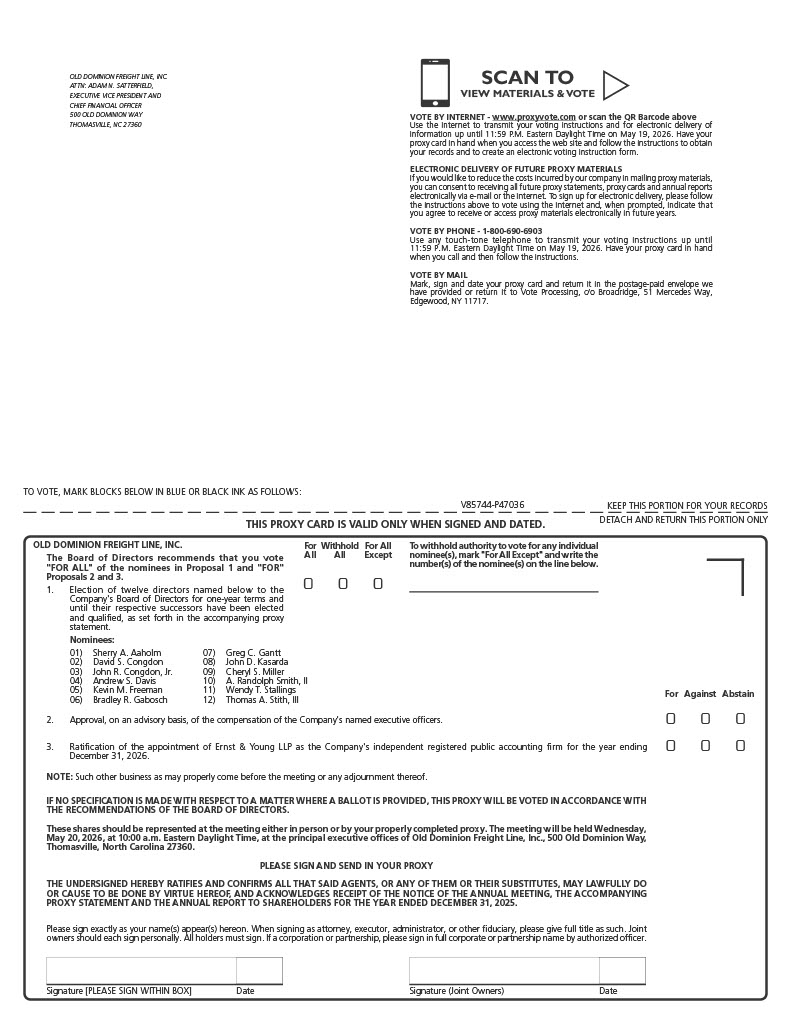
OLD DOMINION FREIGHT LINE, INC. ATTN: ADAM N. SATTERFIELD, EXECUTIVE VICE PRESIDENT AND CHIEF FINANCIAL OFFICER 500 OLD DOMINION WAY THOMASVILLE, NC 27360 SCAN TO VIEW MATERIALS & VOTE VOTE BY INTERNET - www.proxyvote.com or scan the QR Barcode above Use the Internet to transmit your voting instructions and for electronic delivery of information up until 11:59 P.M. Eastern Daylight Time on May 19, 2026. Have your proxy card in hand when you access the web site and follow the instructions to obtain your records and to create an electronic voting instruction form. ELECTRONIC DELIVERY OF FUTURE PROXY MATERIALS If you would like to reduce the costs incurred by our company in mailing proxy materials, you can consent to receiving all future proxy statements, proxy cards and annual reports electronically via e-mail or the Internet. To sign up for electronic delivery, please follow the instructions above to vote using the Internet and, when prompted, indicate that you agree to receive or access proxy materials electronically in future years. VOTE BY PHONE - 1-800-690-6903 Use any touch-tone telephone to transmit your voting instructions up until 11:59 P.M. Eastern Daylight Time on May 19, 2026. Have your proxy card in hand when you call and then follow the instructions. VOTE BY MAIL Mark, sign and date your proxy card and return it in the postage-paid envelope we have provided or return it to Vote Processing, c/o Broadridge, 51 Mercedes Way, Edgewood, NY 11717. TO VOTE, MARK BLOCKS BELOW IN BLUE OR BLACK INK AS FOLLOWS: V85744-P47036 KEEP THIS PORTION FOR YOUR RECORDS DETACH AND RETURN THIS PORTION ONLY THIS PROXY CARD IS VALID ONLY WHEN SIGNED AND DATED. OLD DOMINION FREIGHT LINE, INC. The Board of Directors recommends that you vote "FOR ALL" of the nominees in Proposal 1 and "FOR" Proposals 2 and 3. For All Withhold All For All ExceptTo withhold authority to vote for any individual nominee(s), mark "For All Except" and write the number(s) of the nominee(s) on the line below. 1. Election of twelve directors named below to the Company's Board of Directors for one-year terms and until their respective successors have been elected and qualified, as set forth in the accompanying proxy statement. Nominees: 01) Sherry A. Aaholm 02) David S. Congdon 03) John R. Congdon, Jr. 04) Andrew S. Davis 05) Kevin M. Freeman 06) Bradley R. Gabosch 07) Greg C. Gantt 08) John D. Kasarda 09) Cheryl S. Miller 10) A. Randolph Smith, II 11) Wendy T. Stallings 12) Thomas A. Stith, III For Against Abstain 2. Approval, on an advisory basis, of the compensation of the Company's named executive officers. 3. Ratification of the appointment of Ernst & Young LLP as the Company's independent registered public accounting firm for the year ending December 31, 2026.For Against Abstain NOTE: Such other business as may properly come before the meeting or any adjournment thereof. IF NO SPECIFICATION IS MADE WITH RESPECT TO A MATTER WHERE A BALLOT IS PROVIDED, THIS PROXY WILL BE VOTED IN ACCORDANCE WITH THE RECOMMENDATIONS OF THE BOARD OF DIRECTORS. These shares should be represented at the meeting either in person or by your properly completed proxy. The meeting will be held Wednesday, May 20, 2026, at 10:00 a.m. Eastern Daylight Time, at the principal executive offices of Old Dominion Freight Line, Inc., 500 Old Dominion Way, Thomasville, North Carolina 27360. PLEASE SIGN AND SEND IN YOUR PROXY THE UNDERSIGNED HEREBY RATIFIES AND CONFIRMS ALL THAT SAID AGENTS, OR ANY OF THEM OR THEIR SUBSTITUTES, MAY LAWFULLY DO OR CAUSE TO BE DONE BY VIRTUE HEREOF, AND ACKNOWLEDGES RECEIPT OF THE NOTICE OF THE ANNUAL MEETING, THE ACCOMPANYING PROXY STATEMENT AND THE ANNUAL REPORT TO SHAREHOLDERS FOR THE YEAR ENDED DECEMBER 31, 2025. Please sign exactly as your name(s) appear(s) hereon. When signing as attorney, executor, administrator, or other fiduciary, please give full title as such. Joint owners should each sign personally. All holders must sign. If a corporation or partnership, please sign in full corporate or partnership name by authorized officer. Signature [PLEASE SIGN WITHIN BOX] Date Signature (Joint Owners) Date
Important Notice Regarding the Availability of Proxy Materials for the Shareholder Meeting to be held on May 20, 2026: The Notice of Annual Meeting of Shareholders, Proxy Statement, Form of Proxy and 2025 Annual Report to Shareholders are available on our corporate website at https://ir.odfl.com/annual-shareholder-meeting-information. V85745-P47036 OLD DOMINION FREIGHT LINE, INC. Annual Meeting of Shareholders on May 20, 2026, 10:00 A.M. EDT This proxy is solicited on behalf of the Board of Directors and will be voted as properly specified by the shareholder. The undersigned shareholder(s) of Old Dominion Freight Line, Inc. designates David S. Congdon, Kevin M. Freeman and Ross H. Parr, and any of them, with full power to act alone, agents and proxies to vote the shares of the undersigned at the Annual Meeting of Shareholders, Wednesday, May 20, 2026 at 10:00 a.m. Eastern Daylight Time, and at any adjournment thereof, as designated on the reverse side. The shares represented by this proxy will be voted in accordance with the instructions of the undersigned shareholder(s) when instructions are given in accordance with the procedures described herein and the accompanying proxy statement. This proxy, if properly executed and returned, will be voted "FOR ALL" regarding election of all of the director nominees identified in Proposal 1, and "FOR" each of Proposals 2 and 3, if no instruction to the contrary is indicated. If any other business is properly presented at the meeting, this proxy will be voted in accordance with the best judgment of the agents and proxies named above. Attendance of the undersigned at the meeting or at any adjournment thereof will not be deemed to revoke this proxy unless the undersigned revokes this proxy by properly voting at the annual meeting or otherwise properly completing and delivering a later-dated proxy. Continued and to be signed on reverse side